
How to Tell If Your Lawn Needs Lime: 7 Signs & Best Timing
Test soil pH first—lime is needed below 6.0 to fix nutrient lockout. Watch for moss, yellow grass, poor fertilizer results, weak drought resistance, and weeds. Apply in fall or early spring, aerate first, water in, and avoid over-liming for a healthy, green lawn.

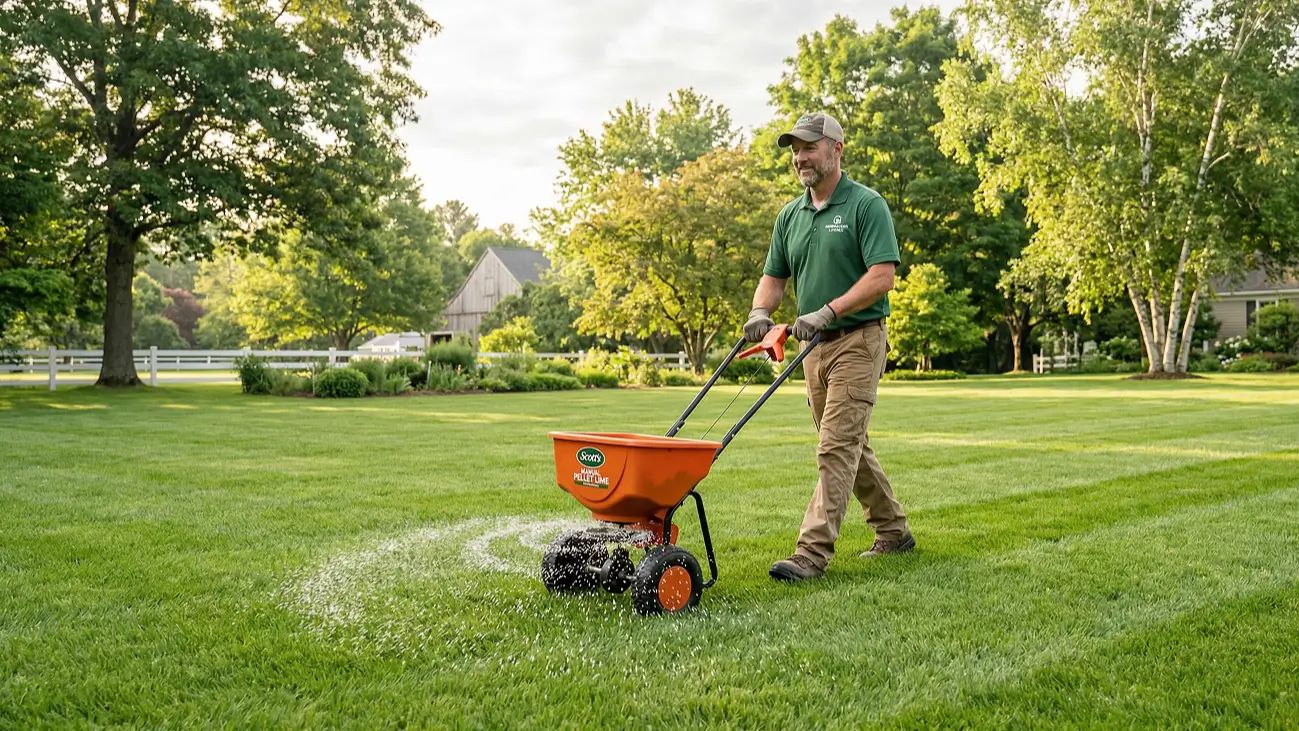
If you're trying to figure out how to tell if your lawn needs lime, grab a soil test. That's the quickest answer. Turf usually begs for a lime treatment once the pH dips below 6.0. But before you even test, your yard might be sending out distress signals: stubborn moss, pale grass blades, or fertilizers that suddenly stop working.
Guessing soil health is a trap. Homeowners often waste cash on premium fertilizers, completely unaware that a highly acidic lawn can't absorb those nutrients anyway. Let's walk through the exact steps to diagnose acidic soil, exactly what lime actually does for grass, and the optimal timing for your application.
How to Tell If Your Lawn Needs Lime (Quick Checklist)
Here is a quick snapshot of the red flags indicating an acidic yard. Spotting these issues early saves both time and frustration.
| Symptom | What It Means for Your Lawn |
|---|---|
| Moss growth in shaded areas | Soil is likely too acidic and compacted. |
| Yellowing grass blades | Low pH is actively inhibiting nutrient uptake. |
| Poor fertilizer results | A severe pH imbalance locked out the nutrients. |
| Soil pH below 6.0 | A lime application is definitely required. |
What Does Lime Do for Grass?
Highly acidic soil triggers something called "nutrient lockout." Basically, the essential minerals already sitting in the earth—like nitrogen, phosphorus, and potassium—become trapped. Your plants simply can't access them.
So, how does the connection between lime and grass actually work? It's all about neutralization. Mined from limestone rock, lime is packed with calcium carbonate and magnesium carbonate. It acts as a powerful buffer, shifting the soil toward a more alkaline state and restoring a healthy baseline.
With the pH corrected, what does lime do for grass? It breaks that nutrient lockout. The trapped minerals are suddenly freed up, fueling deep root growth and richer, greener blades. Plus, lime treatments encourage beneficial soil bacteria to multiply. These microbes break down organic matter, which ultimately supports long-term fertility.
Before tinkering with your yard's chemistry, take a moment to review the deeper effects of soil pH on grass and plant vitality.
7 Clear Signs Your Grass Needs Lime
Your lawn rarely suffers in silence. It gives off clear warning signs if you know what to watch for. For anyone currently researching how to tell if your lawn needs lime, these visual and environmental clues are the best starting point.
Sign 1: Moss Takeover
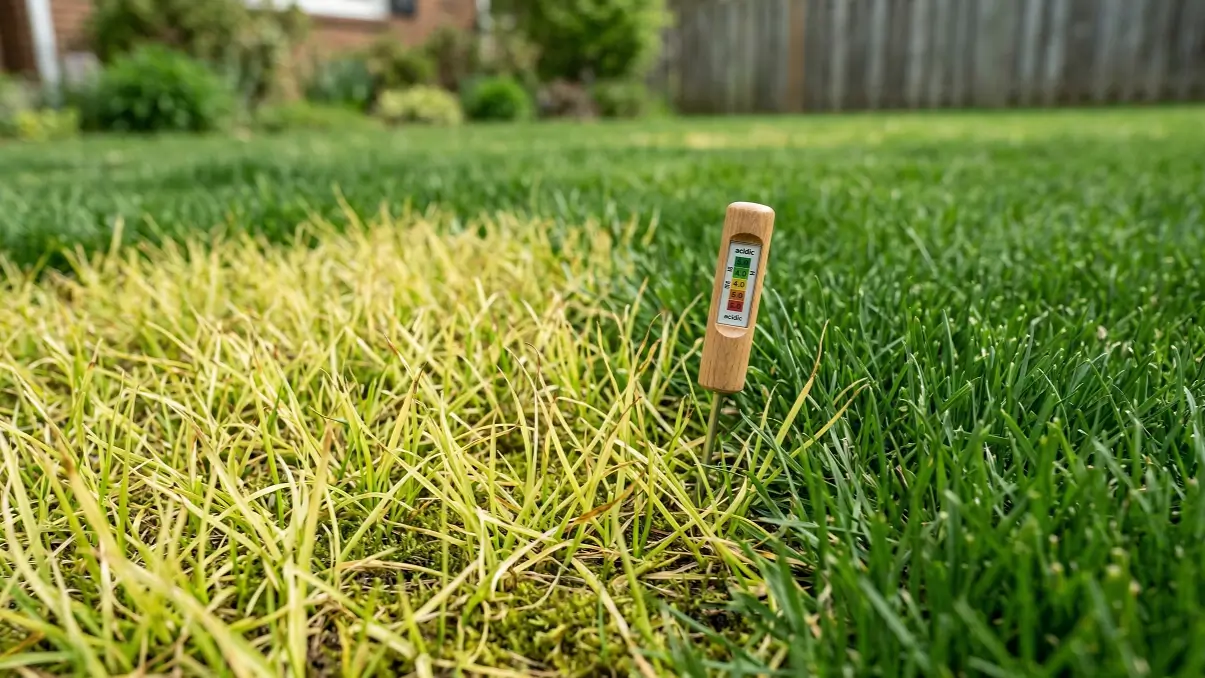
Acidic, compacted dirt is a paradise for moss. If thick moss patches start creeping outward from the shady bases of your trees, your soil pH is likely tanking. Using lime for lawns boosts the turf's ability to compete, helping you reclaim the yard.
Sign 2: Increase in Weeds
A sudden weed invasion usually points to underlying soil failures—poor drainage, heavy compaction, or depleted minerals. Dandelions and clover love starved turf, whereas sorrels actively thrive in acid. Lime improves soil structure gradually, but it won't physically break apart hard clay. You'll still need to aerate to fix heavy infestations.
Sign 3: Yellowing Grass
Yellowing blades are a classic hallmark of acid stress. Once the pH slips below 6.0, the turf struggles to absorb nitrogen and iron. As a result, the foliage loses its rich green color and looks sickly.
Sign 4: Fertilizer Failure
Pouring fertilizer over highly acidic ground achieves almost nothing. In fact, a severe pH imbalance means up to 30% of your applied fertilizer gets wasted through nutrient lockout. If you water and feed the yard regularly but the grass refuses to grow, lime is probably the missing link.
Sign 5: Heavy Rainfall or Runoff
Heavy rainstorms wash essential calcium and magnesium straight out of the topsoil. What gets left behind? Higher concentrations of hydrogen and aluminum ions. This leads to rapid acid buildup and even aluminum toxicity, severely stunting root systems.
Sign 6: Low Resistance to Droughts
Nutrient-starved turf handles heat and drought terribly. If your yard immediately turns brown during a short dry spell—or recovers much slower than the neighbors' yards—pay attention. Those patchy spots usually hide weak, shallow root systems damaged by acidic soil conditions.
Sign 7: A Low pH Soil Test Result
Visual clues are great, but the ultimate proof always comes from a soil test. Sandy dirt drains rapidly and loses balancing minerals fast. Clay soils, conversely, trap acidity. No matter the soil type, a lab result reading below 6.0 means you definitely need a lime application.
Is It Time? The Best Time to Put Lime on Yard
Timing matters. The best time to put lime on your yard is during mild transitional seasons when the ground is highly receptive to chemical shifts.
Fall takes the top spot. In autumn, the ground retains enough summer heat to start the integration process. Then, the upcoming autumn rains and winter freeze-thaw cycles do the heavy lifting. For homeowners in the Northeast or similar climates, applying lime in late fall is especially beneficial, as the intense freeze-thaw cycles actively help incorporate the mineral deep into the soil profile. This natural weathering primes the yard for spring.
Spring serves as a solid backup. Early spring applications work fine, provided you spread the material after the ground completely thaws but before the grass enters its heavy growth phase.
According to the drought survival guidelines from the UMass Amherst Extension, maintaining a soil pH between 6.0 and 7.0 is critical for optimal root activity. Drop below 5.5, and root growth essentially shuts down.
How to Lime a Lawn Safely and Effectively
Ready to fix the soil? Here is how to lime a lawn safely in five straightforward steps.
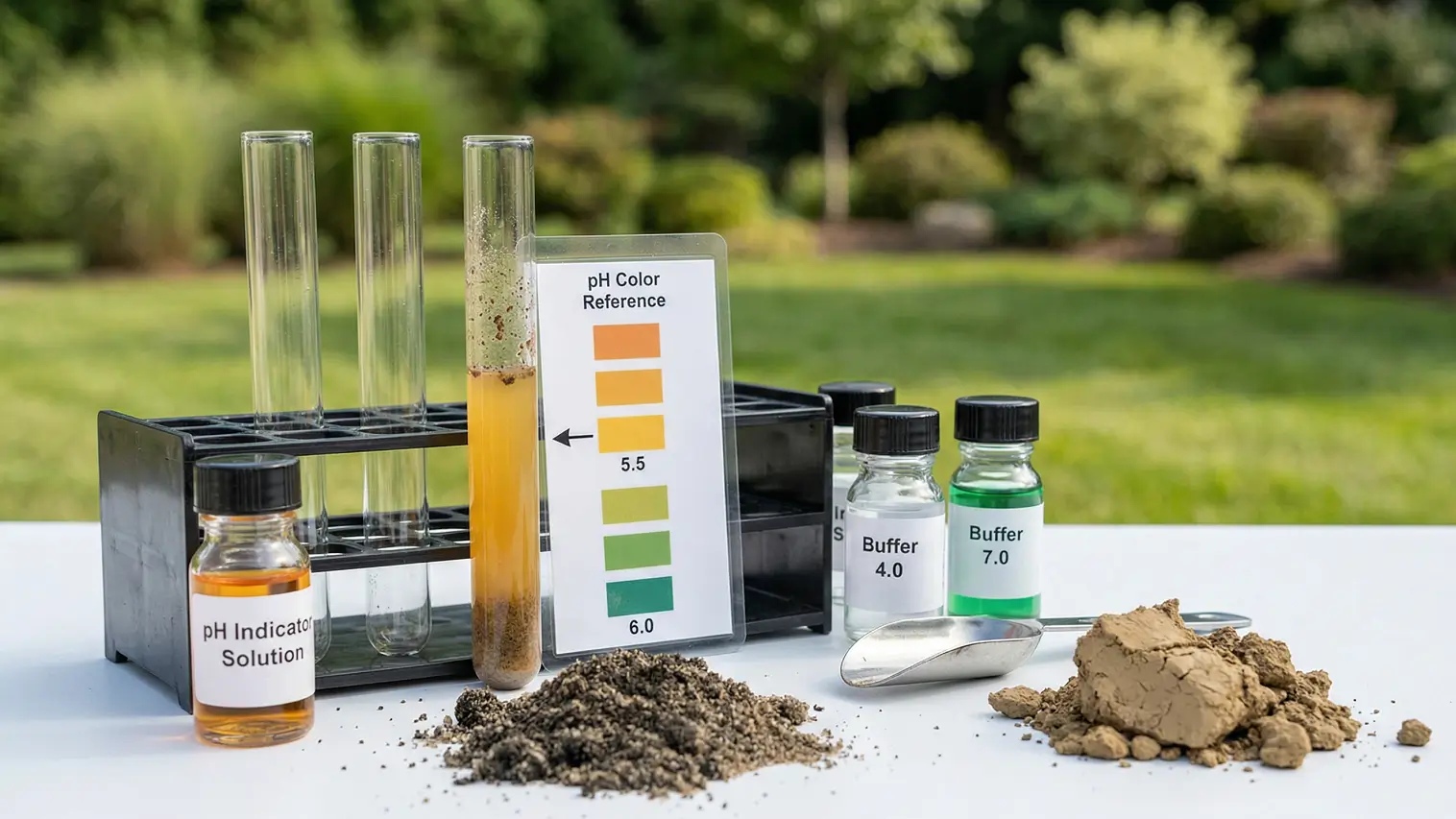
Step 1: Conduct a Soil Test
Start with a proper soil test. This reveals the exact pH and dictates precisely how many pounds of product the yard needs. Never guess.
Step 2: Choose Between Calcitic and Dolomitic
Let your test results dictate the product:
- Calcitic lime is highly recommended if the yard shows low calcium but adequate magnesium.
- Dolomitic lime contains both calcium carbonate and magnesium carbonate. Choose dolomitic if the soil lacks both minerals.
- Enhanced/Fast-acting lime is a modernized option that alters pH much quicker than traditional types, though it often comes at a higher price point. Always check the bag's specific application rates.
Step 3: Aerate Before Applying
Mow the grass short and rake away debris. Next, properly aerate your lawn by pulling soil cores. Doing this allows the amendment to reach the deep root zone instead of washing away on the surface.
Step 4: Use a Spreader and Apply Evenly
Grab a broadcast or drop spreader. Spreading material by hand or with a shovel guarantees uneven coverage and potential lawn burn. Broadcast spreaders handle pelletized products beautifully, while drop spreaders manage the messy powdered versions. Pelletized options are cleaner to handle, though they still need significant time and moisture to break down. Walk in a crisscross pattern (half vertical, half horizontal) to avoid skipped strips.
Step 5: Water Immediately
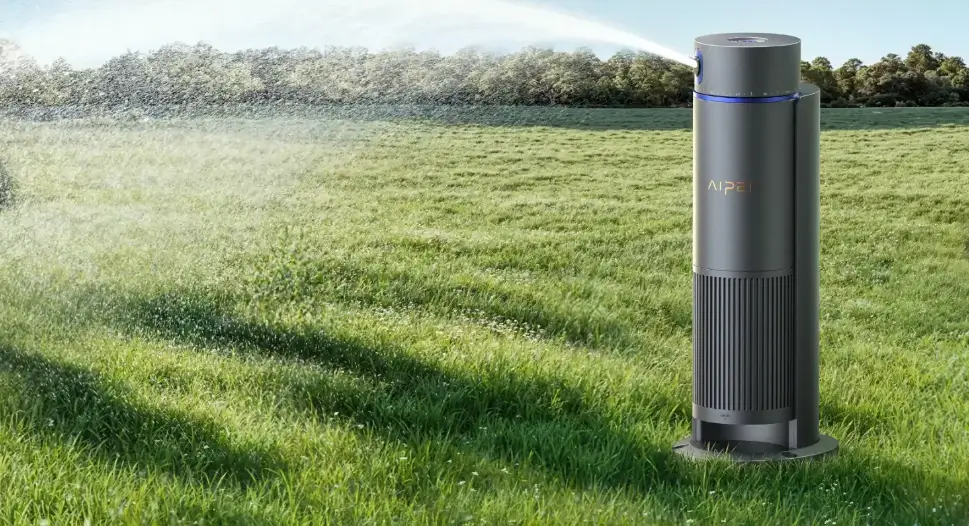
Water the yard immediately after spreading. This step washes the dust off the grass blades to prevent leaf burn and kickstarts the chemical activation in the dirt. Utilizing smart irrigation systems like an automated sprinkler controller takes the stress out of maintaining consistent moisture. It automatically delivers the precise amount of water needed, preventing sloppy runoff.
Common Liming Mistakes to Avoid
Sloppy application techniques waste money and risk damaging the turf. Watch out for these common errors:
- Over-Liming: Dumping extra product won't speed up the pH shift. The UMass Amherst Soil Management Practices clearly state homeowners should never exceed 50 to 70 lbs. per 1,000 square feet in a single treatment. Going overboard creates severe alkalinity, ruining the yard's appearance entirely.
- Inappropriate Timings: Spreading product during the blistering summer heat stresses the grass even more. If the lawn is wilted or dormant, the treatment is largely ineffective.
- Not Testing First: Throwing down amendments without knowing the baseline pH often triggers worse nutrient imbalances.
- Inadequate Watering: The material requires integration. Without a solid watering session immediately after spreading, the product just sits uselessly on the surface.
Conclusion & Next Steps
Now that you understand how to tell if your lawn needs lime, you have the blueprint to safely restore that vibrant green color. Adjusting soil chemistry demands patience, but the long-term payoff is undeniable.
Still questioning your soil's health? Grab a basic testing kit today and permanently remove the guesswork from your lawn care routine. Pairing proper chemical treatments with intelligent watering schedules will dramatically improve your yard's resilience season after season.
FAQs About Lime for Lawns
Still have questions about liming your lawn? Here are some of the most common concerns homeowners have:
Is lime safe for pets and kids?
Generally, yes. Standard agricultural and garden lime is non-toxic. However, the dust can cause mild skin, paw, or eye irritation. To be completely safe, keep pets and children off the lawn until the lime has been thoroughly watered into the soil and the grass blades are completely dry.
Pelletized vs. Powdered lime: Which is better?
Pelletized lime is typically the better choice for DIY homeowners. It is much cleaner to handle, binds together easily in a broadcast spreader, and prevents irritating dust clouds. Powdered lime works slightly faster but is extremely messy and requires a drop spreader on a windless day to prevent it from blowing away.
How long does it take for lime to work on grass?
Lime releases incredibly slowly. You probably won't notice visual improvements for several weeks or even months. The reaction begins the moment moisture hits it in the soil, but patience is required. Slow, steady pH adjustments are vastly safer for the grass roots.
Can you put down lime and fertilizer at the same time?
Keep them separated by at least 1 to 4 weeks. Dropping both at the exact same time often triggers a chemical reaction, causing the fertilizer's nitrogen to gas off into the air. Spacing out the treatments guarantees better growth.
Can I put too much lime on my lawn?
Absolutely. Going overboard turns the soil highly alkaline (above 7.5). This triggers a completely different kind of nutrient lockout that can eventually kill the turf outright. Stick to your test recommendations. If your yard sits comfortably between 6.0 and 7.0, skip the lime completely.