
How to Prevent Bugs Naturally From Your Pool (A Chemical-Free Guide)
Keep water moving and debris-free to naturally stop mosquitoes and aquatic bugs from breeding. Use bug-repelling plants and warm lighting to reduce poolside insect attraction. A perimeter strategy prevents infestations without adding harsh pool chemicals.

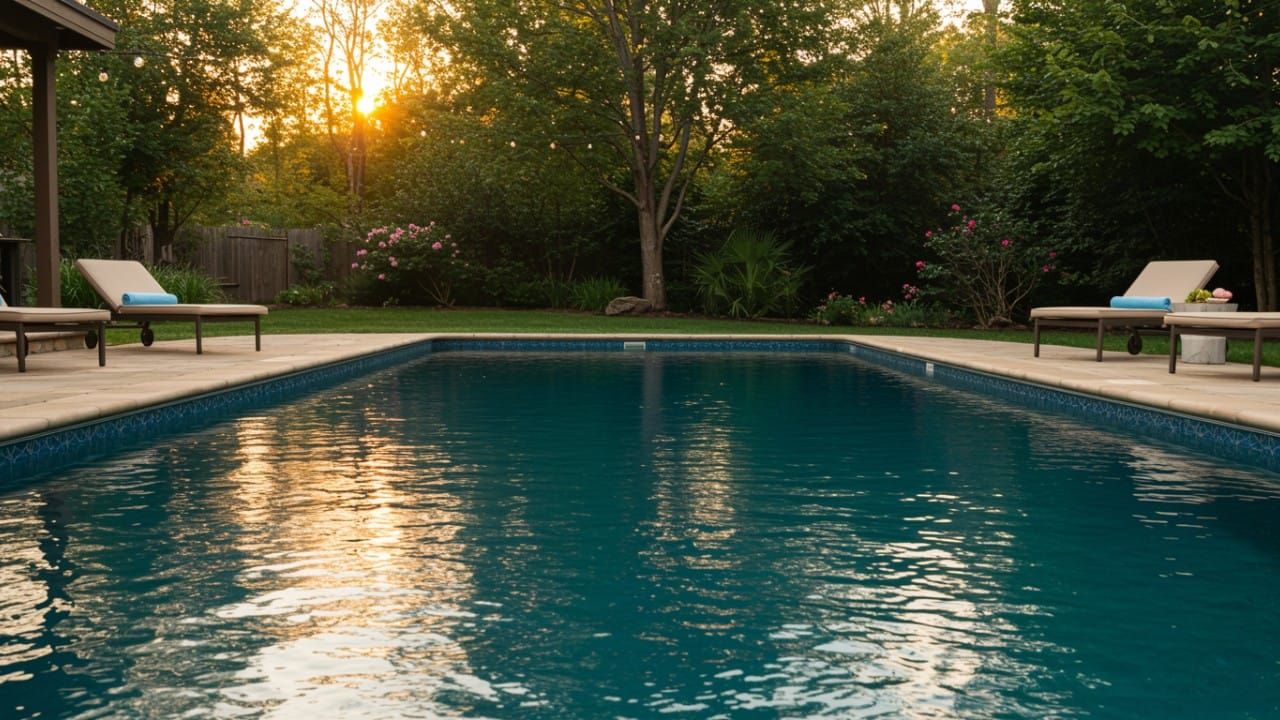
A single female mosquito can lay up to 300 eggs on still water—and she only needs about a week of calm surface to do it. That’s roughly how long it takes between pool skims for many homeowners. No wonder bug season feels relentless.
The usual advice? Shock the pool. Add more chlorine. But if you’re trying to keep chemicals low—for your kids, your pets, or your own peace of mind—that answer falls flat. You shouldn’t have to choose between a bug-free pool and water that feels gentle on skin.
The good news: you don’t have to. Learning how to prevent bugs naturally from your pool comes down to what experts call “perimeter defense.” It’s a system of smart landscaping, strategic lighting, and constant water movement that makes your pool far less attractive to pests in the first place. No extra chemicals required.
Already dealing with an infestation? Start with our guide on how to get rid of water bugs first, then come back here to keep them from returning.
Why Do Bugs Love Your Pool?
Before you can stop bugs, it helps to understand what draws them in. Insects aren’t random. They follow survival signals—water, light, and food. Your pool often delivers all three.
Remove one or two of these attractants, and most bugs will look elsewhere. Remove all three, and your pool becomes practically invisible to pests.
Water source
Pools are giant hydration stations. Many flying insects—especially mosquitoes—need standing water to breed. According to the CDC, mosquitoes require as little as one tablespoon of stagnant water to lay eggs. Your pool’s surface, especially when still, sends a clear invitation.
Bees and wasps also visit pools to drink, particularly in dry summer months when natural water sources shrink. They’re not targeting you—they’re just thirsty.
Light attraction
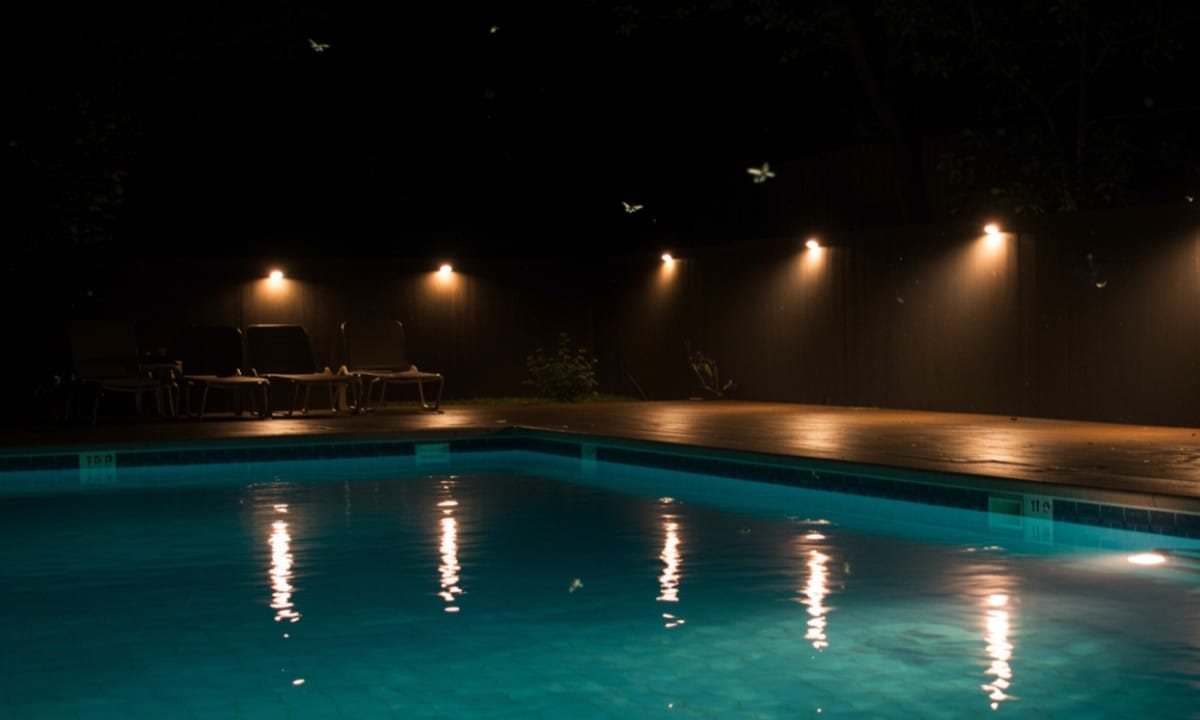
Most flying insects navigate using natural light sources like the moon. Bright white or UV-spectrum lights confuse this system, drawing bugs toward your pool area at night. This behavior, called phototaxis, explains why porch lights become insect magnets every summer evening.
Your pool lights and patio fixtures can have the same effect—turning a relaxing night swim into a bug encounter.
Food supply
Algae, pollen, and decaying organic matter all serve as food for aquatic insects like water boatmen and backswimmers. These bugs eat microscopic plant material. When they arrive, predators follow.
A thin film of pollen or a mild algae bloom might seem harmless. But to bugs, it’s a buffet. Cut off the food source, and you break the chain that brings larger pests to your water.
What Plants Repel Bugs Around a Pool?
Strategic landscaping is one of the most effective ways to keep bugs away from your pool naturally. Certain plants release compounds that confuse, irritate, or repel common insects. Placing them around your pool deck creates a living perimeter defense.
The key is choosing plants that work—and avoiding ones that attract more problems. For a deeper guide on poolside vegetation, check out our article on plants to plant around a pool.
Lemongrass & citronella
Citronella is the classic natural bug repellent, and for good reason. The plant produces oils that mask the scents mosquitoes use to locate hosts. Lemongrass (which contains citronella oil) works similarly and grows well in warm climates.
Plant these in large pots around seating areas. The closer to where you sit, the better they work. Crushing a few leaves releases more oil into the air.
Lavender & mint
Lavender’s strong fragrance repels mosquitoes, moths, and flies. It thrives in sunny spots and handles heat well—ideal for pool environments. As a bonus, it attracts pollinators like bees only when flowering, and they tend to stay on the blooms rather than near water.
Mint is highly effective against wasps and mosquitoes. However, it spreads aggressively. Keep it in containers to prevent it from taking over your garden beds.
Marigolds
Marigolds contain pyrethrum, a compound used in many commercial insecticides. Planting them around your pool’s edge creates a natural deterrent zone. They’re especially effective against mosquitoes and aphids.
Choose French or African marigold varieties for the strongest scent. They’re low-maintenance, affordable, and add a pop of color to your pool area.
Plants to avoid
Not all greenery helps. Fruit trees drop sugary debris that attracts wasps, bees, and ants. Sweet-flowering shrubs like honeysuckle draw insects looking for nectar.
Avoid planting these within 15–20 feet of your pool:
- Apple, fig, or citrus trees
- Flowering jasmine
- Honeysuckle vines
- Any plant that drops berries or fruit
If you already have these nearby, increase your skimming frequency to remove fallen debris before it ferments and attracts pests.
Natural Pool Bug Repellents and DIY Remedies
Sometimes you need a quick fix—something you can mix up today and apply this weekend. These DIY natural pool bug repellents won’t replace a full perimeter strategy, but they help fill gaps.
A note of caution: most of these remedies work around the pool, not in it. Adding foreign substances to pool water can throw off your chemistry and create bigger problems.
Essential oil sprays
Peppermint oil is one of the most effective natural insect deterrents. Research published in the Journal of Medical Entomology found that peppermint oil provided repellent activity against mosquitoes comparable to some commercial products.
Mix 10–15 drops of peppermint essential oil with one cup of water in a spray bottle. Add a teaspoon of dish soap to help it stick. Spray on pool deck surfaces, chair legs, and umbrella poles—anywhere bugs land. Reapply after rain or every few days.
Eucalyptus and lemon oils also work well. The CDC recognizes oil of lemon eucalyptus (OLE) as an effective mosquito repellent when properly formulated.
The dryer sheet trick
This hack sounds odd, but many pool owners swear by it. Placing unscented or lightly scented dryer sheets in your skimmer basket may help deter wasps. The sheets release a subtle fragrance that wasps find unpleasant.
Tuck one or two sheets into your skimmer basket and replace them weekly. This won’t eliminate wasps entirely, but it can reduce how many linger near your water’s surface.
The baking soda myth
Baking soda often appears in “natural pool hack” lists. But here’s the truth: baking soda does not repel bugs directly. What it does is raise your pool’s pH and alkalinity.
Why does that matter? Balanced water chemistry prevents algae growth—and algae is bug food. So while baking soda won’t create a bug barrier, it supports conditions that make your pool less attractive to pests.
For more on keeping your water balanced, see our pool chemistry cheat sheet. Proper chemistry is the foundation that makes every other prevention method work better.
Does Pool Lighting Attract Bugs?
Your pool lights might be working against you. Outdoor lighting is one of the biggest—and most overlooked—bug attractants. Change how you light your pool area, and you can dramatically reduce nighttime insect traffic.
White vs. amber light
Insects see light differently than humans. Most flying bugs are highly sensitive to ultraviolet (UV) and blue-spectrum light. Standard white LED and incandescent bulbs emit plenty of both wavelengths.
Amber and yellow lights, by contrast, fall outside the range most insects detect well. Research from the American Association for the Advancement of Science found that warm-colored LEDs attract significantly fewer insects than cool white bulbs. Switching your poolside fixtures to amber LEDs can make your pool area far less visible to bugs at night.
This doesn’t eliminate every insect. But it removes one of the three major attractants—making your other defenses more effective.
Placement tips
Where you position lights matters as much as the color. Bugs fly toward light sources. If your brightest fixtures sit directly over the water, insects will congregate there.
Move bright lights away from the pool’s edge. Use lower-intensity amber lighting near the water and reserve brighter white lights for areas farther from the pool—like a back fence or garage. Bugs will gravitate toward the distant lights instead.
Surface tension tricks
Some pool owners use a few drops of dish soap to break surface tension. The idea: bugs that land can’t float and sink instead, reducing the visible “bug raft” effect.
This method works in the short term but comes with trade-offs. Soap creates foam, affects water chemistry, and can clog filters. If you try it, use only a drop or two, and be prepared to skim and backwash more frequently afterward. It’s a temporary fix, not a long-term strategy.
How Does Water Movement Keep Bugs Away?
Still water is a breeding invitation. Moving water is a “Do Not Enter” sign. This single principle—keeping your pool surface in motion—is the most effective natural bug deterrent available.
Stagnant water problem
Mosquitoes can’t lay eggs on moving water. They need a calm surface to deposit their eggs safely. The CDC emphasizes that eliminating standing water is the most important step in mosquito prevention around homes.
Your pool pump runs several hours a day, but that doesn’t mean your surface stays active. Pumps circulate water below the surface. The top layer—where bugs land and breed—can remain surprisingly still, especially in corners, around steps, and near skimmer dead zones.
The movement hack
Any tool that disrupts surface tension helps. Fountains, waterfalls, and return jet adjustments all create ripples that deter egg-laying insects.
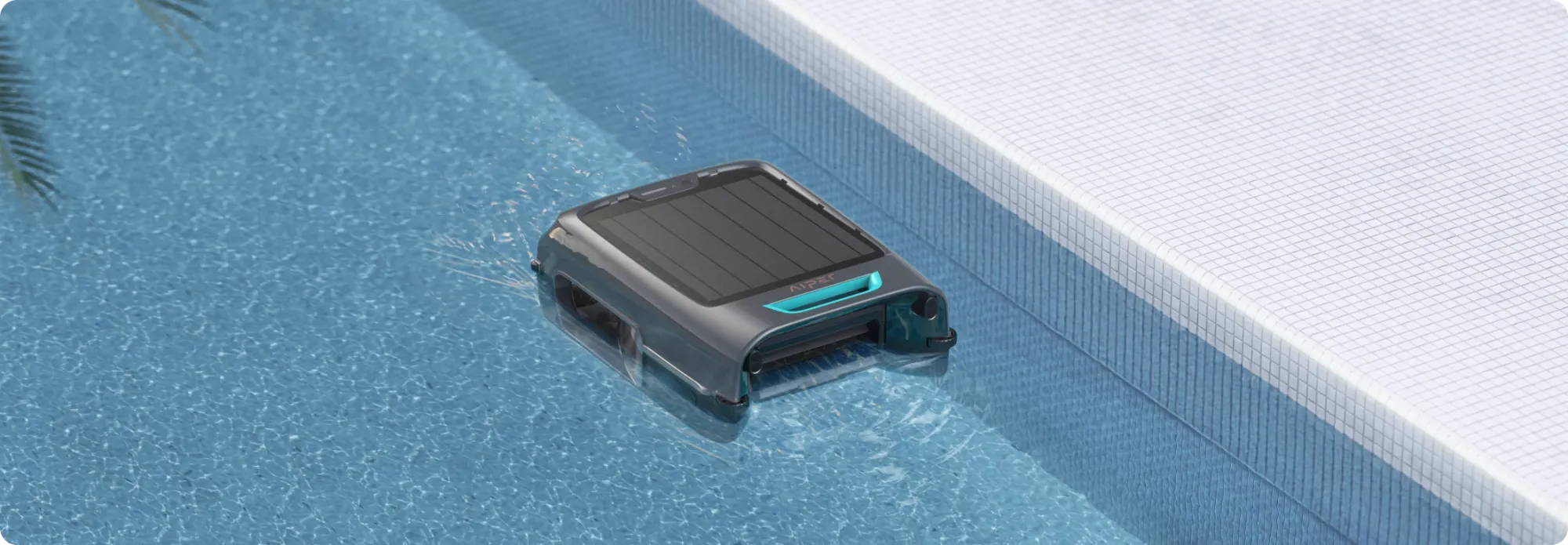
But the most consistent solution is automated surface cleaning. A device that moves across the water continuously does double duty: it removes floating debris (pollen, leaves, dead insects) while keeping the surface in constant motion.
This approach addresses two of the three bug attractants at once—food and still water—without adding a single chemical.
To understand the difference between surface cleaning and deep cleaning, read our comparison of pool vacuum vs skimmer. Both have a role, but for bug prevention, surface action matters most.
Skimming vs. vacuuming
Robotic pool vacuums clean the floor and walls. They handle dirt, sand, and debris that sinks. But they don’t address what’s floating on top—the stuff bugs eat and breed on.
Skimmers work at the waterline. They catch debris before it sinks, removing the organic matter that feeds aquatic insects. For natural bug prevention, surface skimming is the priority. A clean surface means no food source and no calm water for eggs.
How the Aiper Surfer S2 Creates a Natural Bug Barrier
A solar-powered skimmer doesn’t just clean your pool—it turns your water into an environment bugs avoid. The Aiper Surfer S2 runs throughout the day, creating exactly the kind of surface conditions that deter pests naturally.
Think of it as a perimeter patrol for your pool’s surface. While you’re at work or relaxing inside, the Surfer S2 keeps moving, keeps skimming, and keeps the water from sitting still.
Here’s how it supports your chemical-free bug prevention strategy:
- Solar-powered continuous operation: Bugs land throughout the day—not just during your scheduled cleaning. The Surfer S2 uses solar power to patrol almost constantly, removing insects the moment they touch the water before they can sink or lay eggs.
- Surface agitation: The device’s paddle wheel creates consistent ripples and disrupts surface tension. Mosquitoes and water boatmen avoid laying eggs on moving water. Constant motion acts as a natural “No Vacancy” signal.
- Fine mesh filtration: Pollen, dust, and microscopic organic particles serve as food for aquatic insects. The Surfer S2’s fine mesh basket captures these before they become a buffet—breaking the food chain that attracts larger pests.
- Cordless, chemical-free design: No hoses. No power cords. No additives. It fits naturally into a low-chemical pool care routine, supporting the eco-friendly approach many families prefer.
Conclusion
Keeping bugs out of your pool doesn’t require harsh chemicals or constant manual labor. It requires a system—one that addresses why bugs show up in the first place.
Start with your perimeter. Plant lavender, mint, and marigolds. Remove fruit trees and sweet-flowering shrubs from the pool zone. Switch to amber lighting so night swimmers don’t become bug magnets.
Then focus on your water. Keep it moving. Skim it often. Remove the organic debris that feeds aquatic insects before it sinks and starts a cycle.
When you combine landscaping, lighting, and automated surface cleaning, you create an environment bugs simply don’t want. Less time swatting. More time swimming. That’s what backyard freedom should feel like.
Already have bugs in the water? Visit our guide on how to get rid of water bugs for removal steps—then return here to keep them gone.
Frequently Asked Questions About Natural Bug Prevention
What smell do bugs hate the most?
Peppermint ranks among the most effective scents for repelling a broad range of insects, including mosquitoes, ants, and spiders. Lemon eucalyptus is also highly effective—the CDC lists oil of lemon eucalyptus as a proven mosquito repellent.
For poolside use, peppermint spray on deck surfaces works well. Planting lavender and lemongrass adds continuous scent coverage without reapplication.
Does vinegar keep bugs away from the pool?
Vinegar doesn’t repel bugs from the water itself, but it helps with pool deck maintenance. A diluted white vinegar solution (one part vinegar to three parts water) cleans surfaces and removes residue that can attract ants and flies.
Spray it on concrete, pavers, or outdoor furniture. Avoid getting vinegar in the pool—it will lower your pH and disrupt water chemistry.
How do I keep water bugs out of my pool naturally?
Focus on three strategies working together:
First, eliminate food sources. Skim your pool daily or use an automated skimmer to remove pollen, leaves, and organic debris. Water bugs eat algae and microscopic plant matter—starve them out.
Second, keep the surface moving. Stagnant water attracts breeding insects. Run your pump, adjust return jets upward, or use a solar skimmer to maintain constant surface motion.
Third, build your perimeter. Plant bug-repelling herbs like mint, lavender, and citronella around the pool. Switch to amber outdoor lights to reduce nighttime attraction.