
What Is Smart Irrigation? The Ultimate Guide to Saving Water and Your Lawn
Smart irrigation uses real-time weather/soil data to water lawns only when needed, cutting water waste by up to 40% vs. timer-based systems. It builds stronger roots, detects leaks early, and works via app control—no heavy digging required for modern all-in-one systems.

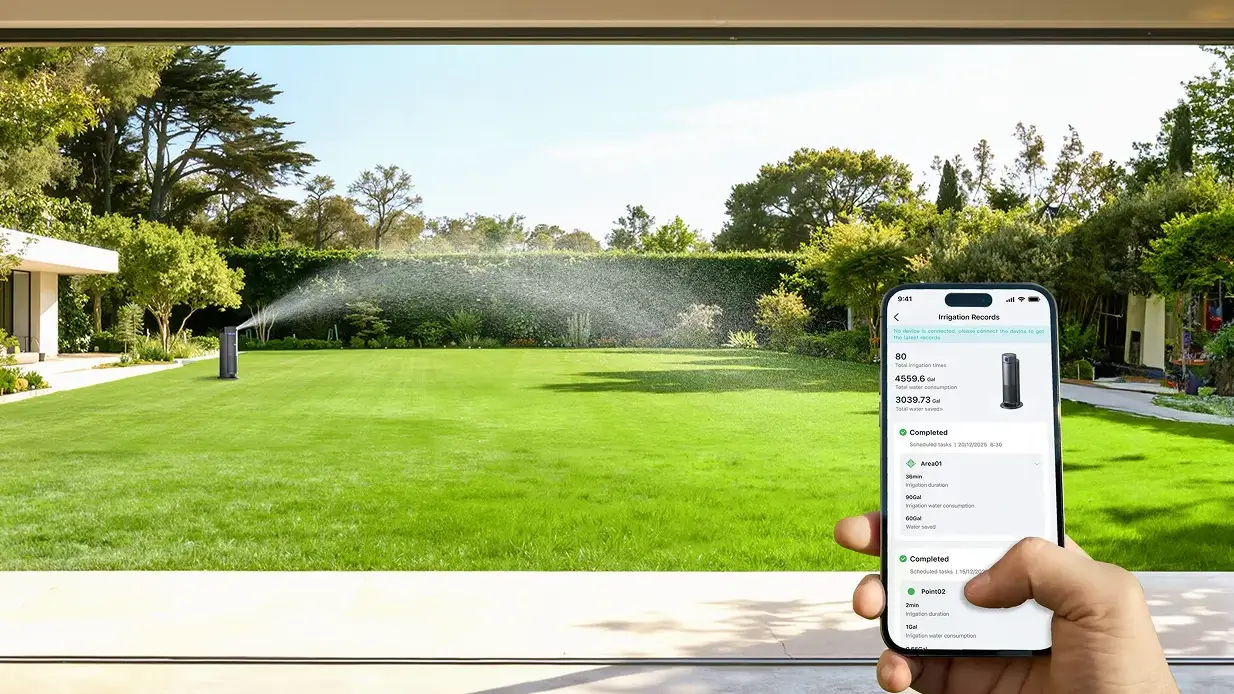
Every summer, it feels like the same story. You turn up the watering to keep your lawn green, and your water bill climbs right along with it. Even then, patches of dry grass still show up, or worse, parts of your yard stay soggy and overwatered.
That frustration is exactly why more homeowners are starting to look into smarter ways to manage their watering. So, what is smart irrigation, and how does it actually help?
At its core, it is about replacing guesswork with data. Instead of sticking to a rigid watering schedule, these systems adjust based on what your lawn really needs. In this guide, we will walk through how they work, why they can lower your water usage, and how newer options are making installation much simpler than it used to be.
What Is Smart Irrigation?
Smart irrigation is a method of watering your lawn that uses real-time information to decide when and how much water to apply. Traditional systems usually run on timers, which means they continue watering whether it has just rained or not.
Smarter systems take a different approach. They respond to conditions like rainfall, temperature, and soil moisture, so your lawn gets the right amount of water at the right time.
According to the Oklahoma State University Extension, tools like weather-based controllers and soil moisture sensors can cut down water use significantly without damaging the landscape. In other words, you are not sacrificing lawn health to save water.
Over time, this approach helps create stronger roots and a more resilient yard, especially during hot or dry periods.
How Does a Smart Irrigation System Work?
A smart irrigation system is built around one main idea: only water when necessary. To do that, it relies on a mix of sensors, data, and automation.
Weather-Based Controllers vs. Soil Moisture Sensors
There are two main types of technology used in these systems.
Weather-based controllers use local weather data to estimate how much moisture your lawn is losing. They factor in things like heat, sunlight, wind, and humidity. Based on that, they automatically adjust your watering schedule. If the weather is hotter than usual, they increase watering. If it cools down, they scale it back.
Soil moisture sensors work a bit differently. Instead of predicting what your lawn needs, they measure what is already happening in the soil. These sensors sit in the ground and track how much water is available at the root level. If the soil is still moist, watering is delayed. If it is dry, the system kicks in.
Some advanced setups use both methods together, which gives a more complete picture and improves accuracy.
Understanding Irrigation Triggers and Automation
Another important piece of the puzzle is irrigation triggers. These are the automatic signals that tell the system when to start or stop watering.
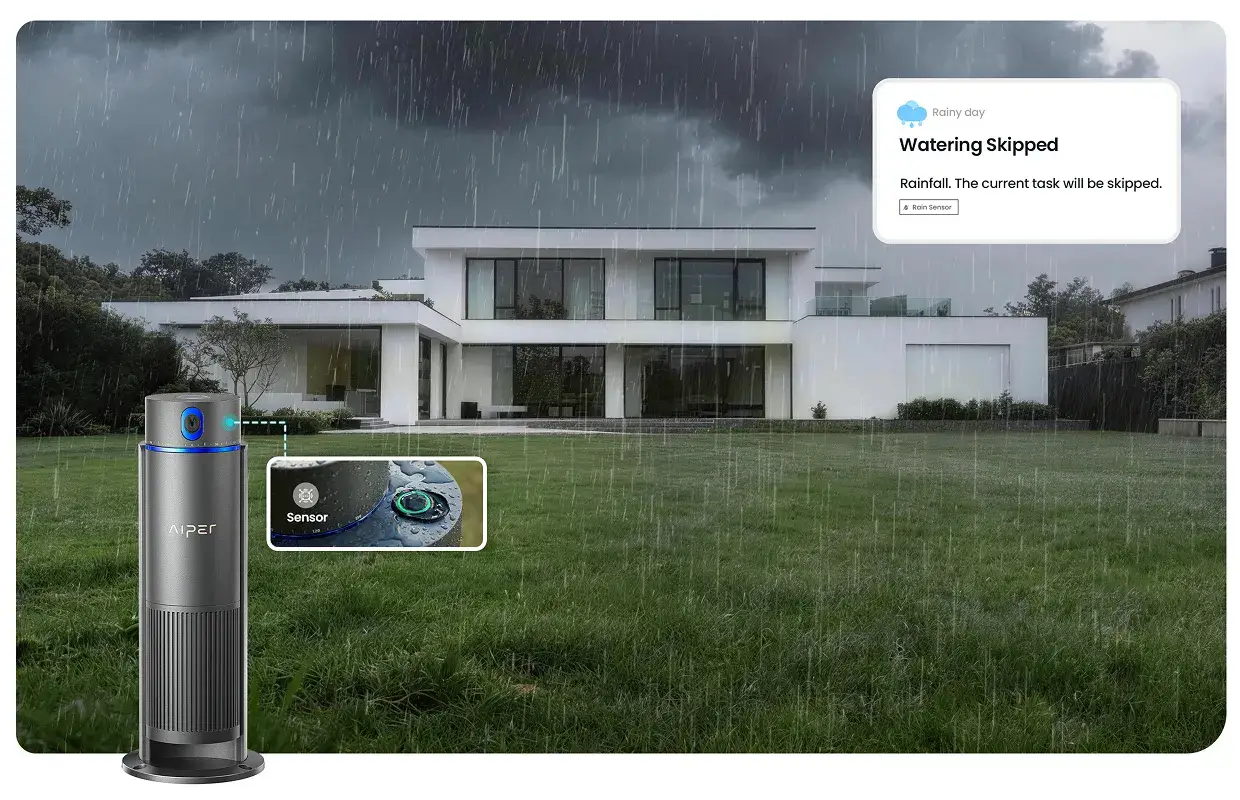
For example, if it rains overnight, the system can pause the next scheduled cycle. If strong winds are detected, it may delay watering to prevent water from being blown away. Even temperature drops can affect how the system behaves.
This kind of automation removes a lot of the uncertainty homeowners deal with. You no longer have to guess whether your lawn needs water or figure out how long to wait after rain to water your grass. The system makes those adjustments on its own.
Some systems even improve over time, using past data to fine-tune their decisions. The end result is a lawn that gets consistent care without constant manual input.
Why Upgrading Your Traditional Sprinkler System Matters
If you are using an older sprinkler system, chances are it is not as efficient as it could be. Fixed schedules do not account for changing weather, which often leads to unnecessary watering.
Switching to a smarter setup can make a noticeable difference.
The most obvious benefit is water savings. When your system adjusts automatically, it avoids watering during rain or cooler periods. That can translate into lower monthly bills, especially in the summer.
There is also the added benefit of early problem detection. Many modern systems can alert you to leaks or irregular water usage, helping you address issues before they turn into bigger problems.
Convenience is another factor. With app-based controls, you can manage your irrigation system from your phone. Whether you are at home or away, you have full control and visibility.
Here is a quick comparison:
| Feature | Traditional System | Smart Irrigation |
|---|---|---|
| Weather Adaptability | Fixed schedule | Adjusts in real time |
| Water Waste | Higher | Lower |
| Control Method | Timer-based | App and automation |
Upgrading is not just about making things easier. It is also about using resources more efficiently.
Modern Solutions: The Rise of 4-in-1 Smart Irrigation Technology
Not long ago, installing a smart irrigation system could be a major project. It often required digging trenches, installing underground pipes, and running electrical wiring. For many homeowners, that level of work was a dealbreaker.
Now, things are changing.
Newer systems are designed to be much more accessible. Many are above-ground and combine multiple functions into a single unit, which simplifies both setup and use.
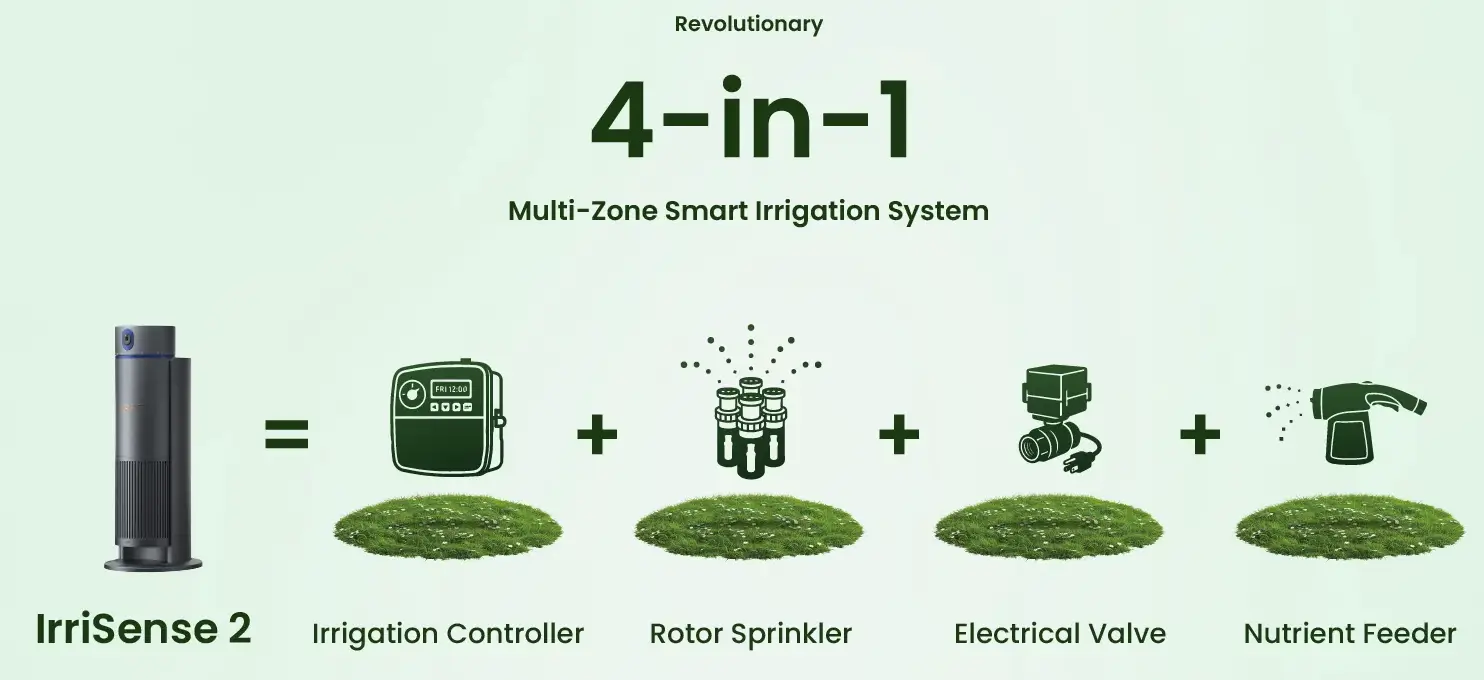
A breakthrough example of this shift is the Aiper IrriSense 2, positioned as the World's First 4-in-1 Multi-Zone Smart Irrigation System. Instead of managing separate, complicated parts, this system seamlessly integrates the controller, sprinkler, electrical valve, and chemical feeder into one powerful, above-ground device.
Instead of managing separate parts, these systems combine the controller, sprinkler, valve, and even a chemical dispenser into one device. That kind of integration reduces complexity and makes it easier to maintain your lawn without juggling multiple tools.
Installation is also much simpler. In many cases, you can install a sprinkler system without heavy digging, which avoids the need for trenching or professional help.
From an efficiency standpoint, these systems are designed to make the most of every drop of water. Features like intelligent scheduling adjust watering based on weather conditions, while technologies such as EvenRain™ help distribute water more evenly across your lawn. Some systems also include pressure stabilization to keep coverage consistent, even if your water pressure changes.
All of these points point to a broader trend: irrigation technology is becoming easier to use, more efficient, and better suited for everyday homeowners.
Common Mistakes to Avoid When Using Smart Irrigation
Even with smarter systems, a few simple mistakes can reduce their effectiveness.
- One common issue is relying too heavily on automation. While these systems handle most of the work, it is still a good idea to check your lawn occasionally. A quick look can help you spot uneven watering or equipment issues.
- Another mistake is overlooking soil type. Different soils absorb and retain water differently. If your settings do not match your soil conditions, your system may not perform as well as it should.
- It is also important to keep sensors clean and properly positioned. If they are blocked or placed incorrectly, the data they provide may not be accurate.
Conclusion & Best Practices for Smarter Water Management
Taking a smarter approach to watering can make a big difference, both for your lawn and your water bill. By using data and automation, smart systems help you avoid waste while keeping your yard in good shape.
If you are thinking about making a change, start by looking at your current setup. Check how much water you are using and how your lawn is responding. From there, consider options that are easier to install and designed to adapt to changing conditions.
A few adjustments now can lead to long-term improvements in both efficiency and lawn health.
Beyond the immediate savings, switching to smarter watering methods also supports long-term lawn health in ways that are easy to overlook. Lawns that are watered more precisely tend to develop deeper root systems, which makes them more resilient during dry spells and extreme heat. This means less reliance on constant watering and fewer patches of stressed or damaged grass over time.
It also helps cut down on runoff, which often carries fertilizers and other chemicals into nearby drains or the surrounding soil. When you give your lawn only the water it actually needs, you are not just lowering your bill; you are also being more mindful about how water is used in your area.
As you look into different options, try to choose something that fits your yard, your local weather, and how much time you want to spend managing it. Some people may find it makes sense to upgrade what they already have, while others might prefer a simpler all-in-one setup that is easier to install and manage.
It does not have to be perfect right away. Even a few small changes in how you water your lawn can start to make a visible difference within one season.
Frequently Asked Questions (FAQ)
Can I convert my existing sprinkler system to a smart one?
Yes, in most cases, you can upgrade by replacing your current controller with a smart version. If your system is older or does not have underground piping, an all-in-one above-ground option may be easier to set up.
Do smart irrigation systems work without Wi-Fi?
Most systems need Wi-Fi for setup and live weather updates. If the connection drops, many will continue running on a saved schedule until it is restored.
How much water can I really save with smart irrigation?
Research from sources like Oklahoma State University Extension shows that smart systems can reduce water waste significantly. In fact, systems equipped with advanced Weather-Sense technology, like the IrriSense 2, can reduce water consumption by up to 40% while keeping your lawn perfectly healthy.