
What is a Skimmer Sock? The Ultimate Guide to Pool Pre Filters
A skimmer sock is a fine mesh liner for pool skimmer baskets, acting as a cheap pre-filter to trap fine debris (pollen, dead algae, hair) before it clogs the pump and main filter. It improves water clarity and protects equipment but requires frequent checks to avoid flow restriction and pump damage.

If you are tired of backwashing more than you expected, hosing off cartridges constantly, or watching your filter pressure climb after every windy day, you are not alone. A lot of pool frustration comes from one simple truth: the stuff that makes water look dull is often not the big leaves you can see. It is the fine, annoying debris that sneaks past your skimmer basket and loads up your main filter.
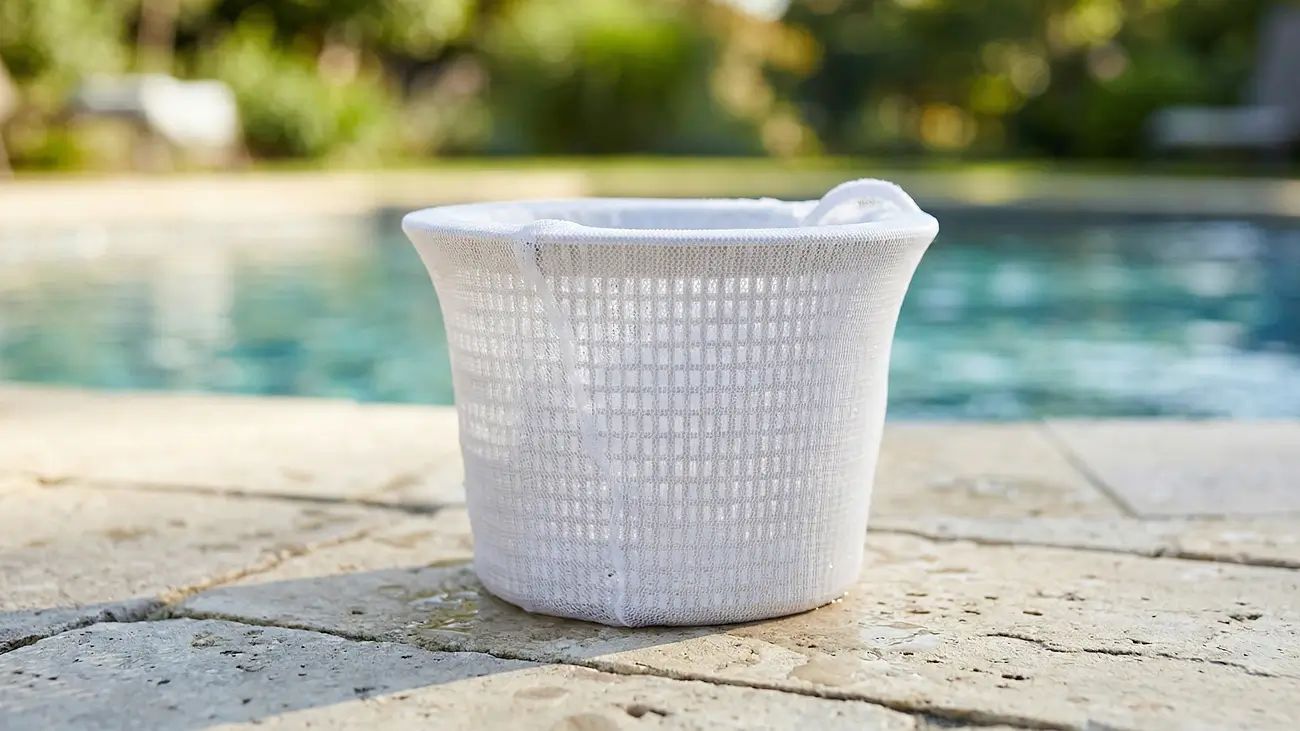
A Skimmer Sock (also sold under names like Scum-Socks, Basket Buddies, or Skimmer Basket Liners) is a fine mesh net that wraps around your skimmer basket like a liner. Its job is to catch smaller debris before it gets pulled into your pump and main filter. Think of it as a cheap, easy pre filter that you can remove and clean in seconds.
They are inexpensive, and they work. But they are not set and forget. If you use them, you also need a simple habit of checking them often so they do not clog and restrict water flow.
What Does a Skimmer Sock Actually Do?
A Skimmer Sock upgrades the very first stage of your pool’s filtration path.
A standard plastic skimmer basket is designed to catch larger debris, like leaves, twigs, and bugs. The gaps are wide on purpose so water can move freely into the pump. A sock adds a much finer mesh layer, so the basket can trap smaller particles that would otherwise go straight to the pump basket and then into your main filter.
That matters because most pools get “dirty” in two different ways at once:
- visible debris you can scoop out
- fine debris that clouds water, spikes filter pressure, and makes you feel like you are always cleaning something
Used well, a Skimmer Sock helps your pool stay clearer with less load on your expensive filtration equipment, especially during high pollen weeks or right after you kill algae.
How Does a Skimmer Sock Protect Your Pool Equipment?
The simplest way to understand skimmer socks is to think in terms of stages.
Your pool already has multiple barriers. The skimmer basket is one. The pump basket is another. Then your main filter does the real polishing. A sock adds another barrier at the easiest place to access, the skimmer basket, so fine debris is removed before it ever reaches the pump and filter.
If you have ever wondered why “fine” filtration matters, micron rating is the concept behind it. A micron is a unit used to describe particle size. Filters with smaller pores catch smaller particles, but they also clog faster and create more resistance to flow as they load up. That tradeoff, finer capture versus pressure drop, is a standard filtration principle in water treatment.
A Skimmer Sock is not usually sold with a precise micron spec the way industrial filters are, but the practical takeaway is still true: it catches smaller debris than a bare basket, and that helps protect the downstream equipment that is harder to clean and more expensive to replace.
Will a Skimmer Sock Catch Dead Algae and Pollen?
Yes, that is one of the best reasons to use one.
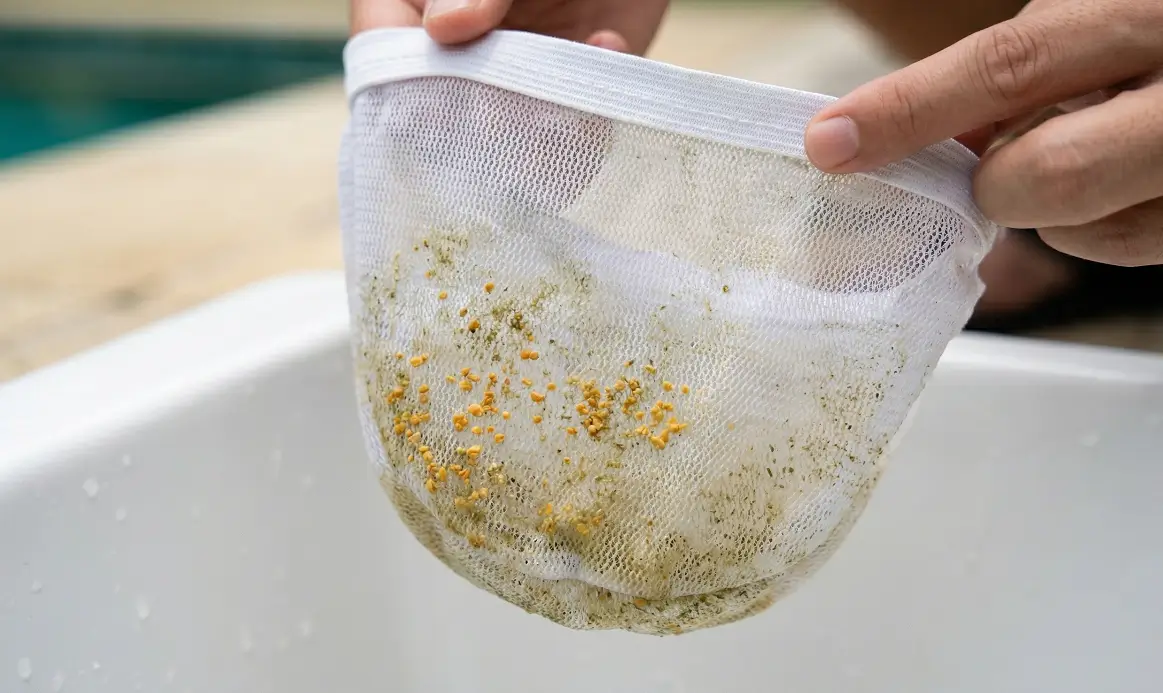
Skimmer socks are especially good at trapping the kind of debris that drives people to forums in the first place: spring pollen, cottonwood fluff, pet hair, and the fine dusty leftovers you can get after an algae cleanup. Pollen alone spans a wide size range, commonly reported around 10 to 110 microns, which helps explain why it can be both visible on the surface and still “fine enough” to be annoying in the system.
Dead algae debris can be even trickier because it often behaves like powder. Research on swimming pool water filtration notes that removing smaller particles is a real challenge compared to larger ones, which is why fine debris can linger and keep water hazy.
From a real world owner standpoint, the community pattern is consistent: people reach for socks when pollen is heavy, when a robot skimmer basket is filling fast, or when they want to keep “the tiny stuff” out of the pump basket.
Are Skimmer Socks Worth It? Weighing the Pros and Cons
For most pool owners, Skimmer Socks are worth it for one reason: they are a cheap first line of defense that can noticeably reduce how fast your main filter loads up.
But the forums are also right about the catch. The same fine mesh that traps micro debris can clog quickly during heavy pollen days or storms. If you do not monitor it, you can restrict water flow, and restricted water flow can become expensive.
Here is the honest tradeoff view.
Pros and Cons Comparison Table
The Pros (Why You Need Them) |
The Cons (The Hidden Dangers) |
Protects the main filter (reduces backwashing and cartridge cleaning) |
High risk of clogging (if not emptied frequently) |
Catches micro debris (pollen, hair, fine dirt, dead algae) |
Can cause “pump starvation” (ruining the pool pump motor) |
Inexpensive (highly cost effective pool hack) |
Requires constant monitoring (adds a daily chore during high pollen seasons) |
Improves water clarity (keeps the water polishing system efficient) |
Flimsy material (can rip and dump debris back into the line) |
The overall community consensus tends to land here: they work well, they are cheap, and they are most useful during short intense seasons, but you must check them often.
How a Clogged Sock Causes Pump Starvation
This is the one warning that matters most.
Your pool pump is basically a water moving machine. It depends on a steady supply of water coming from the skimmer line and or main drain line. If a Skimmer Sock becomes packed with pollen and debris, it can act like a plug. Water flow into the pump drops sharply.
When flow drops, a pump can struggle to stay primed, pull in air, or run with too little water moving through it. In pump engineering terms, running a centrifugal pump “dry” or with inadequate liquid can quickly overheat components and damage the seal because pumped water helps lubricate and cool the seal faces.
Pool owners describe the same outcome in plain language: if you let a clogged sock restrict suction for long enough, you risk the pump running poorly or running dry.
Practical safety framing, according to basic circulation guidance: if your recirculation system is not moving water properly, that is not a “wait until next weekend” situation. It is a fix it now situation.
How Trapping Micro Debris Extends Main Filter Life
Now the good news, because this is why people love skimmer socks.
When you trap pollen, hair, and fine debris at the skimmer basket, your pump basket stays cleaner and your main filter does less of the “gross, sticky, fine particle” workload. That usually shows up as slower pressure rise and fewer deep cleans, especially during peak pollen or after a cleanup event.
This matters because fine debris is exactly what tends to stress a main filter. The smaller the particles, the more challenging removal becomes, and the more quickly filter media can load up.
If you are dealing with fine algae dust after treatment, this Aiper guide on removing tiny algae and algae dust from your swimming pool explains why tiny particles can slip through standard filtration and why pre capture steps can help.
And if your main filter is already taking a beating, here is a practical refresher on easy steps to backwash your pool filter properly so you can keep flow healthy while you experiment with socks.
The DIY Route: Can You Use a Regular Sock?
People try it because the idea is simple: add a fine layer, catch fine debris.
But not every “sock” is a good idea for a pump system, because water flow matters more than most people expect.
Why Cotton Socks Don’t Work
A thick cotton footwear sock is a hard no for most pools.
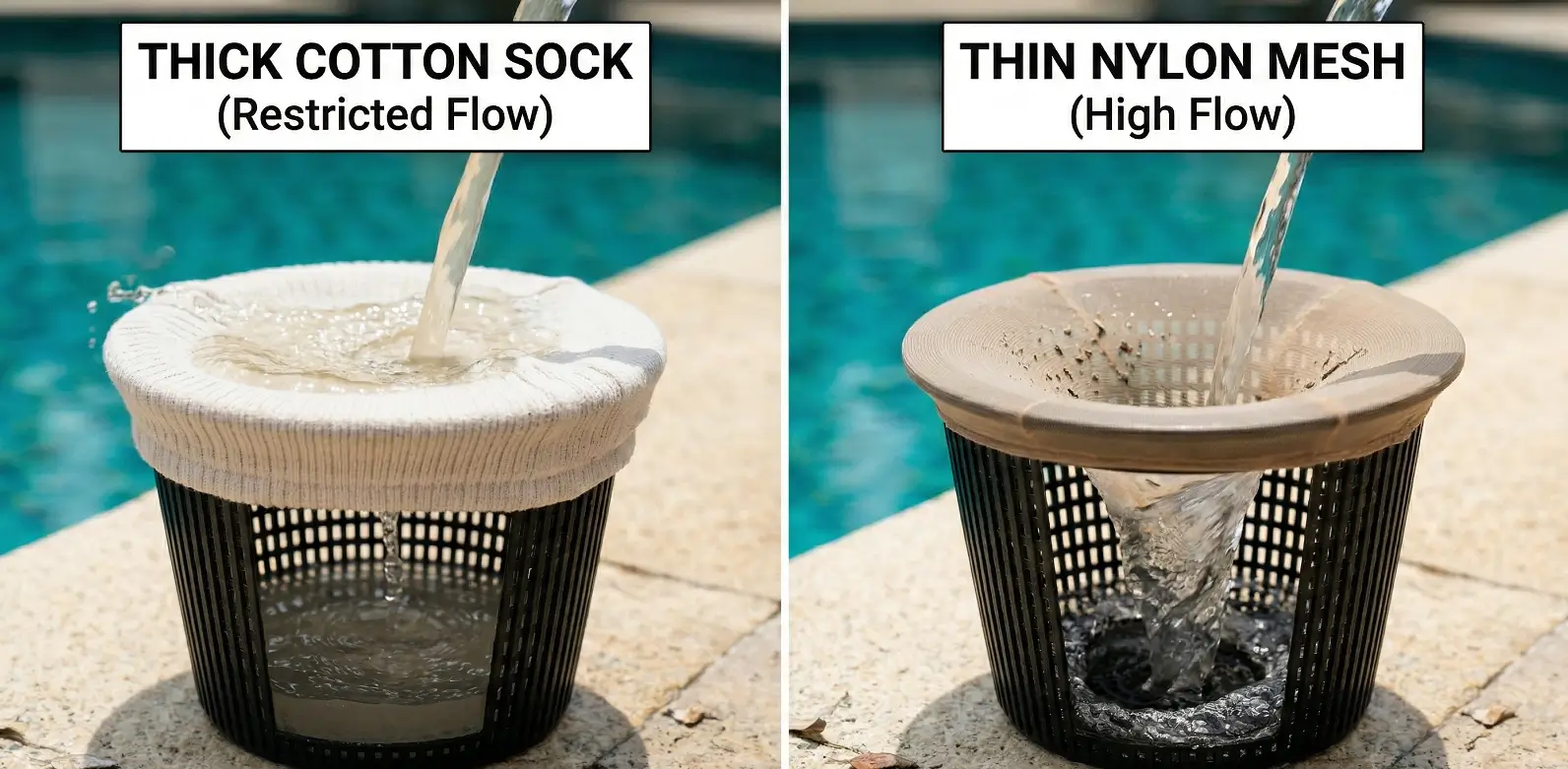
Cotton fabric is thick, absorbs water, and can restrict flow fast when it starts loading up with debris. It can also shed lint and fibers. The core issue is not brand or price, it is physics: finer and thicker material increases resistance, and resistance at the suction side of a pump is exactly what you do not want.
If you want a DIY approach, the safer direction is thin nylon style mesh that behaves more like a filter liner and less like a wet towel.
The filtration principle is well known: the finer the filtration, the more likely you are to create a pressure drop as the material loads with debris.
Pantyhose and Hairnets: The Forum Favorites
This is where the forums are actually useful.
Many pool owners use cheap nylon pantyhose or disposable food service hairnets as a skimmer basket liner. The nylon is thin, it stretches over baskets easily, and it catches a surprising amount of pollen and fine debris for very little money.
There is also an unintuitive upside to hairnets: they can tear if neglected, which is not ideal, but some owners prefer that failure mode over a fully plugged sock that restricts flow for too long.
If you go the DIY route, treat it like a real skimmer sock. Same rules, same monitoring.
How to Use and Maintain Skimmer Socks
A Skimmer Sock only helps if it stays breathable.
If it clogs, it stops being a pre filter and starts being a flow restriction. The goal is to make sock maintenance easier than main filter maintenance, not to trade one headache for another.
How to Install on Inground vs. Above Ground Pools
The install is simple, but you want it secure so it does not slip into the plumbing.
- Turn the pump off before opening the skimmer and removing the basket.
- Stretch the sock over the skimmer basket rim like a liner, then seat the basket back in place.
- Make sure the sock material is not bunched up in a way that could get pulled downward.
- Turn the pump back on and watch flow for a moment. If suction looks weak right away, remove the sock and try a looser fit.
- For above ground pools with smaller baskets, reduce slack. Too much loose fabric can get pulled toward the outlet. Some owners fold the extra material neatly over the rim so it stays above the waterline.
If you are ever unsure about fit, err on the side of better flow. A sock that catches slightly less but keeps water moving is better than a sock that catches everything and starves the pump.
Note: Do not, under any circumstances, place chlorine tablets (pucks) inside a skimmer basket that is lined with a skimmer sock. The sock traps the dissolving chlorine, creating a highly concentrated, acidic puddle right against the thin mesh. This will rapidly eat through the material, destroying the sock. Worse, when the pump turns on, it sucks a concentrated slug of highly acidic water directly into your equipment, which can ruin your pump seals, heater cores, and internal components. Always use a dedicated floating dispenser or an inline chlorinator for tablets.
Are Skimmer Socks Reusable? (And How Long Do They Last?)
Many are reusable, within reason.
You can remove the sock, hose it out inside out, and reuse it until the elastic loosens, the mesh clogs permanently with oils, or the material starts to tear. In heavy pollen season, some owners prefer treating them as semi disposable to save time, swapping often instead of trying to fully restore a sock that is already “gross.”
There is not a universal lifespan because it depends on debris load, chlorine exposure, and how aggressively you clean them. The best rule is simple: if it looks stretched, thin, or clogged even after rinsing, replace it.
The Ultimate Setup: Passive Defense Meets Active Skimming
Skimmer socks are great passive protection, but their flaw is obvious: they sit in one place and they clog.
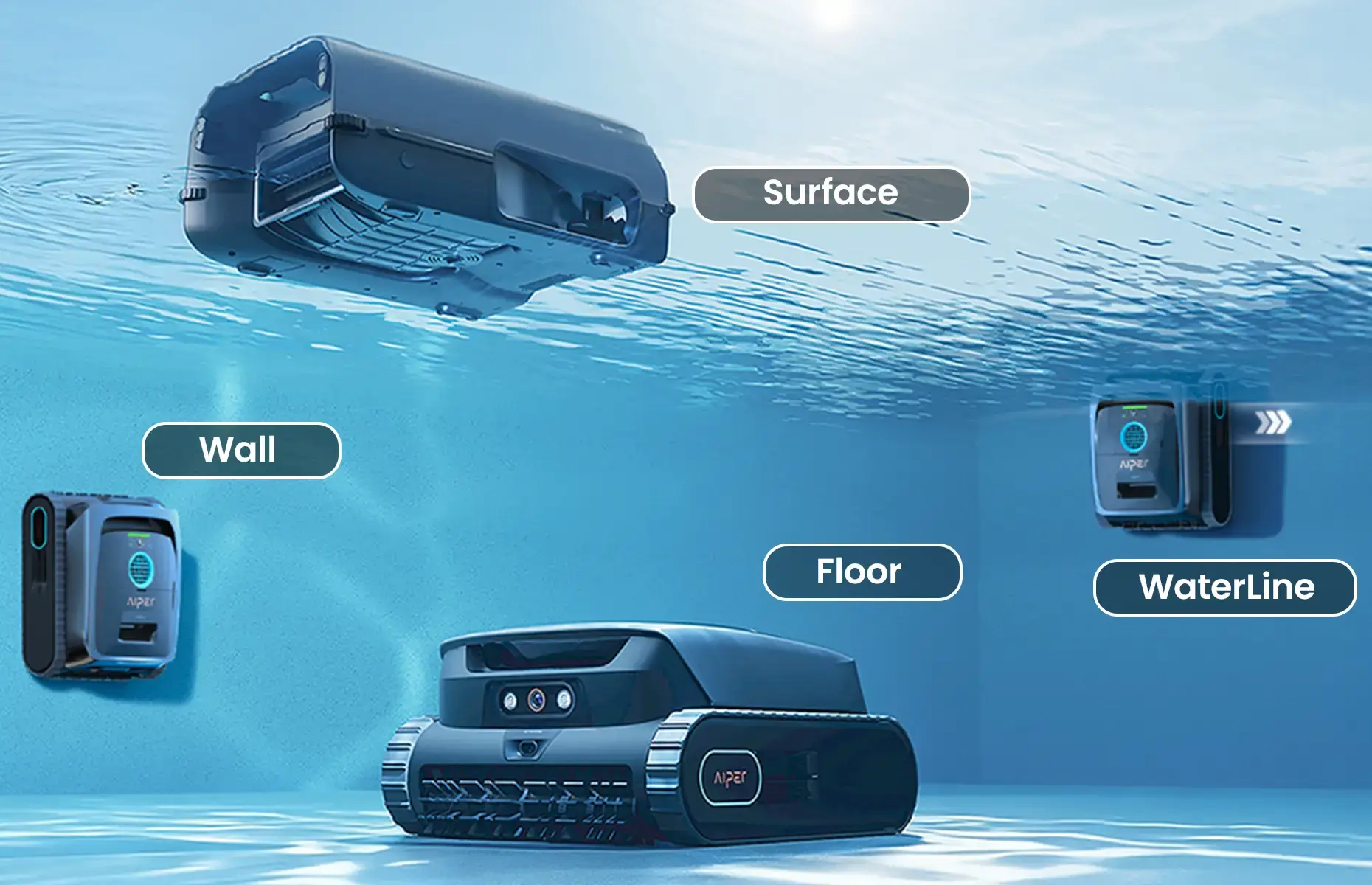
This is where active surface skimming plus robotic cleaning changes the experience. The Aiper Experts Duo is a kit built around that idea, pairing Scuba V3 and EcoSurfer S2 for top to bottom coverage, so leaves and pollen are hunted down on the surface while floor and waterline debris are handled below.
Without active surface patrol, your skimmer basket becomes the main collection point. That is when socks fill fast, clog fast, and become something you have to babysit instead of a simple safety net.
If you are comparing options across the category, you can see the full lineup of robotic pool cleaners to build a setup that matches your pool, your debris pattern, and how hands free you want your routine to feel.
Conclusion
A Skimmer Sock is one of the cheapest upgrades that can make your pool feel easier to manage. It acts like a pre filter inside your skimmer basket, trapping fine debris like pollen, hair, and dead algae dust before it reaches your pump and main filter. That often means clearer water and less backwashing or cartridge cleaning.
The tradeoff is responsibility. Fine mesh clogs, sometimes quickly, and a clogged sock can restrict water flow. If you use skimmer socks, the best practice is simple: check them often, especially during pollen surges and stormy weeks, and prioritize healthy circulation over maximum capture.
Used intentionally, a skimmer sock is not a hassle. It is a small habit that protects a much bigger system.
Explore Aiper’s robotic pool cleaners now!