
How to Clear a Blocked Pool Deck Drain and Fix Water Pooling
Most pool deck drainage issues can be resolved safely without a plumber by simply removing surface debris, locating the access point, and flushing the channel with a standard garden hose to prevent dirty water from ruining your pool.

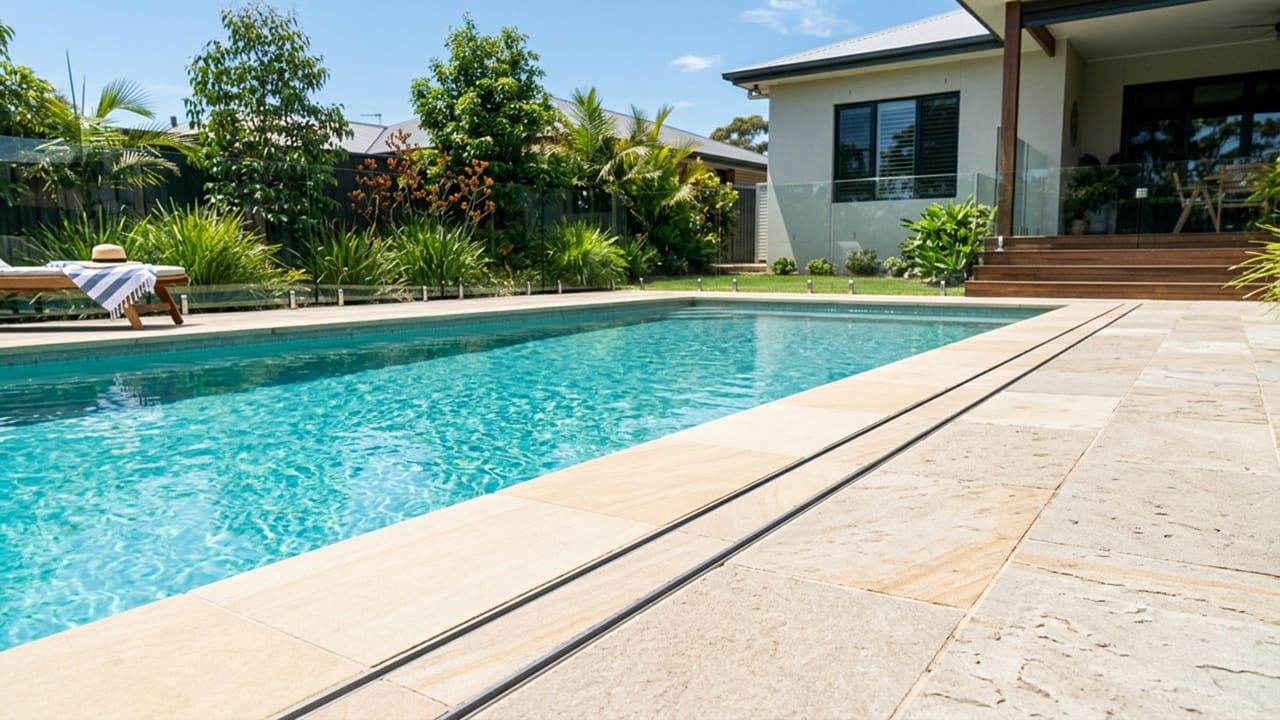
Nothing spoils a relaxing day by the pool quite like standing water around the deck. Besides creating a slip hazard, blocked drains can allow dirty runoff to wash back into the pool, bringing leaves, soil, and other contaminants with it.
According to good drainage practices used throughout the construction industry, surface water should always be directed away from the pool and surrounding structures to help prevent water damage and unnecessary maintenance.
In many cases, you won’t need to call in a professional straight away. Once you’ve worked out where the blockage is and can reach the drain safely, clearing it is often something you can tackle yourself with a few basic tools.
If you’ve cleaned everything out and water is still sitting on the deck, there’s probably something else going on. A poor slope, an awkwardly positioned drain or even damaged pipework could be stopping the water from draining properly.
This guide explains how to clear pool deck drainage (slots), improve your pool deck drainage system, and troubleshoot common drainage around pool deck problems. It focuses only on surface drainage and does not cover underwater pool suction drains.
What Type of Pool Deck Drain Do You Have?
| Drain type | Description | Cleaning tip |
|---|---|---|
| Slot drains | A narrow opening hides the drainage channel below. Some systems include inspection points or access boxes. | Never force open fixed slot sections. Use the designed access point if available. |
| Channel drains with removable grates | Surface water flows through removable grates into a drainage channel. | Lift the grate carefully and remove trapped debris by hand. |
| Linear and strip drains | Long drains installed along the pool edge or paving. Some have removable end caps. | Check both ends for clean-out points before flushing. |
| Perimeter and landscape drains | Installed around the outside of the deck to carry runoff away. | Inspect the outlet as well as the visible drain channel. |
Signs Your Pool Deck Drain Is Blocked
Before grabbing your tools, check whether you’re dealing with a genuine blockage or simply heavy rainfall.
- Water sits around the drain long after rain or pool use.
- The drain overflows instead of carrying water away.
- Water drains much slower than it used to.
- You notice unpleasant smells, slime, or dark sludge inside the channel.
- Water starts flowing back towards the pool instead of away from it.
If several of these signs appear together, there’s a good chance your drain needs cleaning.
What Commonly Blocks Pool Deck Drainage?
Most blockages develop gradually rather than overnight. Common causes include:
- Gum leaves, seed pods, pine needles, grass clippings and other garden debris.
- Soil, sand and fine sediment washing into the drain after rain.
- Hair, insects and general poolside debris.
- Algae, biofilm and slime growing inside damp channels.
- Tree roots entering damaged underground pipes.
- Leftover grout, paving sand, concrete slurry or tile adhesive after construction work.
In many Australian backyards, eucalyptus leaves and storm debris are among the biggest causes of blocked slot drains.
What You Need to Clean a Pool Deck Drain
Basic Cleaning Tools
Most homeowners already have everything needed for routine maintenance:
- Gloves
- Safety glasses
- Stiff brush
- Small scoop or narrow scraper
- Bucket
- Garden hose
- Wet-and-dry vacuum if available
Tools for Removable Grates or Covers
Some pool deck drains have covers that you can remove with a key or simple tool. Before you open them, read the instructions first so you don’t damage the drain.
Safety Precautions
It’s worth wearing gloves to protect your hands from dirt, sludge and sharp debris, and safety glasses can help if you’re flushing the drain with a hose. If you’re using a wet-and-dry vacuum or any other electrical equipment, keep it well away from standing water.
Also, remember that this guide is only for surface deck drains. Underwater pool drains and suction fittings should never be cleaned or taken apart yourself.
How to Clear a Blocked Pool Deck Drain Step by Step
Step 1: Remove Debris From the Deck Surface
Start by sweeping leaves, soil and loose material away from the drain. This stops extra debris from entering the channel while you’re cleaning.
Step 2: Find the Drain Outlet and Access Point
Before you start flushing the drain, spend a few minutes finding where the water flows out. Depending on the type of drain you have, there may be a removable grate, an inspection box, an end cap or another clean-out point. Having access to these areas makes it much easier to clear any trapped debris.
Step 3: Open Any Removable Covers
If your drain has a cover or grate that comes off, lift it carefully. Keep the screws in a safe place. If the drain doesn’t open, don’t force it. Some slot drains cannot be opened and may break if you try.
Step 4: Remove Built-Up Debris
Use your scoop or gloved hands to remove leaves, sludge and sediment. Empty any collection baskets before moving on.
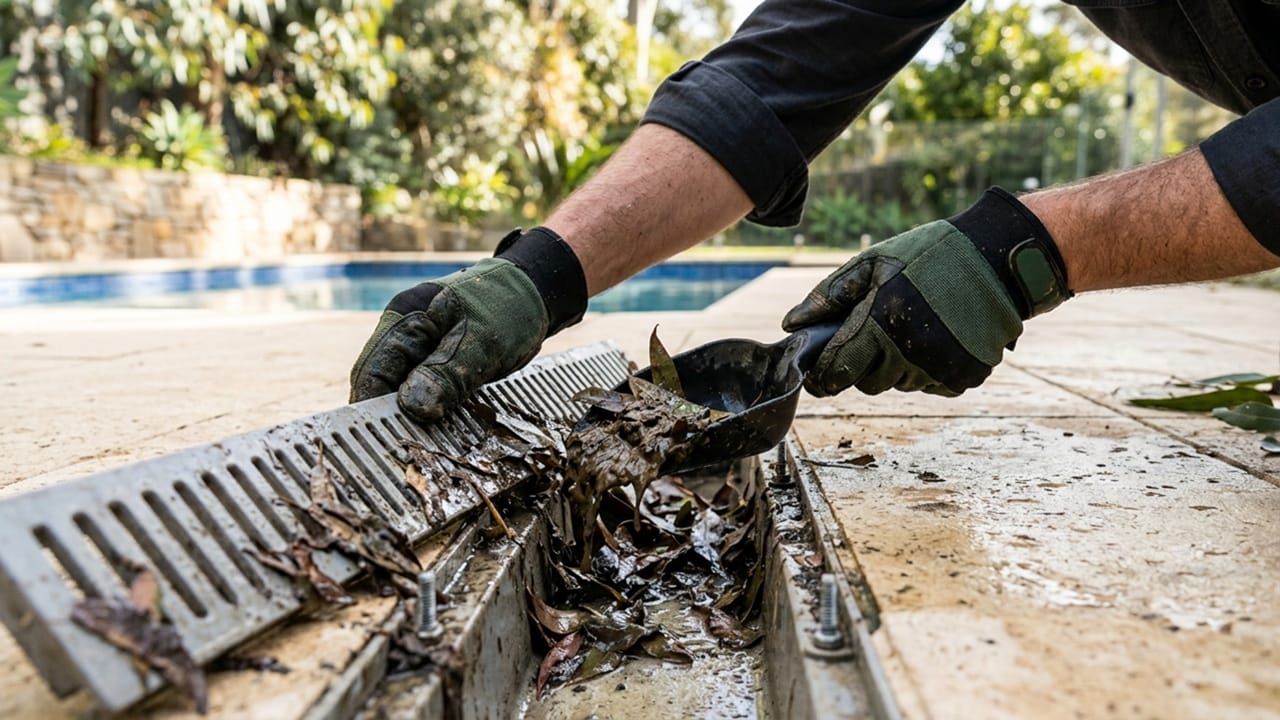
Step 5: Scrub the Channel
A stiff brush works well for loosening algae, slime, and compacted dirt. There’s no need to use sharp tools that could scratch or damage the drain.
Step 6: Flush Towards the Outlet
Use a garden hose to flush the drain in the same direction the water flows. If the water doesn’t drain and starts coming back, there may be a blockage deeper in the pipe.
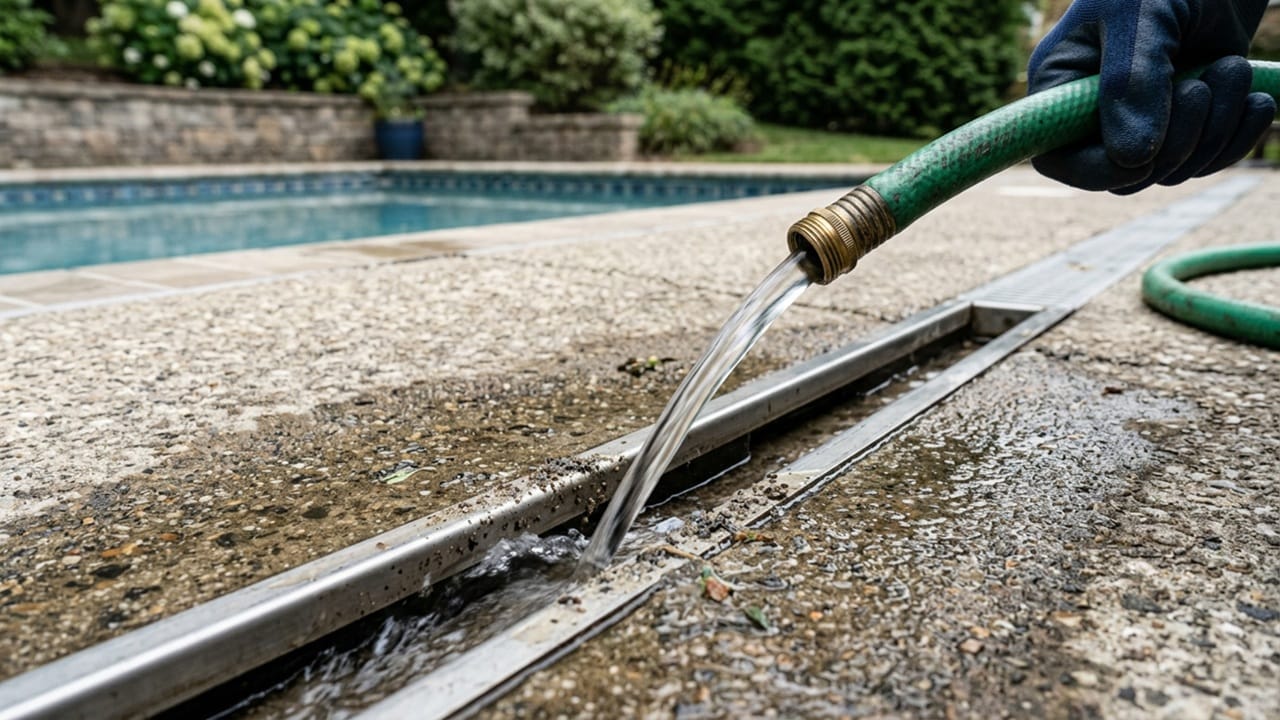
Step 7: Use a Wet-and-Dry Vacuum
If there is still dirt left inside, a wet-and-dry vacuum can help remove it. It cannot fix broken pipes or hard blockages.
Step 8: Test the Drain
Replace any covers securely before pouring water across the deck. The water should flow smoothly into the drain without pooling nearby.
How to Clean Narrow Pool Deck Drainage Slots
Cleaning hidden slot drains takes a slightly different approach because the opening is much narrower.
Locate the Hidden Access Section
Start by locating the inspection point or wider access section. Many slot drains include a clean-out at one end or near a junction box.
Flush from the Access Point, Not Only the Visible
Instead of pouring water straight into the visible slot, flush from the access point whenever possible. This gives trapped leaves and sediment a better chance of reaching the outlet.
Clear Debris from the Outlet End
If the slot doesn’t appear to open, don’t force it. Check the installation guide or contact the installer before attempting to dismantle any fixed sections.
Can You Use a Pressure Washer?
When Low-Pressure Flushing May Help
A pressure washer can help remove light dirt from some drainage systems, but it isn’t always the best option.
Risks of Using Too Much Pressure
A garden hose is often enough to wash away leaves, dirt and small bits of debris. Using too much pressure can cause problems. It may push the blockage deeper into the pipe, damage the drain, or splash dirty water back onto the pool deck.
For most routine maintenance, a standard garden hose is the safer first choice.
What Should You Avoid Putting Down a Pool Deck Drain?
Avoid using:
- Caustic Chemical Drain Cleaners: Chemical drain cleaners that may damage plastics, seals and surrounding landscaping.
- Bleach and Strong Cleaning Chemicals: Bleach or strong cleaning chemicals that can reach stormwater systems or the pool.
- Sharp Tools: Sharp metal tools that may puncture drain components.
- Large Volumes of Debris: Large piles of leaves or sediment that should be removed by hand instead of flushed further into the pipe.
Why Is Water Still Pooling After Cleaning?
If you’ve already cleaned the drain but puddles are still forming, the blockage might not be the real issue.
Sometimes the problem lies in the way the drainage system was installed or how the deck has settled over time.
A few things could be causing it, including:
- The Deck Does Not Slope Towards the Drain: The deck isn’t sloping towards the drain, so water has nowhere to flow.
- The Drain Sits Too High: The drain sits slightly higher than the surrounding paving, allowing water to collect before it can enter the channel.
- The Drain is Too Small for the Area: The drain isn’t large enough for heavy rainfall.
- The Outlet Pipe is Blocked or Damaged: The outlet pipe is blocked, damaged, or partially collapsed.
- The Deck or Paving has Settled: Ground movement has created new low spots.
- The Drain Discharges to the Wrong Location:The drainage outlet isn’t discharging properly.
These issues usually require a closer inspection than routine cleaning alone.
When Should You Call a Professional?
Some drainage issues go beyond what a garden hose or wet-and-dry vacuum can fix. If you’ve cleaned the drain but the problem keeps coming back, it may be time to bring in a professional.
Water Still Backs Up After Flushing
If you’ve cleared out the leaves and dirt but the water still isn’t draining properly, the blockage may be deeper inside the pipe where you can’t reach it. At that point, it’s usually worth calling a licensed plumber. They have the right equipment to find the blockage and clear it without damaging the drainage system.
The Drain Contains Hardened Construction Material
Concrete slurry, grout, paving sand and tile adhesive can harden inside drainage channels. Trying to chip these materials out yourself may damage the drain, so professional removal is usually the safer option.
Roots Keep Returning
Tree roots can work their way into cracked pipes and keep causing blockages. If you’re clearing the same drain every few months, the pipe may need repairing or replacing rather than cleaning.
The Pipe May Be Crushed or Collapsed
Underground pipes can crack, collapse or shift over time. Drainage contractors often use CCTV drain cameras to inspect the pipework without digging up the deck.
Pooling Is Caused by Poor Drainage Design
Sometimes the issue isn’t the drain at all. If the deck doesn’t slope towards the drain or sections of paving have settled, water will naturally collect in low spots.
According to common building and drainage practices, surface water should flow away from structures to reduce the risk of water damage. Correcting the fall of the deck may require a landscaper, pool builder or drainage specialist.
You Can’t Find an Access Point
Not every slot drain has an obvious access point. Some are designed with hidden inspection openings that can be easy to miss if you’re not familiar with the system.
If you can’t find one, it’s best to check the installation guide or get in touch with the original installer rather than trying to pull the drain apart yourself.
How to Prevent Pool Deck Drains From Blocking Again
Regular maintenance is much easier than dealing with a completely blocked drain.
Sweep the Pool Deck Often
Leaves, dirt and mulch quickly find their way into narrow drains. Sweeping the deck every few days, especially during autumn, helps stop debris from building up.
Clean Up After Storms
Strong winds and heavy rain can fill drains with gum leaves, twigs and seed pods overnight. A quick inspection after bad weather can prevent bigger problems later.
Keep Garden Beds Away From Drain Openings
Loose mulch, soil and decorative stones often wash into drains during rain. Keeping garden beds tidy reduces the amount of material entering the channel.
Check the Drain Outlet
It’s easy to focus on the visible drain and forget about where the water leaves the system. Make sure the outlet stays clear throughout the year.
Clean Before Summer
Before summer starts, clean your pool deck drain. It’s easier to remove a small blockage now than fix a big one later.
Act Early
If you notice water draining more slowly than usual, don’t ignore it. Small blockages are normally much quicker to remove than fully blocked pipes.
How Pool Deck Drainage Supports a Cleaner Pool Area
Reduce Dirty Runoff Near the Pool Edge
Well-maintained drainage around the pool deck does more than prevent puddles. It also helps stop dirty runoff carrying soil, leaves, and organic matter back into the pool after rain.
Keep External Drainage and In-Pool Cleaning Separate
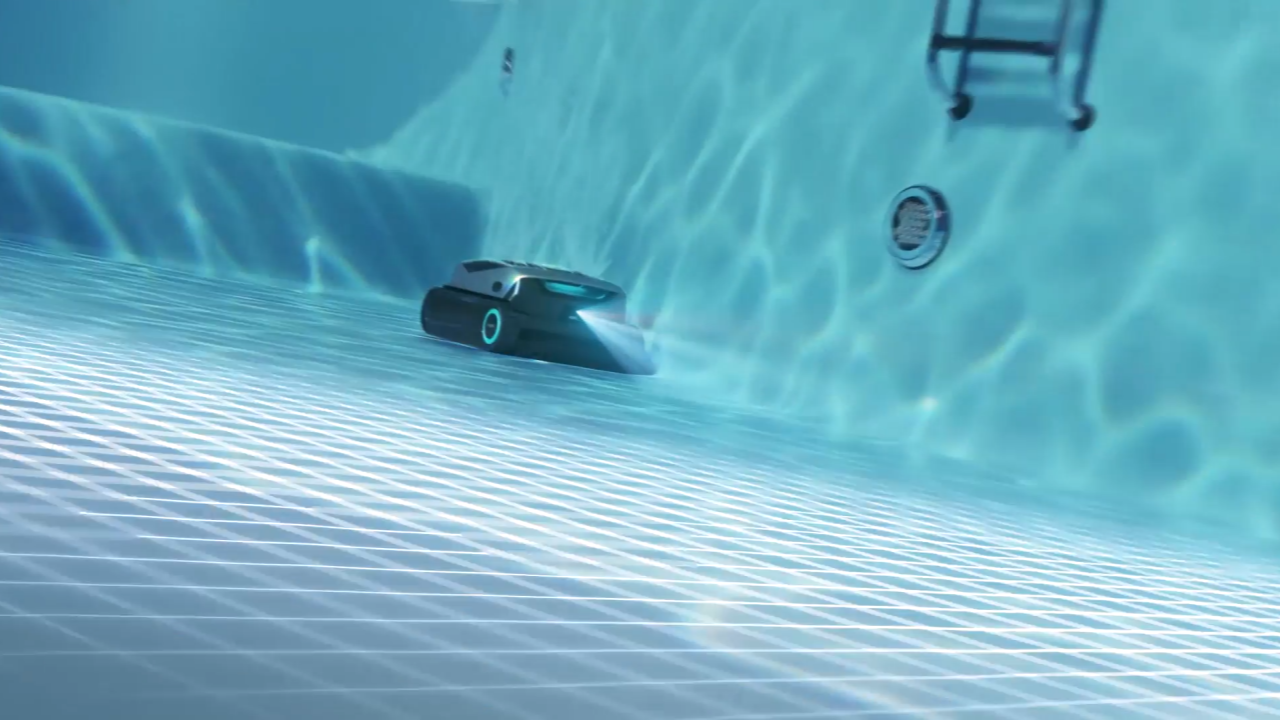
Good deck drainage and pool cleaning work together, but they do different jobs. Drainage channels manage water outside the pool, while robotic pool cleaners help remove suitable debris from inside the pool and clean underwater surfaces.
Make Pool Maintenance More Manageable
If your goal is to spend less time maintaining the pool, the Aiper Scuba X1 Pro Max is designed to clean multiple pool surfaces using intelligent navigation.
Instead of manually vacuuming the pool after every storm or busy weekend, it helps automate routine in-pool cleaning. Without regular cleaning, debris can build up on the floor and walls, making pool maintenance more time-consuming.
Conclusion
Learning how to clear pool deck drainage (slots) doesn’t have to be complicated. In most cases, the process is simply identifying the drain, removing accessible debris, locating the outlet, flushing the system and checking that water flows away properly.
Avoid forcing open fixed slot drains or relying on harsh chemical cleaners, as both can cause unnecessary damage. If water continues pooling after the drain has been cleaned, the cause is often related to deck slope, damaged pipework or drainage design rather than a simple blockage.
Keeping your drains clear helps protect your pool area, while regular in-pool cleaning keeps the water looking its best. Together, they make maintaining your pool far easier throughout the year.