
How to Safely Add Muriatic Acid to Your Pool
Always run your pool pump on high speed, wear protective gear, and add muriatic acid slowly via direct pour or bucket dilution. Dose in small increments, wait and retest pH to avoid corrosion, surface damage and unsafe acidic water.

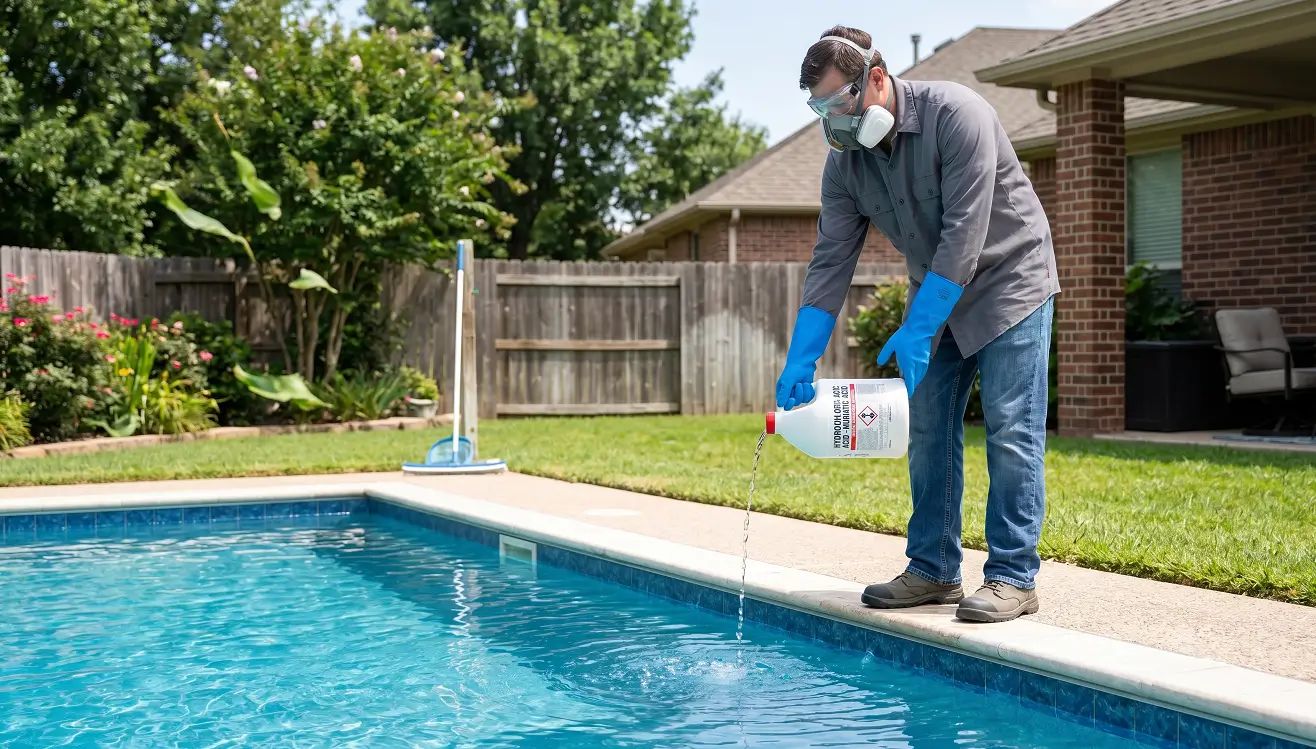
If you are dealing with high pH or high total alkalinity, learning how to add muriatic acid to pool water is one of those tasks that feels intimidating for a reason. Muriatic acid is highly corrosive, and the fumes can be sharp. The goal is not to "be brave." The goal is to be controlled, protected, and precise.
Done correctly, muriatic acid is a normal part of balancing pool water. It helps bring pH back into the comfortable range and can also help lower total alkalinity over time. Done carelessly, it can irritate your eyes and lungs, damage clothing, and in some pools it can etch surfaces or weaken equipment if it is poured in the wrong place.
You can handle this safely at home. You just need to respect the chemical, confirm your dose, and use a slow technique with strong circulation.
For deeper context on why acid is used and what it changes in your water, see this guide on what muriatic acid does for a pool.
The Reality of Muriatic Acid: Fumes, PPE, and Common Sense
If you have ever opened a jug and seen a white vapor in humid air, you are not imagining things. That visible "smoke" is acidic vapor and moisture in the air reacting. It is one reason experienced pool owners treat acid handling like a focused, short job, not something you casually do while chatting.
According to CDC guidance on chemical safety, limiting inhalation exposure and preventing eye and skin contact are key priorities when handling corrosives like strong acids. In pool terms, that translates to basic personal protection and smarter body positioning.
Wear safety glasses or splash goggles and chemical resistant gloves. Closed toe shoes and long sleeves help, too. Some people choose a respirator, but at minimum you should work in open air, stand upwind, and keep your face back.
The single best habit is simple: never lean directly over the jug or bucket. Keep your head upright, arms extended comfortably, and your movements slow.
Critical Rules to Follow Before Dosing Muriatic Acid in Pools
These are non-negotiables. They protect you, your pool surface, and your pool equipment.
Rule 1: The Pump Must Be Running (High Speed)
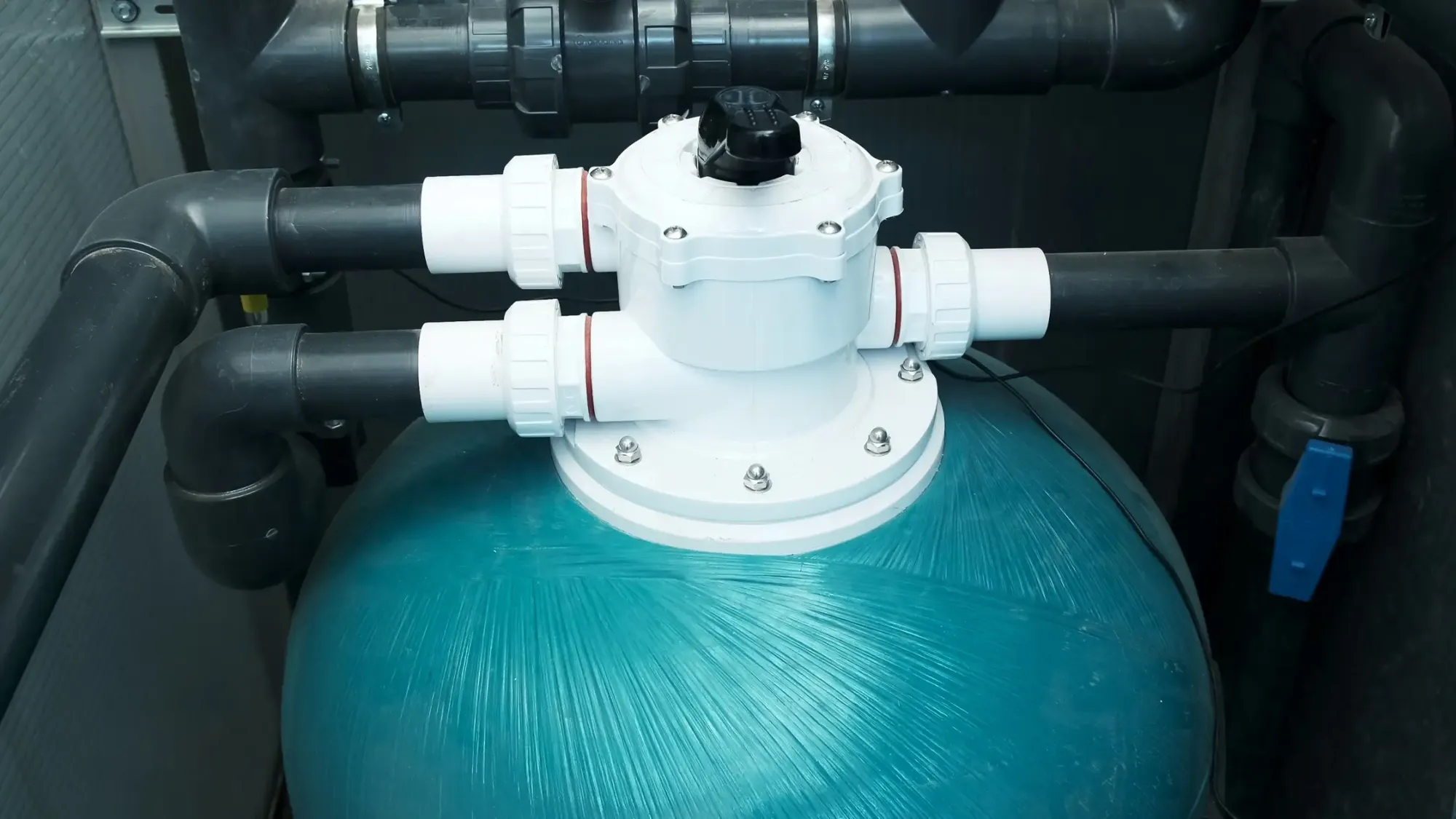
Muriatic acid is denser than pool water. If circulation is off, a concentrated stream can sink and sit on the floor before it mixes. That can damage surfaces, especially plaster finishes, and it can also stress vinyl liners if a strong pocket of acid lingers against the material.
Run the pump during dosing, and aim for high speed if your system has multiple speeds. Good circulation helps the acid disperse quickly, which is the safest outcome for swimmers and for surfaces.
Rule 2: Always Acid into Water (Never Water into Acid)
This is a core lab safety rule for a reason. Adding water to concentrated acid can cause heat and splashing that throws acid upward. Adding acid into a larger volume of water reduces the chance of a dangerous splash reaction.
In practical pool owner terms, it means you either pour acid directly into the pool water in a controlled way, or you add acid into a bucket that already contains pool water.
Rule 3: Never Pour Into the Skimmer
Do not pour muriatic acid into the skimmer to "let the plumbing mix it."
A strong slug of acid moving through the circulation line can be harsh on equipment and components. It can also create very low pH water passing through sensitive areas before it has a chance to dilute. Add acid to the pool itself, with the pump running, so it mixes in the full body of water immediately.
Also important: never mix acid with chlorine products, and never add chemicals together in the same container. Follow each product label and allow time for mixing between additions.
How to Add Muriatic Acid (Two Community Tested Methods)
Both methods below can work. The right choice depends on your comfort level, your pool surface, and how cautious you want to be about concentrated acid contacting the floor.
Method 1: The "Low & Slow" Direct Pour (Fastest & Most Popular)
This is the most common approach among experienced pool owners because it is quick and keeps the job time short.
Start with the pump running and return jets pushing water strongly. Move to the deepest area of the pool, or the area with the strongest circulation, and stay away from the skimmer opening.
Keep the jug low and stable. A popular trick is to rest the bottom edge of the jug just at the water surface so your arms are not holding all the weight and you are less likely to jerk or splash. Then pour slowly, like you would pour milk, in a thin stream. Try to pour in front of a return jet so the flow helps spread the acid immediately.
When you are done, keep the pump running to fully distribute the chemical.
Method 2: The Bucket Dilution Method (Maximum Surface Protection)
If you are nervous about etching or bleaching a surface, this method reduces the concentration that hits the pool at any one spot.
Use a clean plastic 5 gallon bucket. Fill it about two thirds with pool water first. Then carefully measure your acid dose and add the acid into the bucket. Keep your face back and stay upwind, since you will be near the fumes for longer than a quick direct pour.
Once diluted, you can slowly pour the bucket into the pool water while walking along the perimeter, keeping the pour low to reduce splashing. Rinse the bucket in the pool when finished, then store it for pool chemical use only.
How Much Muriatic Acid Should You Add?
If you are searching how much muriatic acid to add to pool water, the safest answer is: it depends on your pool volume, your current pH, your total alkalinity, and exactly what kind of acid you bought.
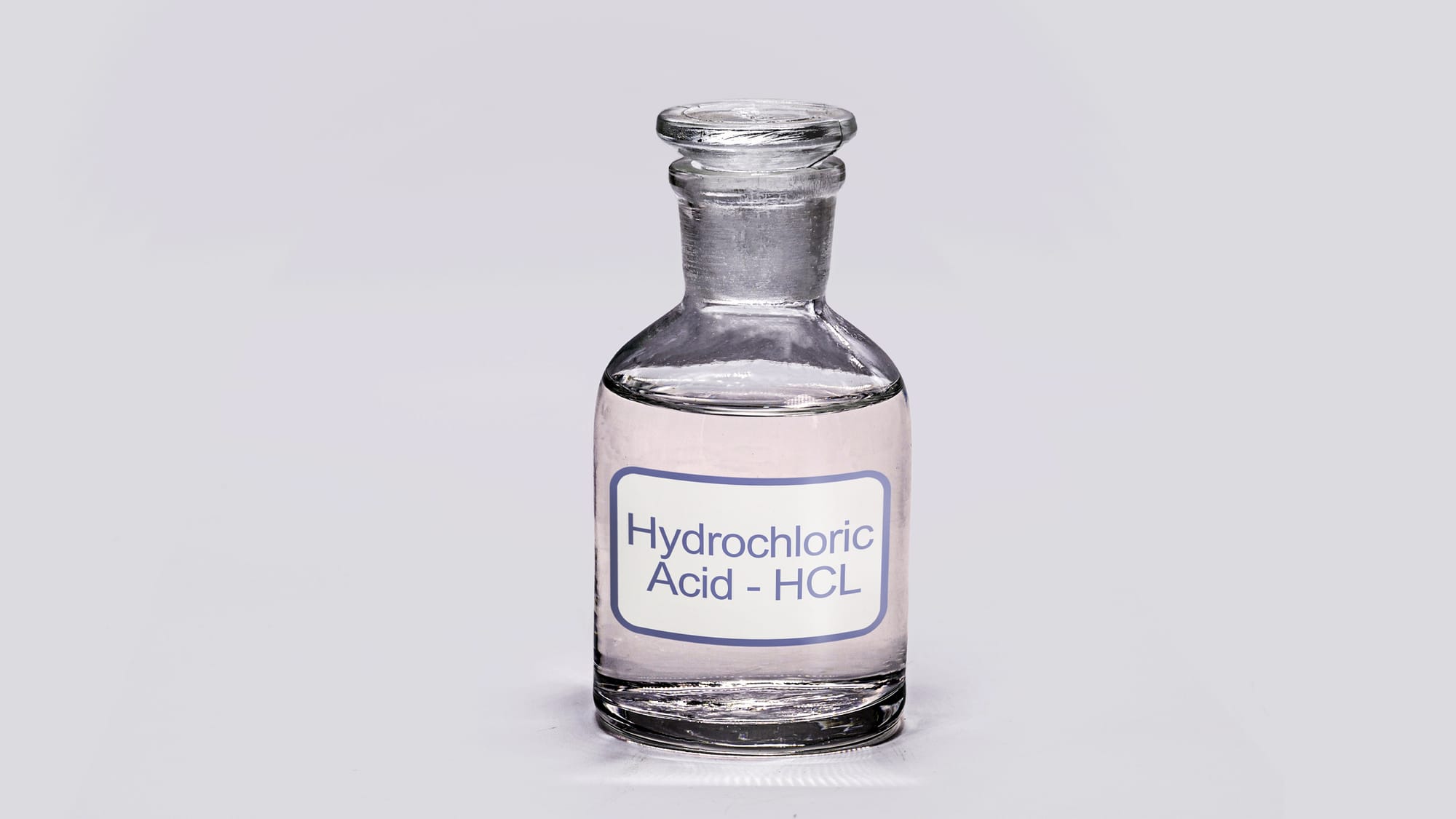
Before pouring anything, you must check the concentration of your product. Muriatic acid sold for pools generally comes in two strengths:
- Standard Strength (31.45% or 20° Baume): This is the traditional, highly concentrated, and highly corrosive form. It works fast but produces strong fumes.
- Low-Fuming / "Half-Strength" (15%): Designed for safer handling, this produces significantly fewer vapors. Because it is roughly half the strength of standard acid, you will need to use twice as much to achieve the same pH drop.
Measuring vs. Eyeballing
Measuring is safer for water balance accuracy, but it can increase the time your jug is open and you are exposed to fumes. Some experienced owners learn to estimate portions of a jug to move quickly, but that skill only makes sense once you have a predictable pool and know how your water responds.
If you are newer, measure. Have your measuring container ready, stand upwind, and cap the jug again immediately. Most importantly, do not treat dosing like cooking. Your pool is a big chemistry system, and small changes can swing pH faster than you expect.
Standard Muriatic Acid Dosage Chart (Target pH: 7.4)
To give you a safe starting point, here is a baseline reference chart using Standard Strength (31.45%) Muriatic Acid in a pool with average Total Alkalinity (around 100 ppm). Note: If you are using 15% acid, double these amounts.
| Pool Volume | Current pH | Suggested Starting Dose (31.45%) |
| 10,000 Gallons | 8.0 | ~16 oz (473 ml) |
| 10,000 Gallons | 8.2 | ~24 oz (710 ml) |
| 20,000 Gallons | 8.0 | ~32 oz (946 ml) |
| 20,000 Gallons | 8.2 | ~48 oz (1,420 ml) |
(Important: Total Alkalinity heavily influences how much acid is needed. Always start with these partial doses, which brings us to the golden rule of dosing...)
The "Dose, Wait, and Retest" Approach
This is the method that prevents panic later.
Start by calculating a dose using your test results and a pool chemistry calculator, or by following the dosage guidance on the product label. For a common reference point, many pool owners start with a partial dose for a 10,000 gallon pool, then adjust, because total alkalinity can change how strongly pH responds.
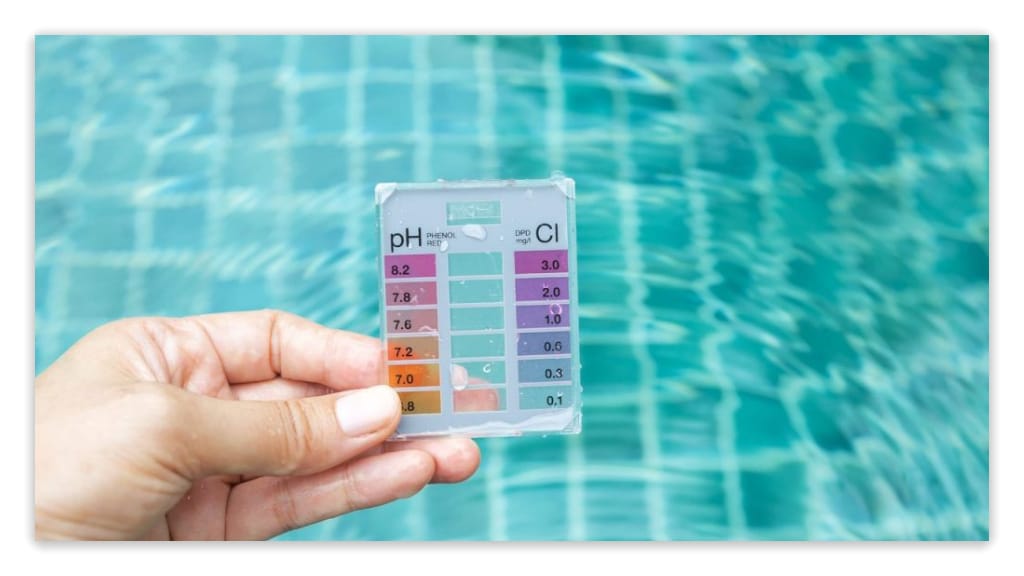
After you add acid, keep the pump running and wait 30 to 60 minutes, then retest pH. If you are still high, repeat with another partial dose instead of dumping in a large amount at once.
If you need a refresher on testing basics and reading results, use this pool water testing walkthrough.
Why pH Balance Protects Your Pool Investment
Balanced water is not just about "ideal numbers." It is about protecting surfaces, keeping equipment happier, and making day to day pool care easier.
When pH runs high, calcium scale is more likely to form, especially in harder water. Scale can leave rough deposits on walls and floors, clog up areas where water flows, and make the pool feel less comfortable. When pH runs too low, water becomes more aggressive and can contribute to corrosion and surface wear. Industry guidance commonly targets a pH range around 7.2 to 7.8 for swimmer comfort and equipment protection, but always follow your test kit and pool manufacturer recommendations.
Preventing Scale and Protecting Equipment
When pH stays high, scale and roughness can build up, and cleaning starts to feel never ending. Keeping water balanced supports a smoother pool surface, which is ideal for modern maintenance tools like cordless robotic cleaners that can move consistently and scrub efficiently. Scale and rough patches can hold debris and algae, and they can make routine cleaning take longer.
If you want to reduce hands on scrubbing after you do the chemistry work, a cordless option like the Aiper Scuba V3 can help take floor cleaning off your weekly list.
And if you are comparing styles and capabilities across the lineup, you can browse Aiper's full collection of robotic pool cleaners here.
Conclusion
Adding muriatic acid is one of those pool tasks that feels intense, but it becomes straightforward when you follow a calm routine. Protect yourself from fumes and splashes, stand upwind, and keep your face away from the container. Keep the pump running so acid disperses fast, and never pour acid into the skimmer.
For dosing, resist the urge to "fix it in one shot." Dose, wait, and retest. That single habit prevents overshooting your target and keeps your pool safer for swimmers and surfaces.
When your pH and alkalinity are balanced, the pool looks better, feels better, and is easier to maintain week after week.
Frequently Asked Questions
How often do you have to add muriatic acid to a pool?
It depends on your pool type, aeration, and fill water, but many pools need periodic acid additions during the swim season. Saltwater pools often require acid more frequently because the chlorine generation process tends to push pH upward over time. The best guide is your test results, not a fixed schedule.
Should the pump be on when adding muriatic acid to the pool?
Yes, the pump should be running so the acid mixes quickly and does not settle in a concentrated spot. Strong circulation also helps prevent surface damage and reduces how long low pH water exists in one area. If your pump has multiple speeds, use higher flow during dosing when possible.
How long do you let muriatic acid sit in the pool before swimming?
In many cases, owners wait about 30 to 60 minutes with the pump running, then retest to confirm pH is in a safe range. If you added a larger dose, or your pool has weaker circulation, waiting longer is a smart choice. Always follow your chemical label and pool safety guidance for your specific setup.
What should I do if muriatic acid splashes on my skin or eyes?
If muriatic acid splashes on your skin, immediately flush the area with massive amounts of clean, running water for at least 15 minutes. Remove any contaminated clothing while rinsing. If the acid splashes into your eyes, do not rub them; immediately flush them with water for a minimum of 15 minutes and seek emergency medical attention immediately.
How do I fix muriatic acid spills on a pool deck or concrete?
Do not try to hose a raw spill directly into the pool or onto your grass, as it will damage both. Instead, immediately neutralize the acid by pouring a generous amount of baking soda (sodium bicarbonate) or soda ash directly onto the spill. It will fizz and bubble aggressively. Keep adding baking soda until the fizzing completely stops. Once neutralized, you can safely dilute the area and rinse it away with a hose.
What happens if I accidentally add too much muriatic acid and the pH is too low?
If you overshoot your dose and the pH crashes (drops below 7.0), your water is highly acidic and can damage your heater and liner. Do not panic. You can naturally raise the pH by aerating the water—turn your return jets to point up at the surface and run any waterfalls or fountains. If it is dangerously low, you can chemically raise the pH and alkalinity by broadcasting soda ash (sodium carbonate) or baking soda across the surface of the pool while the pump is running.