
WiFi Sprinkler Controller vs Traditional Timer: Which One Is Right for Your Australian Garden?
WiFi sprinkler controllers auto-adjust watering via local weather & remote app control to cut 30–50% water waste vs rigid traditional timers; standard timers suit small low-maintenance gardens with manual seasonal tweaks.

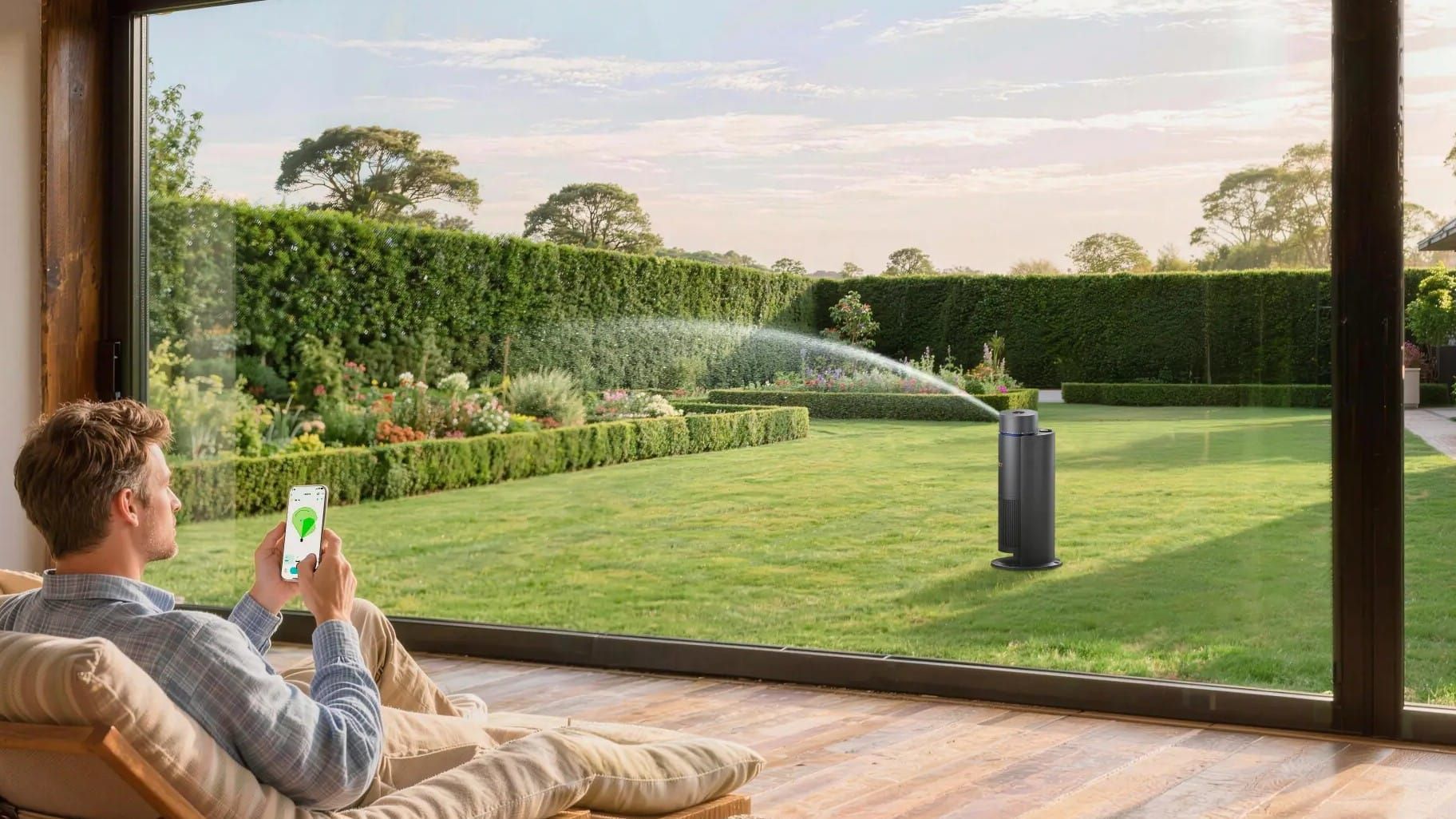
If you have a sprinkler system already running on a dial timer, the question of whether to upgrade is a fair one. Traditional timers work. They have worked for decades. But if you have ever watched your sprinklers run through a downpour, or come home from a two-week holiday to a water bill that made your stomach drop, you already know their limits. A WiFi sprinkler controller solves a specific problem: it replaces blind, fixed-schedule watering with something that actually responds to what is happening in your garden and in the sky above it.
This guide breaks down exactly what each system does, where each one earns its place, and what the real-world difference looks like for an Australian homeowner juggling water restrictions, summer heat, and the cost of living.
What a Traditional Sprinkler Timer Actually Does
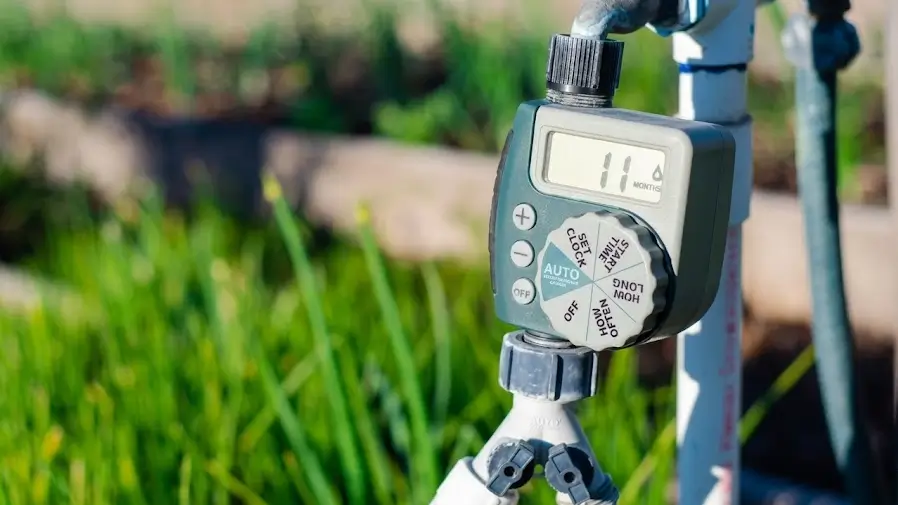
A traditional timer — the kind you mount near the tap or in the garage — is essentially an electronic clock connected to your irrigation valves. You tell it which zones to run, for how long, and on which days, and it does exactly that. Monday, Wednesday, Friday at 7am, Zone 1 for 10 minutes, Zone 2 for 15. Week after week.
That reliability is genuinely useful. Traditional timers are inexpensive, straightforward to programme, and need very little attention once set up. For a simple one or two-zone garden where the owner is happy to make seasonal adjustments manually, they do the job.
The problem is the word "manually." A traditional timer does not know it rained last night. It does not know that Tuesday's forecast is 39°C with no wind, which means your lawn will need more water than usual, not the same amount it gets in May. It does not know you are in Queensland right now and your neighbour has called to say there is standing water on the verge. It just runs its programme, on schedule, regardless of what is actually happening.
In Australia, where many councils enforce specific watering days and windows — and where summer water demand can swing dramatically week to week — that inflexibility has a real cost.
What a WiFi Sprinkler Controller Does Differently
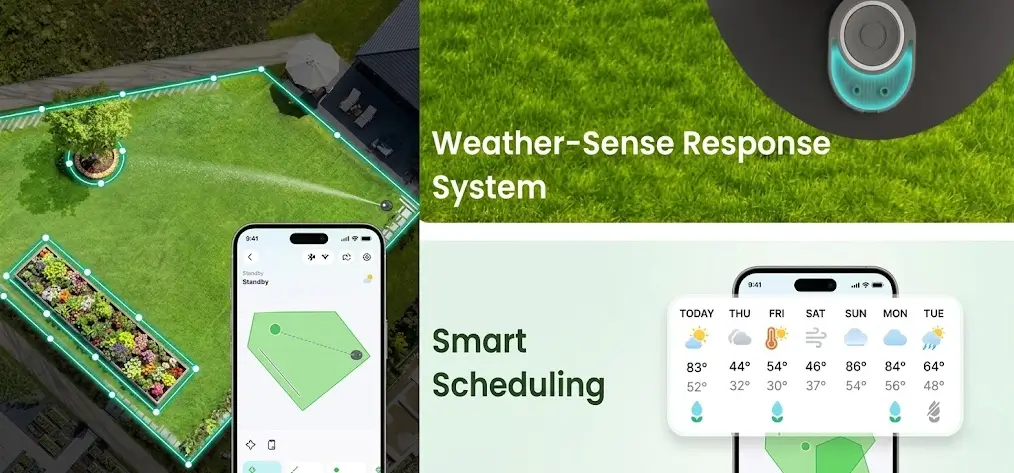
A WiFi sprinkler controller connects to your home internet and uses that connection to do several things a traditional timer physically cannot.
Weather-based scheduling. The controller pulls real-time and forecast weather data for your specific location. If rain is expected within 24 hours, it skips the scheduled cycle. If temperatures have been elevated and evapotranspiration rates are higher than normal, it can extend run times to compensate. This is not an estimate — it is a calculation based on actual local conditions.
Remote access. You control the system from your phone, anywhere. Change a zone's run time, pause the whole system, start a manual cycle, or check whether the 6am run completed normally — all from an app. For anyone who travels for work, takes school holidays, or simply does not want to be tied to the tap, this is more than convenience. It is the difference between a lawn that survives a heatwave and one that does not.
Zone-by-zone independence. Different areas of your garden have different needs. Your buffalo lawn near the fence handles shade and needs deep, infrequent watering. Your vegetable patch in full sun needs more frequent, lighter cycles. A WiFi controller manages these independently and automatically adjusts each zone's schedule based on its individual parameters.
Water restriction compliance. In most Australian states, watering is permitted within specific windows — typically before 10am and after 4pm, on allocated days of the week. A WiFi controller programmed to those windows will never water outside them, and will not need to be physically adjusted if your council updates its restrictions. You change it in the app.
Head-to-Head: The Key Differences
Feature |
Traditional Timer |
WiFi Sprinkler Controller |
|---|---|---|
Weather response |
None — fixed schedule |
Automatic: rain skip, temperature adjust |
Remote control |
No |
Full app control from anywhere |
Setup complexity |
Low |
Moderate (app-guided, typically 20–45 min) |
Zone management |
Basic |
Independent schedules per zone |
Water restriction windows |
Must be manually programmed |
Programmable; easily updated via app |
Seasonal adjustment |
Manual |
Automatic or one-tap |
Leak and fault alerts |
None |
Available on advanced models |
Up-front cost |
$20–$80 |
$100–$500+ |
Water savings vs fixed schedule |
Baseline |
Up to 30–50% reduction |
Internet dependency |
None |
Requires home Wi-Fi |
The Hidden Cost of a Fixed Schedule in Australia
The case for upgrading is sharpest when you look at what running a fixed-schedule timer actually costs over a year.
Australian water bills are not cheap. The average household spends well over $200 per quarter on water, and outdoor irrigation is one of the largest controllable line items. A traditional timer running the same cycle in February as in July does not account for the difference in evaporation rates, rainfall, or your lawn's actual water demand. It waters on days it has been told to water, regardless of whether that water is needed.
Consider a typical summer week. Tuesday and Thursday are your watering days under council restrictions. There is 15mm of rainfall on Monday. A traditional timer runs Tuesday morning anyway, adding water to already-saturated soil. The excess sits in the root zone, encourages shallow root development, and — particularly for warm-season grasses like buffalo or couch — raises fungal disease risk overnight. A WiFi controller with weather integration reads Monday's rainfall, determines the soil has already received its required moisture, and skips Tuesday's cycle automatically.
Over a year, those skipped cycles add up to significant water savings — and a lower bill.
Where WiFi Controllers Win — and Where They Do Not
Clear advantages:
- Automatic rain skip eliminates watering through rainfall — the single biggest waste in a fixed-schedule system
- Remote control is genuinely useful for anyone who travels or wants monitoring capability
- Weather-based adjustment removes the need to manually change schedules between seasons
- App notifications and alerts catch problems early — an unusually long run time on one zone, for example, can indicate a leak
- Better for multi-zone systems where different areas genuinely need different treatment
Honest limitations:
- Cost is higher up-front, though this is typically recovered through water savings within one to two seasons
- Requires a stable home Wi-Fi signal near the controller — not always straightforward in a detached garage or at the end of a long garden
- App quality varies significantly between brands — setup can be smooth or frustrating depending on the product
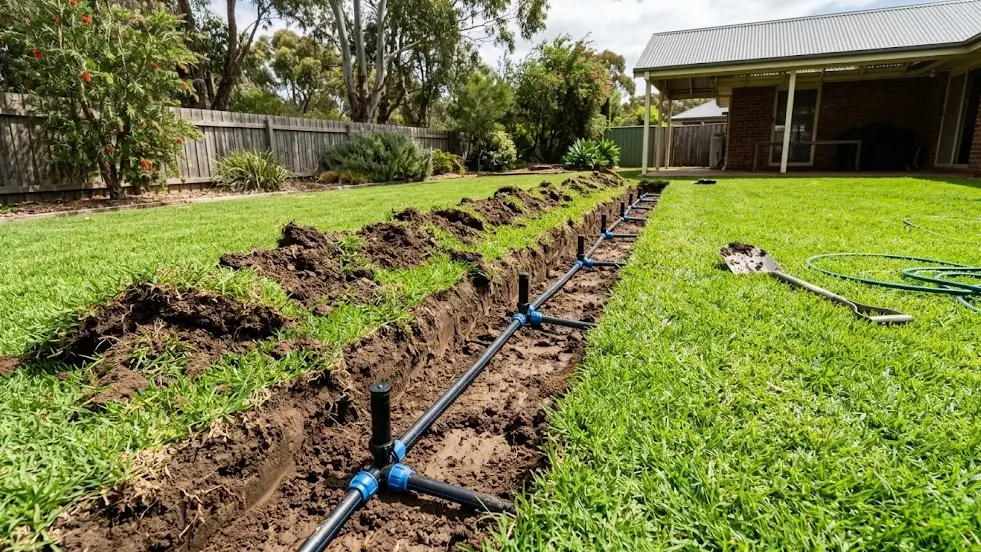
- Assumes you have, or are willing to install, an underground irrigation system — which most Australian homeowners do not already have
That last point is worth dwelling on. The majority of WiFi controllers on the market are designed to work with an existing in-ground pipe and valve system. If you do not already have that infrastructure, adding it involves trenching, professional installation, and several thousand dollars before the WiFi controller even enters the picture.
What If You Do Not Have an Existing System?
This is where a newer category of product changes the calculation. Above-ground all-in-one WiFi irrigation systems skip the underground infrastructure entirely — they connect to a standard garden tap, stake into the ground, and manage the whole yard from a single unit.
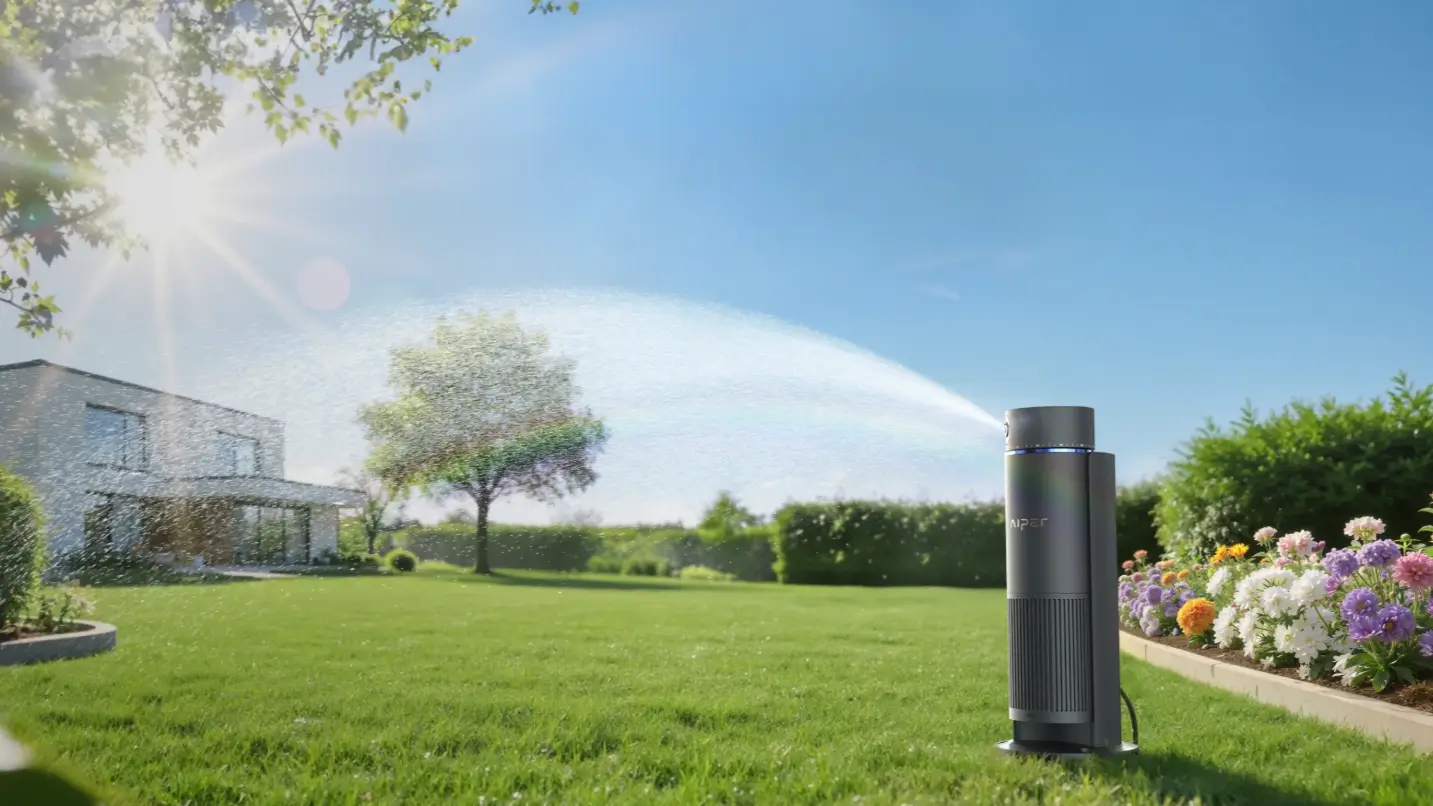
The Aiper IrriSense 2 takes this approach further than any other current option. It combines the controller, sprinkler, electrical valve, and nutrient feeder into one device — replacing the four separate components a traditional underground system requires. It covers up to 445m², supports up to 10 independently scheduled watering zones, and connects to your home Wi-Fi for full app control and weather-adaptive scheduling. The EvenRain™ technology distributes water in a pattern that mimics natural rainfall, which improves soil absorption and avoids the surface runoff that wastes water on compacted or clay-heavy ground. Setup takes around 15 minutes from unboxing.
For Australian homeowners who want the full benefit of a WiFi controller — remote access, weather intelligence, zone management — without committing to underground installation, it represents a practical alternative to the traditional path.
FAQs
Can I add WiFi to my existing traditional timer?
Some brands offer a WiFi module that can be added to a compatible existing controller. For other brands, replacement of the controller unit is required. Check your current timer brand's compatibility before assuming a module upgrade is possible.
Do WiFi sprinkler controllers work during a power outage?
No — like traditional timers, they require power to operate. Most WiFi controllers retain your programmed schedule through a power outage and resume automatically when power is restored, but they will not run cycles during an outage.
What WiFi frequency do sprinkler controllers use?
Most WiFi irrigation controllers and smart irrigation systems connect to a 2.4GHz network. If your router only broadcasts 5GHz, or broadcasts both under the same network name, you may need to separate them during setup. Check the product specifications before purchasing.
Will a WiFi controller actually reduce my water bill?
Research consistently shows that weather-based smart controllers reduce outdoor water use by 30–50% compared to fixed-schedule systems. The actual saving depends on how inefficiently your current system is running — if your timer already skips rainy days and you adjust seasonally, the gap will be smaller. If you are running the same schedule year-round regardless of conditions, the saving will be more significant.