
How to Adjust Pool Return Jets for Perfect Circulation
Adjust most pool return jets at 45° toward uniform rotation, set one far jet flat for skimmer intake & a downward angled deep helper; fix dead spots via cross-flow aiming and pair with robotic cleaners for full pool circulation.

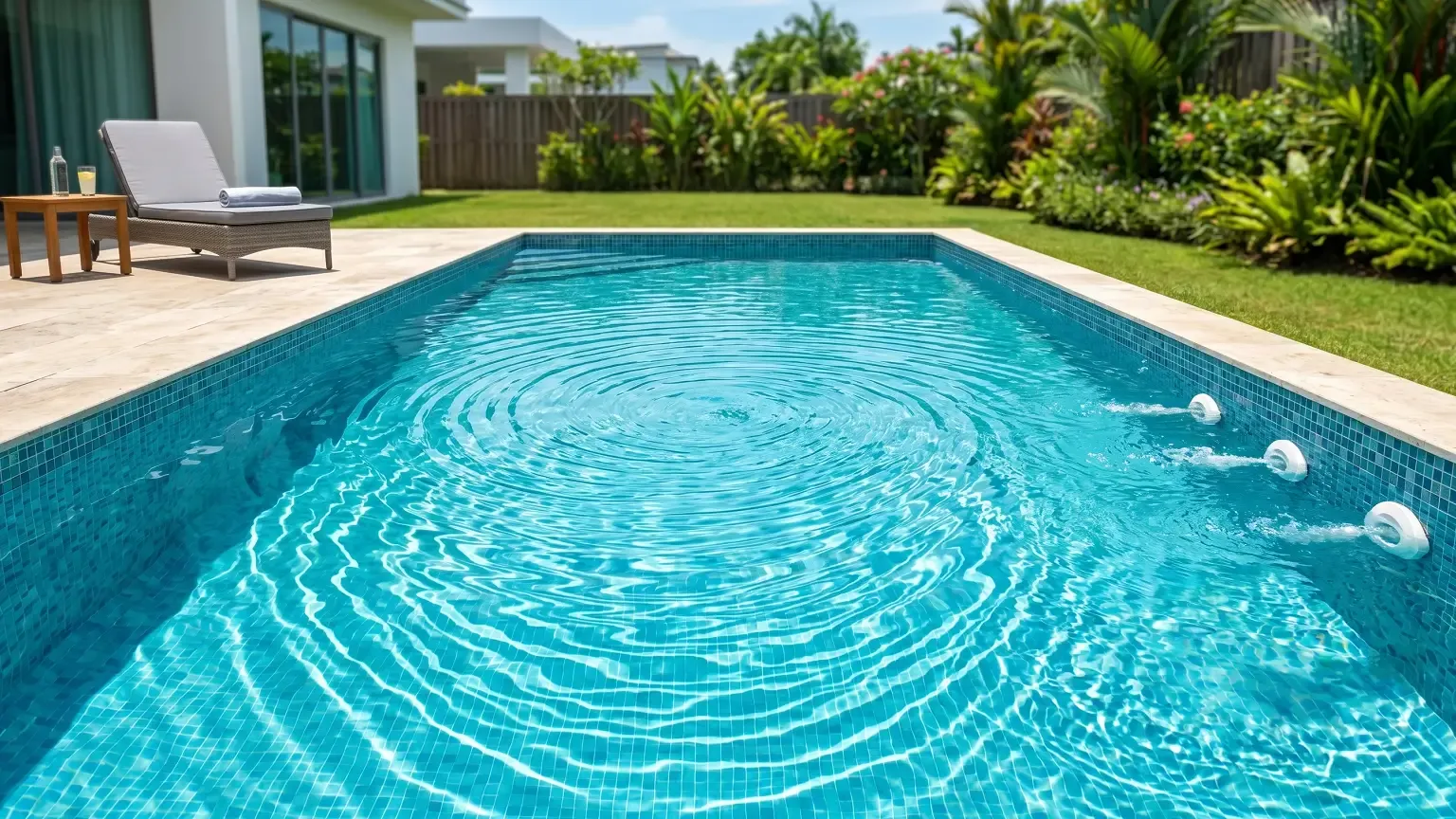
Have you ever spent hours skimming your pool, only to watch a fresh layer of leaves gather right in the middle a few hours later? Or perhaps you notice that fine dust and debris constantly settle on your steps, no matter how often you vacuum. It is an incredibly frustrating cycle that leaves many pool owners feeling defeated.
Getting a crystal-clear pool relies heavily on how well your water actually moves around. Think of your return jets as the steering wheel of the entire system. When those little eyeball fittings are pointed in random directions, you end up with random, patchy cleaning.
Industry standards show that proper circulation is what keeps your water healthy. It stops your pool chemicals from pooling in one spot and makes sure floating debris actually gets pushed into the filter instead of sinking to the bottom. This blog explains everything you need to know about how to adjust pool return jets to ensure proper circulation.
Key Takeaways
- Set a uniform direction for all return jets to establish a continuous vortex of moving water.
- Use the 45-degree rule to push surface debris forward while simultaneously lifting sediment from the floor.
- Point your furthest jet slightly flatter to guide floating debris directly into the skimmer throat.
- Address dead spots around steps and corners by aiming flow across the openings rather than directly at them.
- Enhance your physical circulation system by pairing it with robotic pool cleaners to handle heavy floor debris that water pressure alone cannot move.
The Common Mistake: Treating Jets Like Random Nozzles
A frequent error in pool maintenance is treating return jets as independent nozzles rather than parts of a unified system. It is incredibly common to fall into the trap of pointing every single jet upward. While that creates a nice ripple on top and looks great, it leaves the bottom half of your pool completely stagnant. This creates a massive dead zone on the floor where algae spores thrive and fine debris settles for good.
On the flip side, angling every jet straight down might help the floor, but it completely ruins your surface skimming. Without that top-layer movement, leaves and bugs just drift around until they get waterlogged and sink.
Another easy mistake is setting your jets up to fight one another. If you have one jet pushing water left and another pushing it right, they just cancel each other out. This clash of currents creates dead spots where the water becomes completely still.
These stagnant pockets become perfect breeding grounds for algae, and your pool chemicals won't even be able to reach those zones to do their job.
The Goal: Creating a Pool Whirlpool
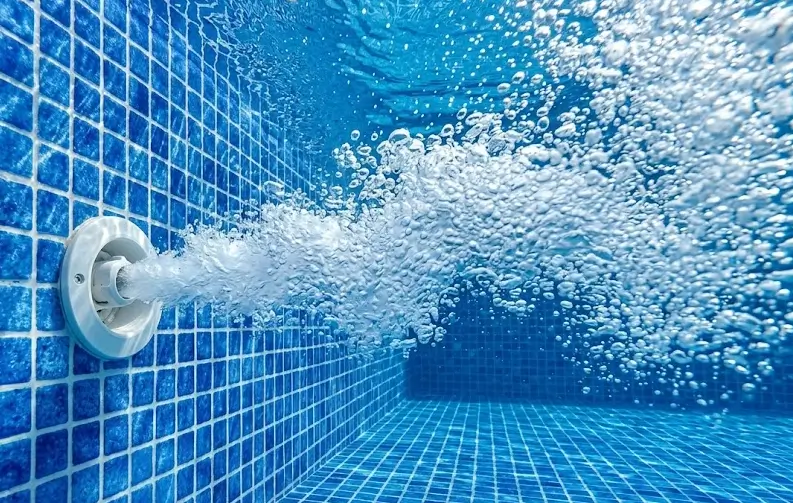
To get your pool circulating right, you need to create a single, continuous current. The goal is to get the entire body of water moving like a gentle whirlpool. This keeps the water moving as one cohesive unit, making sure no hidden pockets are left isolated, still, or stagnant.
Should You Go Clockwise or Counterclockwise?
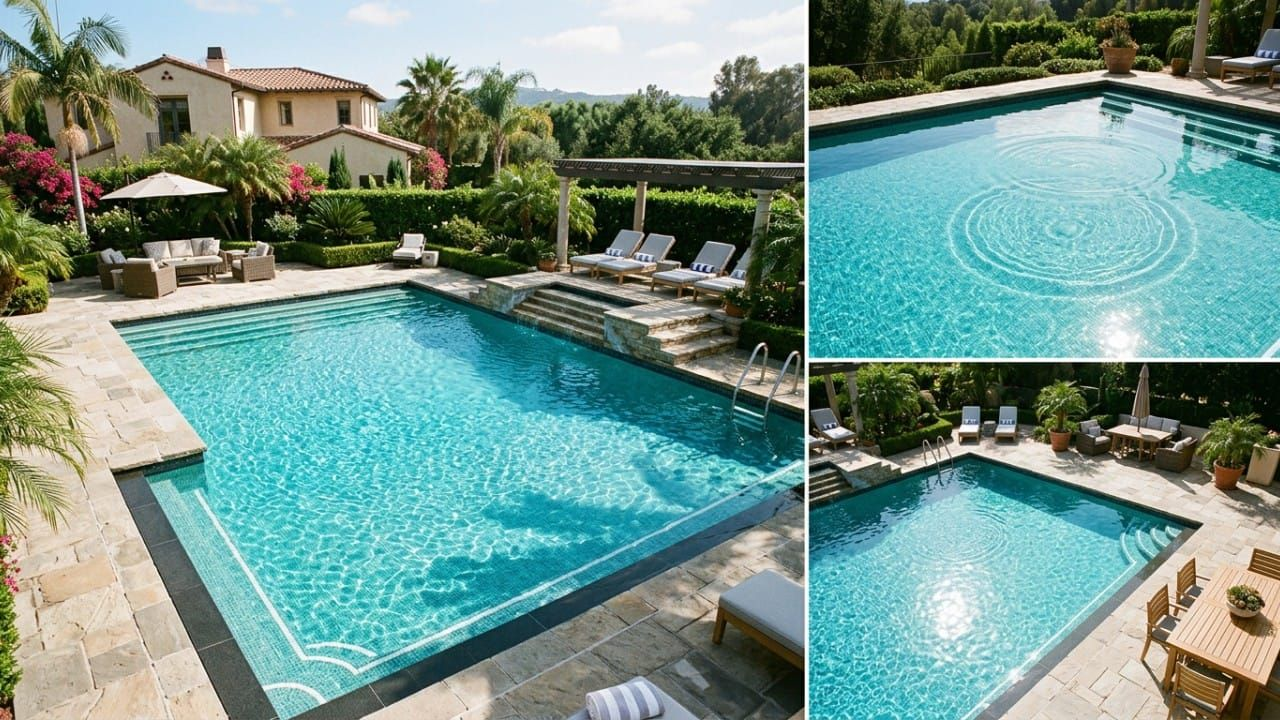
To determine the best direction for your pool, look at the physical layout of your backyard. The ideal direction depends entirely on your skimmer location and the prevailing wind patterns in your area. You want to choose a circular direction that naturally pushes floating debris toward the skimmer throat rather than forcing it past it.
If your local wind usually blows from west to east, your water rotation should work with that wind to herd floating leaves straight into the skimmer basket. For a deeper look into maximizing your water flow, you can explore detailed strategies onpool water circulation.
Step-by-Step: How to Aim Your Return Jet
Adjusting your eyeball fittings requires a methodical approach. Follow these three steps to establish an efficient circulation pattern.
1. The 45-Degree Rule (The Main Loop)
Getting your circulation pattern right comes down to the 45-degree rule. Take about 70% to 80% of your return jets and angle them slightly downward and to the side at a 45-degree angle.
Make sure they all face the same circular direction you chose earlier. This specific angle does double duty: it rolls the deeper water upward and forward while keeping the surface moving in a steady, continuous loop.
2. Set a "Surface Helper"
If you notice leaves are just drifting past your skimmer rather than actually going into it, you need to set up a surface helper. Take the return jet located furthest away from your skimmer and adjust it to a flatter angle closer to the surface.
This creates a dedicated fast lane across the top of the water, boosting the surface speed just enough to push floating debris straight into the skimmer before it gets waterlogged and sinks.
3. Set a "Deep Helper"
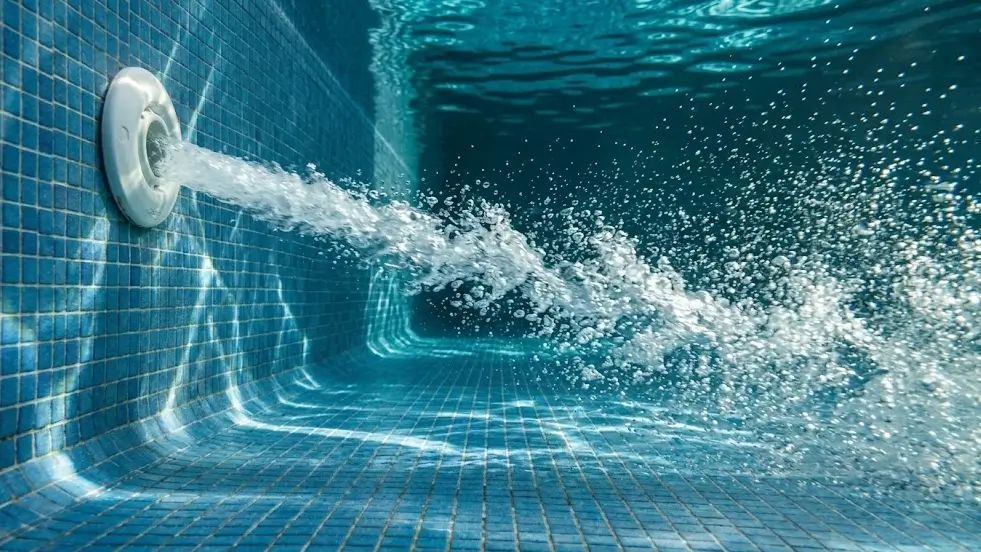
Fine dust, dirt, and heavy sediment often end up gathering in the deep end because standard circulation just struggles to reach all the way down there. To fix this, you can configure one of your return jets to act as a deep helper.
Point this specific fitting at a sharper downward angle toward the floor of your deep end. This downward flow sweeps across the bottom layer of water, kicking up fine particles and keeping them moving in the current so your main drain can pull them out and send them straight to the filter.
How to Fix Circulation Dead Spots
Even with a great whirlpool effect, certain pool designs possess structural dead spots where water naturally stagnates. Use these targeted adjustments to clear them up:
- Stairs and Ledges: Aim the flow across the opening of the steps rather than directly into the step riser. This creates a vacuum effect that pulls stagnant water out. For comprehensive maintenance tips, check out this guide on how to clean pool steps and ladders.
- Inside Corners: Angle the nearest jet to sweep past the corner at an angle, which draws trapped water into the main circulation loop.
- Deep End Pockets: Use your deep helper jet to push water across the floor, preventing debris from settling permanently in the corners.
When Adjusting Your Jets Isn't Enough
Adjusting your return jets works wonders for keeping fine dust moving and guiding floating leaves toward your skimmer. However, even the best water flow hits a physical limit. Return jets simply cannot generate enough upward lift to pull heavy, waterlogged debris like gum nuts, large eucalyptus leaves, or thick coastal sand off the pool floor.
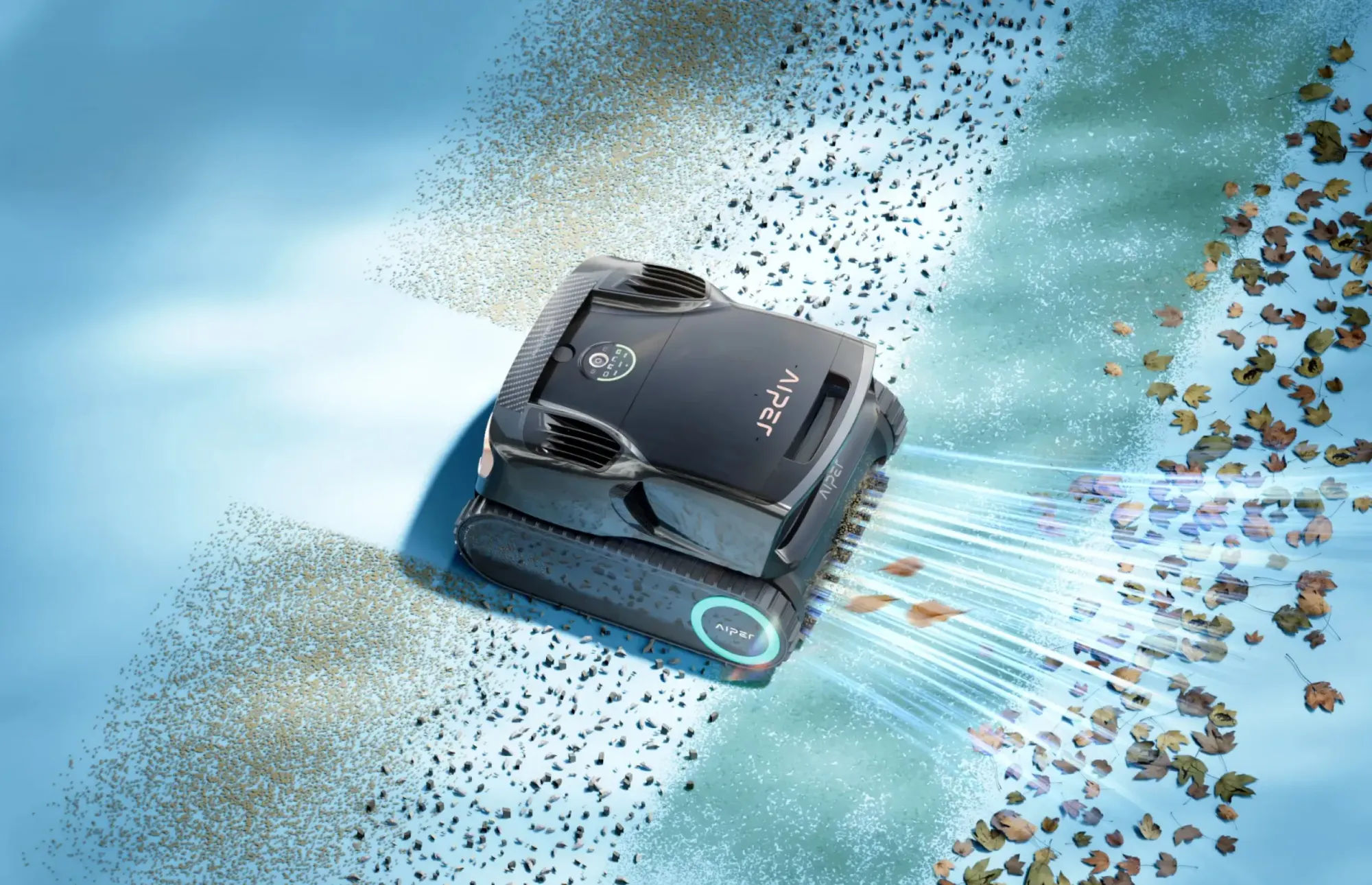
When your pool needs a proper floor and wall clean, relying entirely on water pressure will just leave you with a patchy, half-clean mess. Moving to an automatic mechanical solution gives you the deep scrubbing power needed to keep your pool surfaces spotless. The Scuba X1 Pro Max steps in right where your water flow falls short, using advanced dual-drive motors and commercial-grade filtration to actively scrub and suck up the heavy debris your return jets leave behind. Without this kind of extra mechanical help, heavy organic rubbish just sits on your pool floor, stains your plaster, and eats through your chlorine supplies in no time.
Troubleshooting Weak Pool Jet
If you have adjusted your eyeball fittings but the water flow still feels sluggish, you are likely dealing with a pressure issue rather than an aiming problem.
- First, take a look at your skimmer and pump baskets and give them a good emptying. Packed leaves and debris choke off the water intake, starving your pump of water.
- Next, check the pressure gauge on your filter. If the reading is 8 to 10 PSI higher than its usual clean baseline, it is time to backwash your sand filter or give your cartridge filter a thorough clean to get that flow back to normal.
- Finally, if you run a variable-speed pump, make sure your RPMs are set high enough during your main filtration cycle to generate the speed you actually need for effective circulation.
FAQ: Pool Circulation and Return Jets
Can pool jets be adjusted?
Yes, pretty much all modern pool return jets have a threaded locking ring that you can easily loosen by hand. This lets you spin the internal eyeball fitting around to whatever angle you need before locking it back into place.
Why is my pool return jet not strong?
Weak flow usually comes down to a blockage on the suction side, like a clogged skimmer basket, or too much resistance on the pressure side, which means you have a dirty filter that needs a good clean or a backwash.
How to increase pool return pressure?
You can increase return pressure by cleaning your pool filter, emptying all debris baskets, checking for blockages, or increasing the operating speed of your variable-speed eco pump.
Is it normal to lose 1 inch of water a day in a pool?
No, losing an inch of water daily generally indicates a leak. Normal evaporation typically accounts for roughly 4 to 7 millimetres of water loss per day depending on local Australian weather conditions, wind, and humidity levels.