
Best Pool Cleaner for Leafy Pools: What Works Best for Heavy Leaf Debris?
Leaf-heavy pools need pool cleaners with large debris capacity, strong suction & full coverage. Robotic pool cleaners outperform suction, pressure and manual types for heavy leaves, gum nuts and twigs with low maintenance.

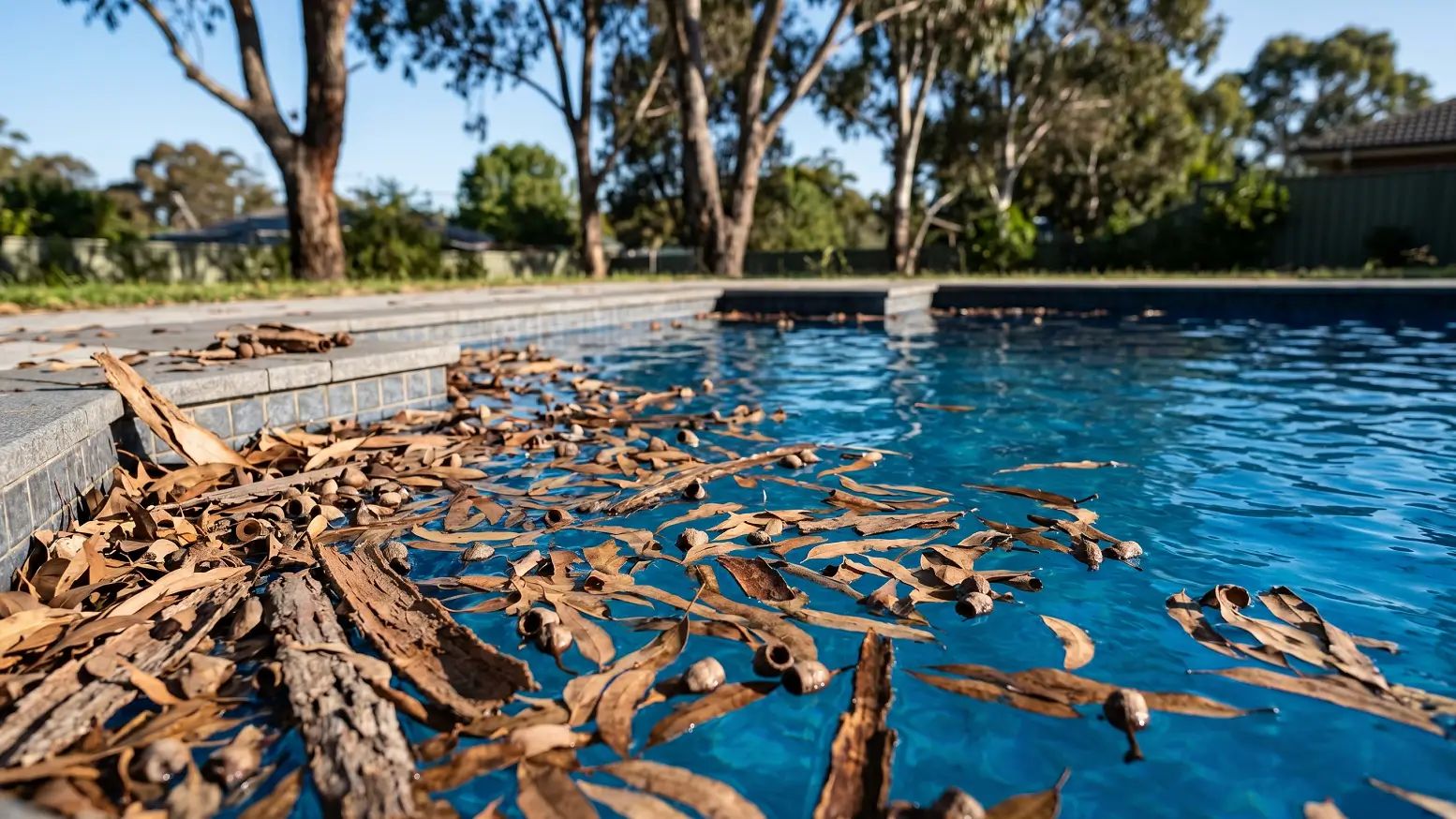
If you have a pool under gum trees, palms, or dense backyard planting, you already know that leaves are not a once-in-a-while problem. They show up after windy afternoons, storms, and seasonal drop, then pile up on the surface, sink into corners, and clog baskets faster than most pool owners expect.
That is why choosing the best pool cleaner for leafy pools is different from choosing a cleaner for general dust or light dirt. A pool that mainly collects fine sediment needs one kind of performance. A pool that fills with leaves, bark, seed pods, and gum nuts needs something else entirely.
This guide looks at what actually works for heavy leaf debris in Australian pools, which cleaner types struggle, which features matter most, and how to choose a cleaner that saves time instead of creating more maintenance.
Why Leafy Pools Need a Different Kind of Cleaner?
Leaf-heavy pools create a bulk-debris problem, not just a surface-dirt problem. Fine dust can be filtered out gradually, but leaves behave differently. Some float for hours, some become waterlogged and sink, and others collect in steps, corners, ledges, and along walls.
In Australia, the problem is often worse because it is rarely just leaves. Many pool owners are also dealing with gum leaves, gum nuts, bark, seed pods, small twigs, and storm-blown garden debris. These are larger, heavier, and more likely to clog narrow intakes or fill a debris basket quickly.
That is why lighter-duty cleaners often disappoint in leafy pools. A cleaner may work well on ordinary day-to-day dirt but struggle when the debris load becomes bulky and irregular. If the basket fills too fast or the intake chokes on larger debris, the cleaner stops being a labour-saving tool and becomes another thing you have to keep checking.
Leafy pools also create more pressure on water quality and filtration. As organic debris sits in the water, it begins to break down, adding colour, fine particles, and extra organic load to the system. Health advice in Western Australia recommends removing leaves and similar material daily and vacuuming regularly, which supports the idea that leaf-heavy pools need more active debris control than ordinary pools do.
What Makes the Best Pool Cleaner for Leaves?
The best pool cleaner for leafy pools is not the one with the longest spec sheet. It is the one that handles bulky debris well, reaches the areas where leaves actually collect, and keeps routine cleaning from turning into constant troubleshooting.
When comparing options, focus on these four things first.
1. Large debris capacity
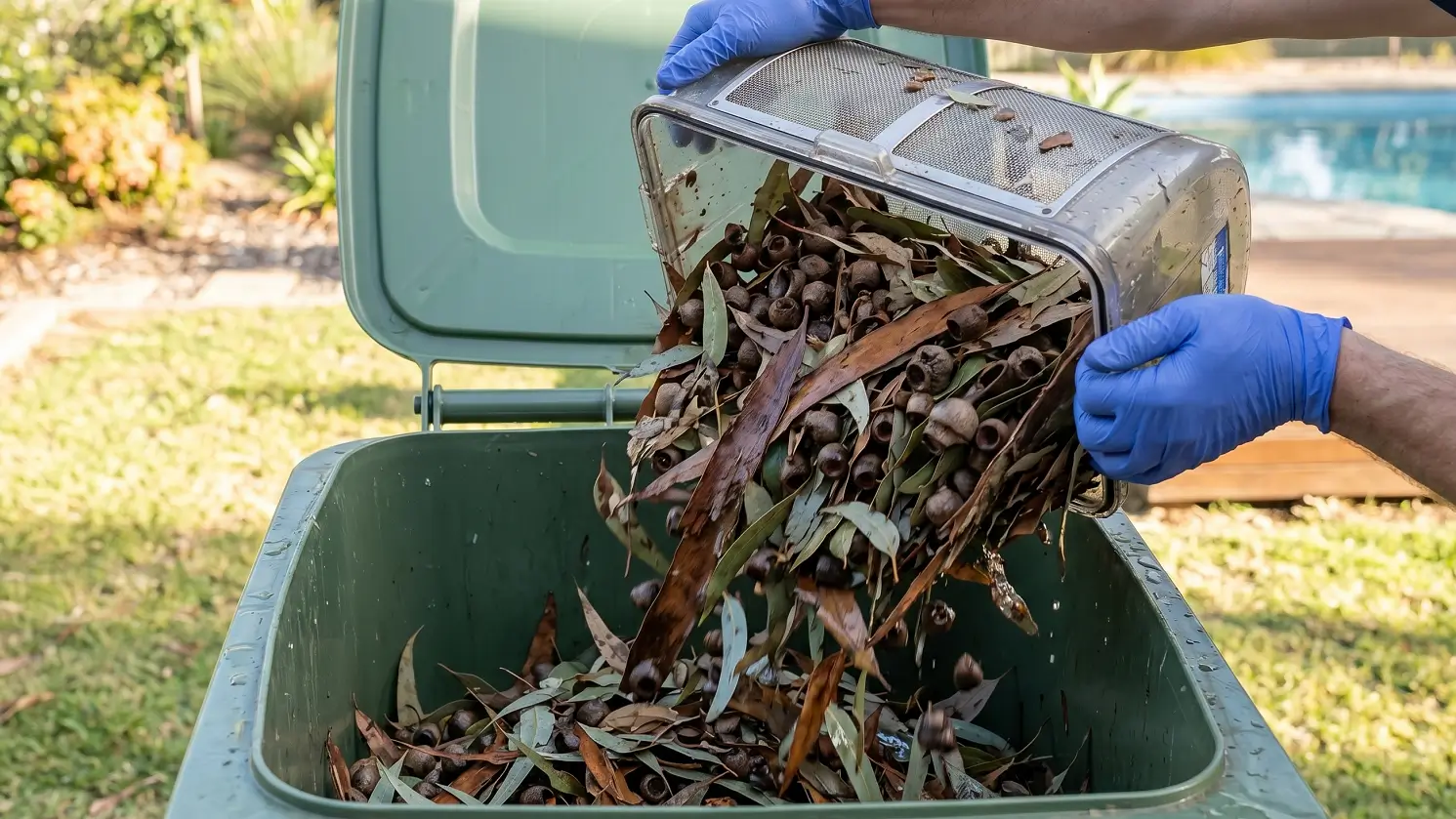
Leafy pools fill a basket quickly, especially when the debris is wet. A cleaner with a small basket may work for fine dirt, but in a leaf-heavy pool it forces frequent stops and extra emptying. The more debris the cleaner can hold in one cycle, the less often you need to step in.
2. Strong suction and a leaf-friendly intake
Some cleaners can pick up dust and sand well but struggle the moment larger leaves, seed pods, or gum nuts enter the picture. In leafy conditions, suction has to be paired with an intake path that can handle bulkier debris without choking or pushing it around.
3. Coverage that matches where leaves collect
Leaves rarely stay in one convenient spot. They gather in corners, around steps, along walls, and in dead spots on the floor. A cleaner that only handles the middle of the pool floor may still leave you with frustrating manual cleanup around the edges.
4. Easy maintenance between cycles
Even a strong cleaner becomes annoying if the basket is difficult to empty, awkward to rinse, or messy to reassemble. In a leafy pool, maintenance ease matters more than many buyers expect because consistency is what keeps the pool under control.
Which Type of Pool Cleaner Works Best for Heavy Leaves?
Not every cleaner type performs equally well when leaf load is high. The right choice depends on how often your pool collects leaves, how bulky the debris is, and how much manual work you are trying to avoid.
Manual pool vacuums
Manual vacuums can still work for small pools, occasional cleanups, or post-storm touch-ups. They give you direct control and can help when a pile of leaves has collected in one obvious area. The downside is simple: if your pool gets leaves often, manual vacuuming becomes repetitive labour rather than a real long-term solution.
Suction-side cleaners
Suction-side cleaners are usually better suited to lighter debris loads than truly leafy pools. They can help with routine dirt and some smaller leaves, but frequent large debris often means slower performance, more clogging risk, and more pressure on the main pool filtration system.
Pressure-side cleaners
Pressure-side cleaners can often cope with larger debris better than suction-side models, especially when leaves and twigs are part of the mix. The trade-off is that they may need extra equipment and still involve more ongoing attention than many buyers expect.
Surface skimmers and leaf-catching cleaners
If your biggest problem is floating leaves before they sink, a surface-focused cleaner or skimmer can be a useful part of the setup. These are not always enough on their own for full-pool cleaning, but they can reduce the amount of leaf debris that reaches the bottom in the first place.
Robotic pool cleaners
For many leafy pools, robotic cleaners are the strongest fit because they operate independently of the main pool system, collect debris into their own canister, and reduce the load on the pool filter. A good robotic cleaner for leaves should combine strong debris pickup, large internal capacity, and reliable coverage.
This is also where feature quality starts to matter more than category labels. A basic robot may still struggle with wet leaves if the basket is too small or the intake is too narrow. A leaf-ready robot needs to be built for heavier debris, not just everyday dust.
Quick comparison table
| Cleaner type | Best for | Strengths | Limitations | Leafy-pool fit |
| Manual vacuum | Small pools, spot cleanup, post-storm touch-ups | Direct control, simple to use, low setup | High effort, not practical for frequent leaf fall | Fair for occasional use |
| Suction-side cleaner | Light to moderate debris | Simple setup, familiar system | Can clog, depends on pool filtration, less ideal for bulky debris | Limited in heavy leaf conditions |
| Pressure-side cleaner | Mixed debris, larger leaves than suction systems can handle | Better bulk-debris handling than suction models | May need extra equipment, still more manual oversight than many expect | Better, but not always low-effort |
| Surface skimmer / leaf catcher | Floating leaves before they sink | Helps reduce surface buildup, useful in windy periods | Does not replace full-pool cleaning | Strong support tool, not complete solution |
| Robotic cleaner | Frequent leaf fall, mixed debris, lower-effort maintenance | Independent cleaning, own debris canister, broad coverage, lower filter burden | Higher upfront cost, model quality varies | Usually the strongest long-term fit |
Why Robotic Pool Cleaners Usually Make the Most Sense for Leaves?
For pool owners dealing with regular leaf drop, the biggest advantage of a robotic cleaner is not just automation. It is the combination of independent cleaning, debris containment, and lower day-to-day effort.
The main reasons usually come down to four things.
They keep bulky debris out of the main filtration path
Instead of sending leaves through the whole pool circulation system first, robotic cleaners collect debris into their own canister. In a leaf-heavy pool, that matters because it reduces pressure on the skimmer basket and the main filter.
They are better suited to repeated cleanup cycles
Leafy pools create recurring mess, not one-off mess. You clean the pool, then a windy day fills it again. A robotic cleaner is often the most practical option when the problem keeps coming back because it reduces how much manual effort each cleanup cycle demands.
Better robots usually cover more of the pool properly
Leaves do not just sit in the centre of the floor. They gather around walls, corners, steps, and ledges. Robotic cleaners with stronger pathing and broader coverage are more likely to deal with these trouble zones than simpler cleaners that only handle part of the pool.
They usually create the lowest-effort routine overall

A leafy pool is not just a cleaning issue; it is a consistency issue. The best robotic cleaners reduce the need to skim, vacuum, and clear baskets over and over again. That convenience is often what makes them feel worth it in real backyard use.
How to Choose the Right Cleaner for Your Leafy Pool?
The right cleaner depends less on a generic “best overall” label and more on your actual pool conditions.
Debris Type
A pool that gets a few floating leaves after windy weather is different from one that constantly collects gum leaves, gum nuts, bark, and seed pods. The heavier and more varied the debris, the more important large-capacity collection and stronger suction become.
Pool Size and Shape
Larger pools need longer cleaning endurance and more debris storage. Pools with steps, benches, curves, and corners need better pathing and broader coverage. A cleaner that works well in a simple rectangular pool may be less effective in a pool with more complex features.
Manual Effort
If you do not mind occasional manual cleanup, a simpler system may still work. But if leaves return every few days, the best choice is usually the one that removes the most effort from your routine.
Cleaning Frequency
If your pool is only leafy during one short seasonal window, you might tolerate more manual support. If your pool sits under trees year-round, convenience becomes a far more important buying criterion.
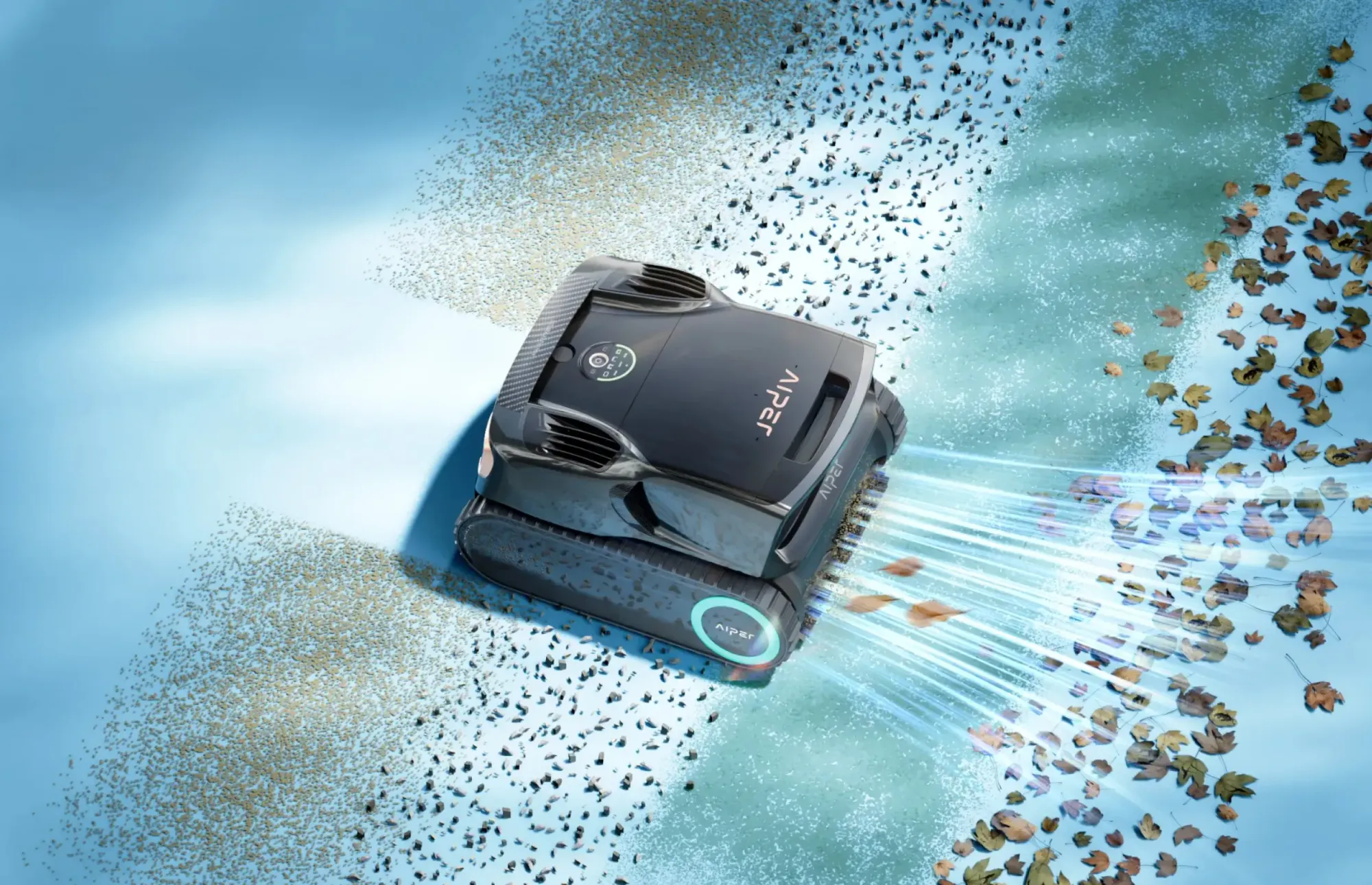
If your pool is large, collects mixed leaf debris regularly, and you want less manual follow-up after each clean, it makes sense to look at a stronger robotic option rather than a light-duty cleaner. A model like Aiper Scuba X1 Pro Max fits that kind of setup better because it is designed for stronger debris pickup, broader coverage, and a more independent cleaning routine.
What Else Helps Keep a Leafy Pool Under Control?
Even the best cleaner works better when the rest of the pool routine makes sense.
During heavy leaf-fall periods, surface skimming still helps stop leaves from becoming waterlogged and sinking. Regular basket emptying also matters, because even a strong cleaner slows down if its debris canister is packed too tightly.
A pool cover can help when the pool is not in use, especially if your main issue is repeated overnight or storm-driven leaf drop. And if your pool is in an exposed location, it helps to treat leaf management as part of a broader pool-maintenance plan rather than expecting one machine to solve every problem on its own.
Conclusion
The best pool cleaner for leafy pools is the one that can handle bulky debris without constant clogging, repeated emptying, or too much manual cleanup afterward. That usually means looking beyond light-duty cleaners and focusing on large debris capacity, stronger suction, better coverage, and easier maintenance.
For many Australian pool owners, that points toward a capable robotic cleaner rather than a basic suction or manual-only solution. If your pool is regularly hit with leaves, gum nuts, and mixed yard debris, choosing a cleaner built for that reality will save more time than any short-term workaround.
FAQs
What is the best pool cleaner for leaves?
The best pool cleaner for leaves is usually one built to handle heavy debris rather than just fine dirt. In practical terms, that means strong suction, a large debris basket or canister, good floor and wall coverage, and low clogging risk. For many leafy pools, a robotic cleaner is the most practical long-term choice.
Can robotic pool cleaners pick up wet leaves?
Yes, but not all of them handle wet leaves equally well. Wet leaves are heavier, bulkier, and more likely to jam a narrow intake or fill a small basket quickly. Models designed for heavier debris loads usually perform better here than lightweight robots made mainly for fine dirt.
Are suction-side cleaners good for leafy pools?
They can work in lighter leaf conditions, but they often struggle when debris load is high. Larger leaves and mixed organic debris can reduce performance or create more pressure on the main filtration system. For pools that get leaves frequently, they are often less convenient than a strong robotic cleaner.
What should I look for in a pool cleaner if my pool gets gum leaves or gum nuts?
Look for a cleaner with large debris capacity, good suction, practical basket access, and reliable coverage. Gum leaves, seed pods, and similar backyard debris are tougher than ordinary fine dirt, so a cleaner that only performs well in clean-water test conditions may not be enough.
Do I still need to skim if I have a robotic pool cleaner?
Sometimes, yes. A robotic cleaner can reduce a lot of the routine work, but in peak leaf-fall periods, quick surface skimming can still help stop floating leaves from sinking and breaking down. Think of the robot as the main cleaner, not necessarily the only thing you ever do.
Is a cordless robotic pool cleaner better for leafy pools?
Often, yes, especially if you want easier handling and fewer interruptions. A cordless design can make setup and retrieval simpler, and it avoids cable tangles around steps or awkward pool shapes. What matters most, though, is not cordless alone, but whether the cleaner is genuinely built to manage heavy debris.