
How to Clean a Fibreglass Pool
Clean fibreglass pools with soft tools and mild cleaners to protect thin gel coat. Keep balanced water chemistry, avoid abrasive tools and full draining, follow regular cleaning schedules to extend pool service life.

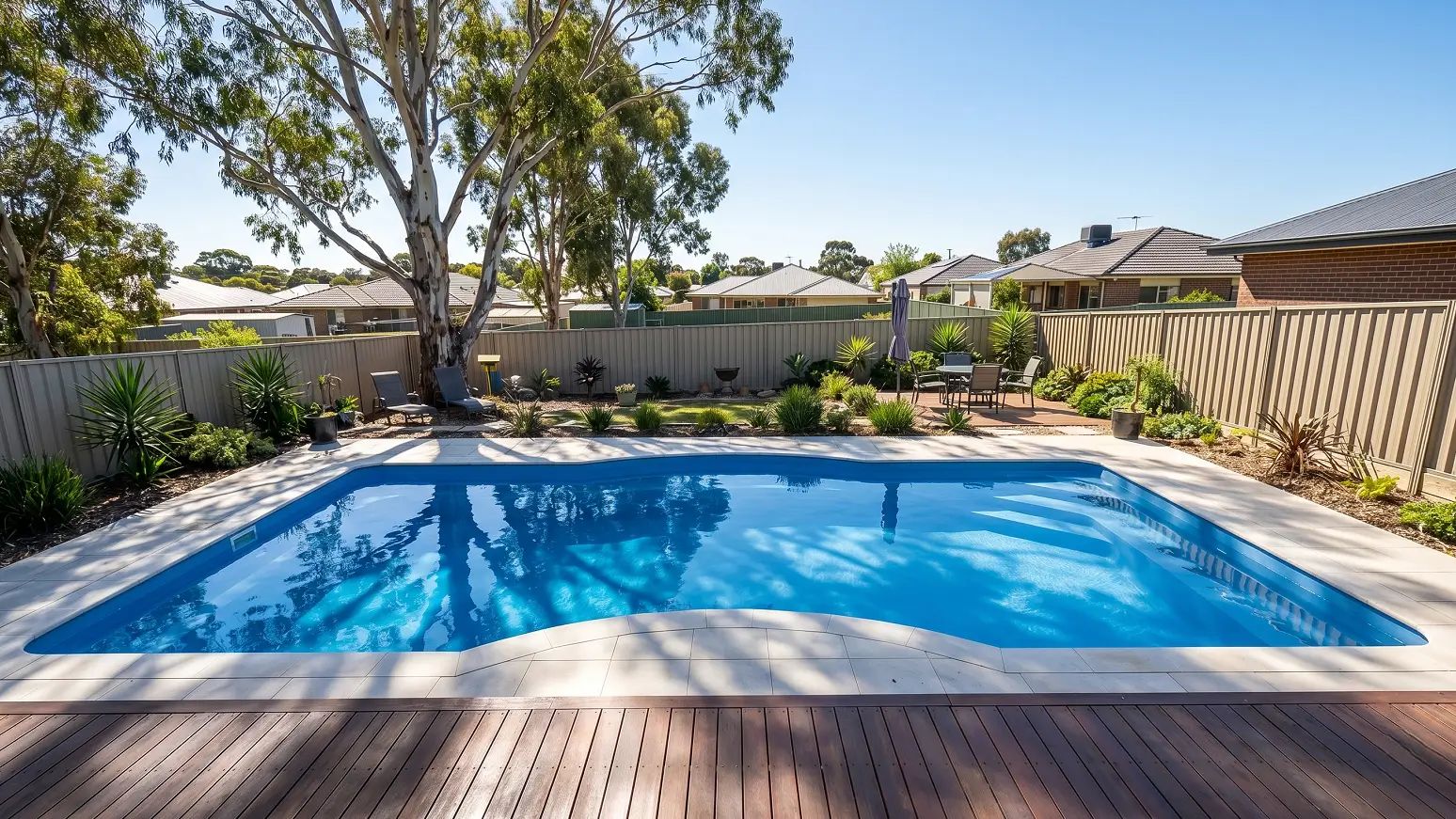
Fibreglass pools are a favourite for Aussie backyards, and it’s easy to see why. They look sleek, feel great on the feet, and thanks to their smooth gel coat, they are naturally resistant to the algae blooms that plague concrete pools. However, that shiny surface is also its most vulnerable feature. If you use the wrong tools or harsh chemicals, you can permanently scratch or dull the finish.
Learning how to clean a fibreglass pool is all about a "softly, softly" approach. This guide will show you how to keep your pool sparkling without risking the integrity of that expensive gel coat.
Why Fibreglass Pools Need a Gentle Touch
The secret to a fibreglass pool's longevity is the non-porous gel coat. This top layer acts as a barrier that prevents algae from taking root, making it much easier to wipe clean than porous surfaces. But there’s a trade-off: according to leading composite manufacturing standards, this gel coat is only about 0.5mm to 1mm thick.
If you go in with aggressive scrubbing or abrasive tools, you’ll create microscopic scratches. These scratches don't just look bad; they provide a "foothold" for algae and minerals to settle into, eventually making the pool harder to maintain. Cleaning fibreglass isn't about muscle; it’s about using the right, gentle method.
The Right Tools for a Fibreglass Pool
Using the wrong equipment can turn a simple Saturday chore into a costly repair bill. Here is a quick guide to what should (and shouldn’t) touch your pool surface.
| Tool Category | What to Use (The "Do's") | What to Avoid (The "Don'ts") |
| Brushes | Soft nylon bristle brushes | Stainless steel or wire brushes |
| Cleaning Cloths | Microfibre cloths or soft sponges | Scouring pads or steel wool |
| Scrapers | Plastic spatulas (for stubborn spots) | Pumice stones or metal scrapers |
| Chemicals | pH-neutral, gel-coat-safe cleaners | Abrasive powders or harsh bleach |
Step-by-Step Fibreglass Pool Cleaning Routine
Skim the Surface
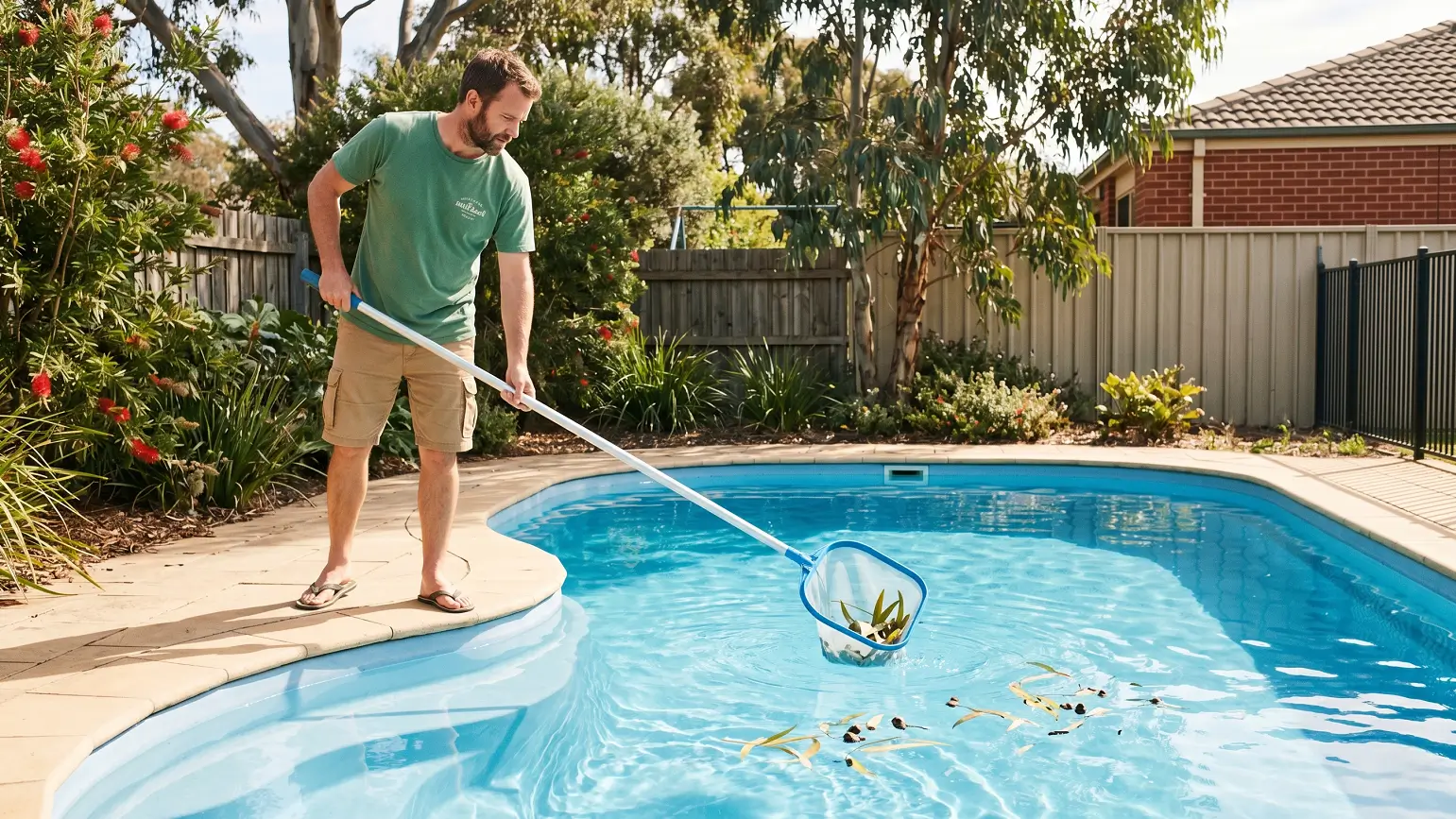
In Australia, we deal with a lot of heavy debris: gum nuts, eucalyptus leaves, and large bugs. You want to get these off the surface before they sink. Once organic matter sits on the floor of a fibreglass pool, the tannins can leach out and leave stubborn brown stains on the gel coat. A quick daily skim saves you hours of scrubbing later.
Wipe Down the Waterline
That "bathtub ring" around the waterline is usually just a build-up of sunscreen, body oils, and dust. To get rid of it, grab a soft sponge or a microfibre cloth. Stay away from harsh household detergents; instead, use a proper pool surface cleaner or make a quick paste with bicarb soda and water. It’ll lift the oils easily without scratching up the finish.
Brush the Walls and Steps
Even if the pool looks clear, a fine layer of dust can settle on the walls. Use a nylon brush to give the walls and steps a quick once-over. This dislodges any "biofilm", so your filtration system can catch it. Pay extra attention to the steps and seats, where water circulation is often a bit slower.
Vacuum the Pool Floor
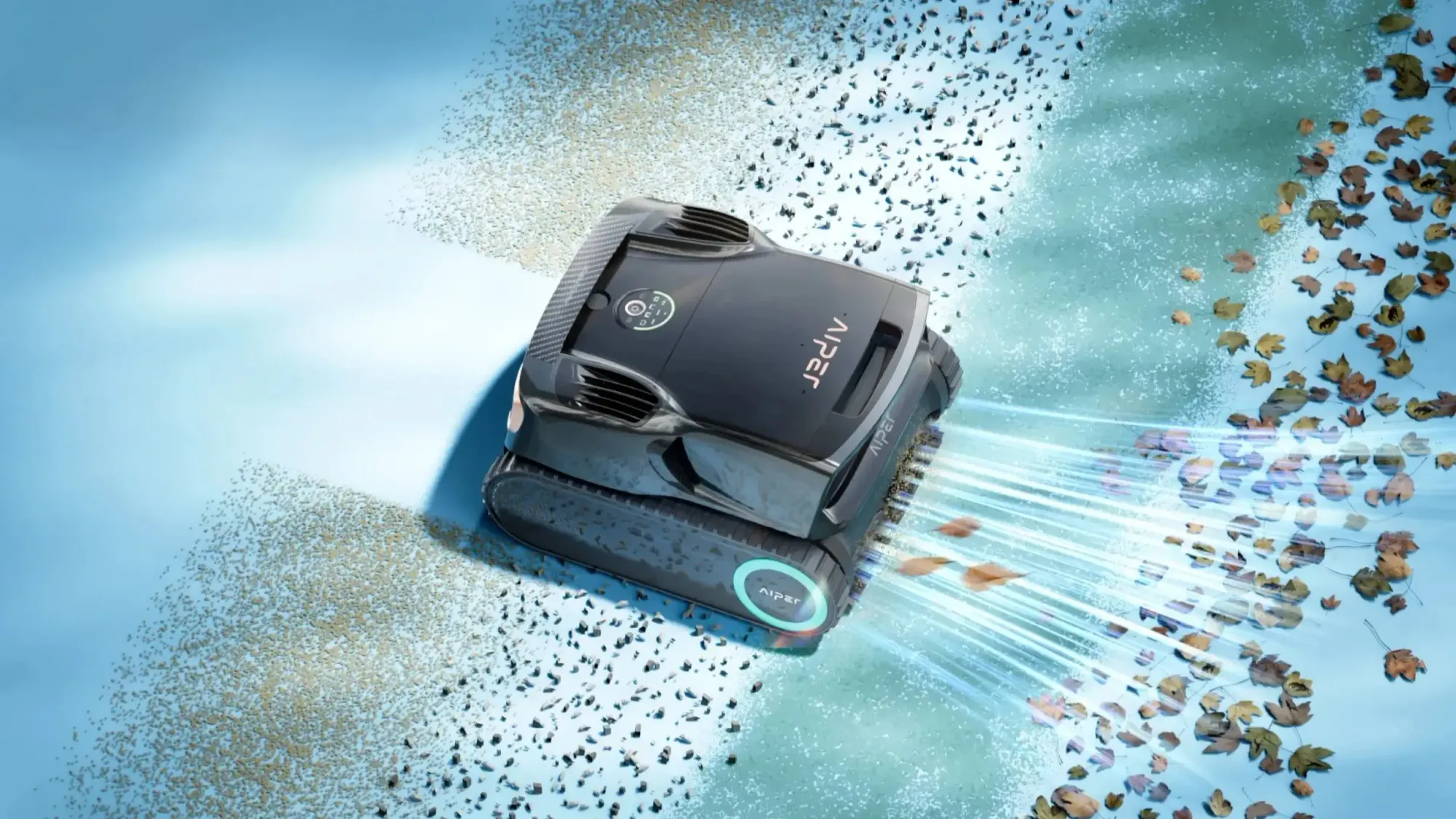
Getting rid of sunken debris is the last step, but it’s usually the part everyone hates. Old-school suction cleaners can be a bit risky because those heavy, ribbed hoses tend to drag across the floor. Over time, their "feet" can actually wear down the gel coat and dull that nice finish.
This is where the Scuba X1 Pro Max stands out.
- The Need: Homeowners need a way to remove heavy debris without spending hours manually vacuuming or risking scratches from heavy, dragged hoses.
- The Solution: This cordless robot uses high-performance sensors and gentle scrubbing movements to map your pool and lift dirt efficiently without the abrasive friction of old-school suction units.
- The Drawback: Without a smart, cordless cleaner, you’re left wrestling with bulky hoses that can tangle and potentially scuff your pool’s walls, leaving you with a clean floor but a damaged finish.
Ideal Water Chemistry for Fibreglass Pools
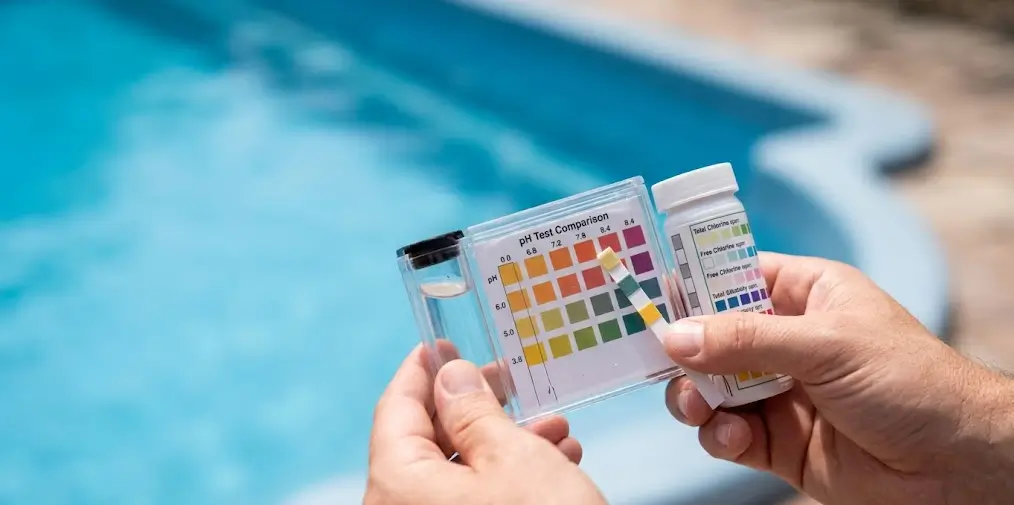
Maintaining water balance is just as important as physical cleaning. Because fibreglass is non-porous, it is sensitive to "scaling" if your chemistry is off.
- pH Level: Aim for 7.2 to 7.6.
- Total Alkalinity: Keep it between 80 and 120 ppm.
If your pH stays too high for too long, calcium can drop out of the water and form a crust on your walls. This makes the once-smooth fibreglass feel like rough sandpaper. For a deeper dive into long-term care, check out our guide on How to Care for Your Fibreglass Pool.
Warning: Never Drain Your Fibreglass Pool
This is the most important rule of fibreglass pool ownership. Unlike concrete pools, which are heavy and anchored, fibreglass shells are relatively light. They rely on the weight of the water inside them to counteract the hydrostatic pressure (the pressure of the groundwater) outside the shell.
If you drain your pool without professional help and pressure-relief valves, the groundwater can literally pop the pool out of the ground or cause the walls to buckle. Always consult a pro if you think the pool needs emptying.
How Often Should You Clean a Fibreglass Pool?
Consistency is your best friend. Follow this checklist to keep the workload light:
- Daily: Skim the surface and empty the skimmer baskets.
- Twice Weekly: Test your pH and Chlorine levels.
- 2-3 Times Weekly: Run your robotic pool cleaner to keep the floor and waterline pristine.
- Monthly: Check your filter pressure and backwash if needed.
FAQ: Maintaining Your Fibreglass Pool
What is the best cleaner for a fibreglass pool?
A soft sponge with a pH-neutral cleaner is best for the waterline. For the floor and walls, a robotic cleaner with soft brushes is the safest way to maintain the gel coat without abrasive wear.
Can I use a wire brush on a fibreglass pool?
No. Never use wire or stainless steel brushes. They will create deep scratches in the gel coat, which will then host algae and eventually lead to "osmotic blistering", where water gets trapped behind the finish.
How do you remove a brown stain from a fibreglass pool?
Most brown stains are organic (tannins from leaves) or metallic. Try a Vitamin C (ascorbic acid) tablet rubbed on a small spot; if it lifts, it’s metallic. If not, a gentle organic stain remover is your best bet.
What happens to a fibreglass pool after 25 years?
If well-maintained, a fibreglass pool can last 25 to 30 years or more. Over time, the gel coat may fade slightly due to UV exposure, but the structural integrity usually remains solid as long as the water chemistry is kept in check.