
Should You Water Grass Before a Frost? (What Australian Lawn Owners Need to Know)
Water lawn deeply in the evening 1-2 days ahead of frost to insulate roots. Never water when frost forms. Match watering routines to local Australian grass varieties for winter lawn protection.

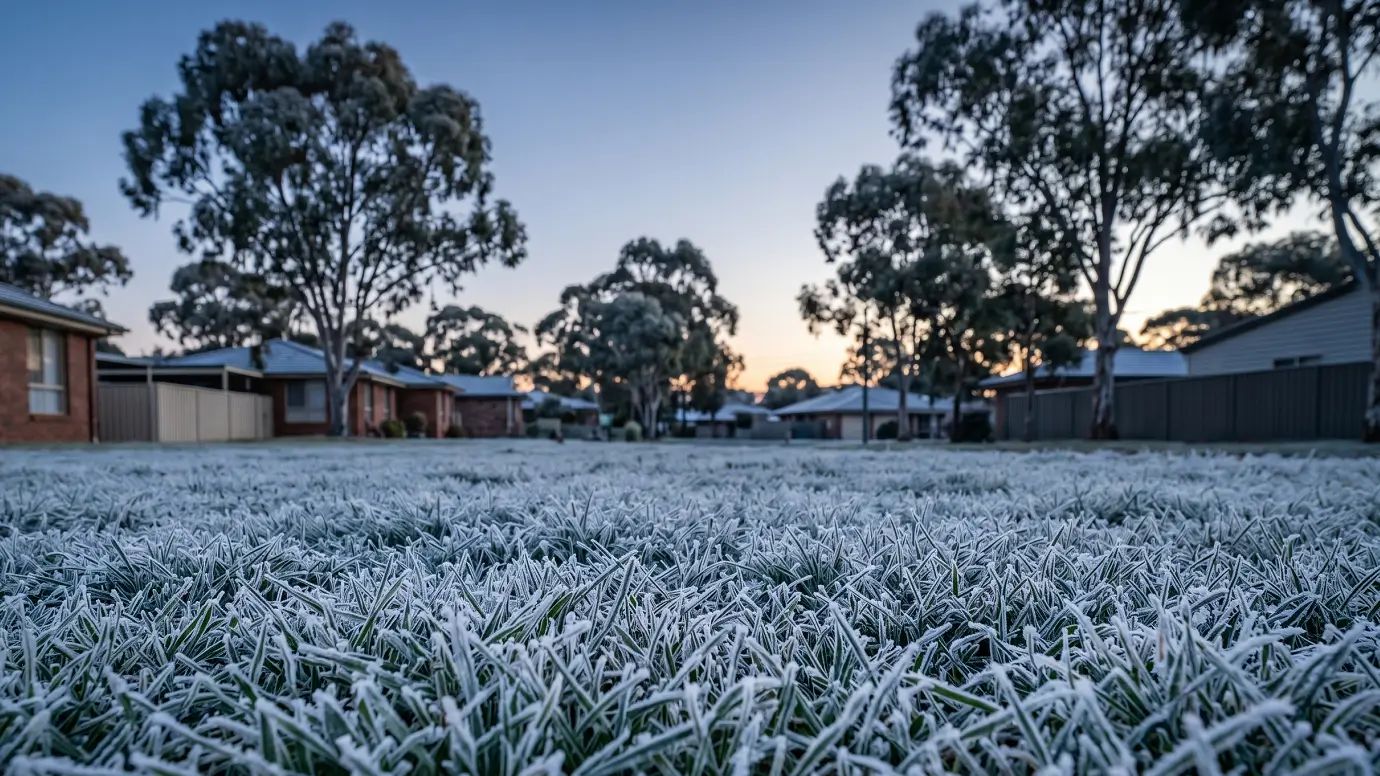
Yes, watering your grass the evening before a frost is recommended, but timing and method matter. Giving your yard a deep soak helps the soil retain heat and protects the delicate root system from freezing. If you are wondering should you water grass before a frost, the answer lies in providing deep hydration at the right time.
This guide covers why watering helps, how to do it correctly without damaging the foliage, and specific advice for Australia's most common grass types to keep your lawn green through winter.
What Happens to Grass During a Frost?
Frost damage happens when the moisture inside the grass blades freezes and expands. This expansion bursts the plant's cell walls, which is why your lawn turns yellow or brown during winter. Since these crushed cells can't process sunlight properly, it takes much longer for the grass to bounce back and grow.
According to Lawn Solutions Australia, most local damage is caused by "radiation frost." This happens on clear, calm nights when the ground loses its stored heat to the atmosphere, causing surface temperatures to plummet to 0°C or lower. This is particularly stressful for warm-season grasses like Kikuyu, Couch, Buffalo, and Zoysia. Because these are the most common lawn types in Australia, they are also the most likely to suffer visible damage during a cold snap in the southern states.
Should You Water Grass Before a Frost? The Clear Answer
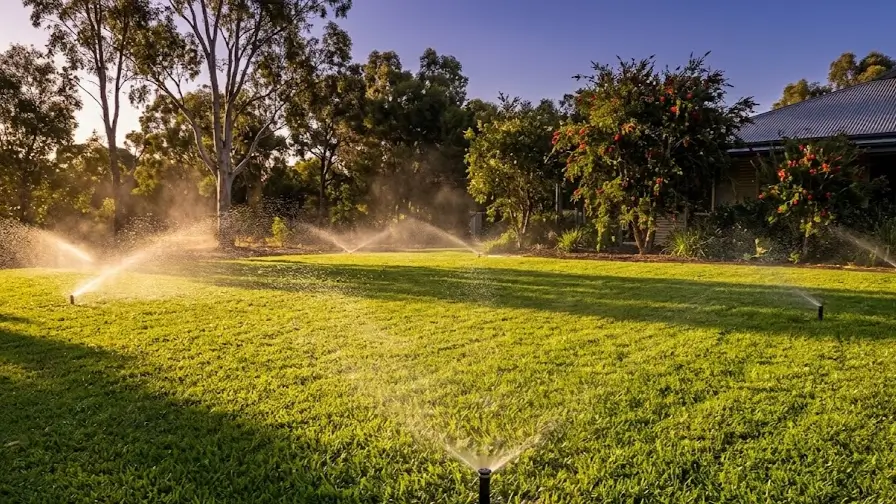
The answer is a definitive yes. Providing your lawn with adequate moisture before the temperature drops is one of the most effective ways to insulate it against the cold.
- Heat Retention: Wet soil has a higher heat capacity than dry soil, meaning it stays warmer for longer and protects the roots.
- Evaporative Warmth: As water evaporates from the soil surface overnight, it releases a small amount of heat that creates a slightly warmer microclimate around the grass blades.
- Structural Integrity: Hydrated grass cells are plumper and more resilient, making them less likely to rupture when ice crystals begin to form.
In short, hydrated grass is healthy grass, and healthy grass survives the winter far better than a parched lawn.
How to Water Grass Before a Frost —— The Right Way
- Timing is Everything: Water your lawn in the evening, roughly 1 to 2 days before the frost is expected. Do not wait until the morning of the frost. The goal is to give the water enough time to move past the blades and settle into the soil.
- Water Deeply, Not Lightly: Aim for about 2–3 cm of water penetration into the root zone. Avoid a light surface sprinkle; if water sits on the foliage, it is more likely to freeze directly on the blades and cause "ice burn." Always direct the water at the base of the grass.
- The Morning Mist: If frost has already settled on your lawn, a very brief, light misting at first light can help melt the ice evenly. This reduces the patchy, scorched look caused by an uneven natural thaw.
- Stay Off the Lawn: This is the golden rule. Never walk on frosted grass. The frozen blades are incredibly brittle and will snap under the weight of a footstep, leading to permanent dead patches that won't recover until spring.
Pro Tip: Using a smart irrigation system to pre-schedule your evening watering removes the human error of forgetting to check the forecast. This is where a device like the Aiper IrriSense 2 becomes invaluable, allowing you to manage schedules remotely so you never accidentally water on a frost-heavy morning.

When You Should NOT Water Before a Frost
While watering is generally helpful, there are specific times when it can do more harm than good. Keep these negative scenarios in mind:
- While frost is actively forming: If you see ice crystals appearing, stop. Adding water now will just cause it to freeze instantly on the leaf surface, worsening the damage.
- On the morning of the frost: Water applied at dawn hasn't had time to reach the roots and will likely sit on the foliage, increasing the risk of freezing.
- When overwatering: Saturated, "boggy" soil freezes much harder during prolonged cold and can lead to fungal issues like winter mould.
- When the soil is already wet: Use the footprint test. If the grass doesn't spring back after you step on it (in non-frost conditions) or there is standing water, skip the session.
Australian Grass Types & Frost Tolerance — Know Your Lawn
Not all Australian lawns require the same level of intervention. Identifying your grass type is the first step in protecting it. Depending on where you live and the variety of turf you have, your pre-frost routine will look quite different.
| Grass Category | Common Australian Varieties | Frost Tolerance | Watering Recommendation |
| Warm-season grasses | Kikuyu, Buffalo, Couch, Zoysia | Low — highest risk of damage | Deep water the evening before frost |
| Cool-season grasses | Fescue, Rye | Medium–high — contain antifreeze proteins | Standard winter watering is sufficient |
Homeowners in Australia's southern states: Victoria, South Australia, ACT, and Tasmania, with Kikuyu or Buffalo lawns, should pay particular attention to pre-frost watering. These varieties are highly susceptible to the cold and will likely go dormant or brown off without proper hydration. Conversely, those in northern tropical regions typically do not experience frost, so this advice generally won't apply to those warmer climates.
For a full guide on preparing your lawn before winter, see our Autumn Lawn Care Guide for Australian Gardens.
What to Do the Morning After a Frost
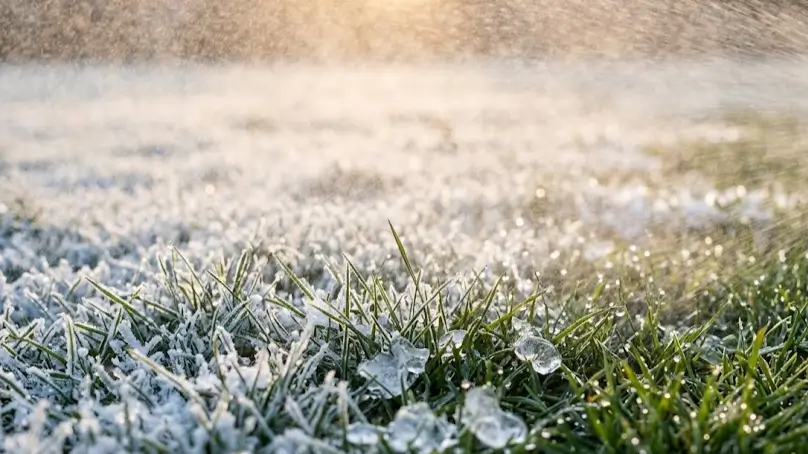
If you wake up to a white lawn, don't panic. Following these steps will help your grass recover without lasting scars.
Keep off the grass: Wait until the sun has completely melted the ice before allowing pets or people to walk on the lawn.
Use a gentle spray: A very light, even mist of water can help the frost melt more uniformly than the sun alone. This prevents the "sun-scald" look that happens when one side of a blade thaws faster than the other.
Hold the mower: Never mow or fertilise a frost-stressed lawn. Wait until the grass has fully thawed and shows signs of life before performing any maintenance.
Be patient with browning: If you see brown tips, it’s likely just ruptured cell walls. Most healthy Australian lawns are resilient enough to bounce back naturally once the weather warms up.
Conclusion
The best defence against a frosty Australian morning is a well-hydrated root system. By watering the evening before a freeze deeply and keeping the moisture directed at the soil rather than the blades, you give your lawn the best chance of staying green through winter.
FAQ
Is it OK to water grass when frost is expected?
Yes, water the evening before a forecast frost, not on the morning it arrives. Deep watering 1–2 days ahead allows moisture to reach the root zone and insulate the grass. Do not water once frost has already formed on the blades.
Should I run my sprinklers before a freeze?
Yes, but schedule them to run the evening before, not at dawn. Watering on the morning of a frost leaves water sitting on cold blades, increasing the risk of ice damage. A smart irrigation system lets you pre-schedule this automatically.
What happens if I don't water my lawn before a frost?
Dry grass cells are more vulnerable to frost damage. Without adequate moisture, the cell walls of grass blades are more likely to rupture when temperatures drop, causing yellowing and brown patches — particularly for warm-season grasses like Kikuyu and Buffalo.