
How to Water a Sloped Lawn in Australia Without Runoff or Dry Patches
Use cycle-and-soak method to water sloped lawns in Australia. Choose rotary nozzles for gentle slopes and drip irrigation for steep areas. Aeration, proper mowing and mulching also stop runoff and dry patches.

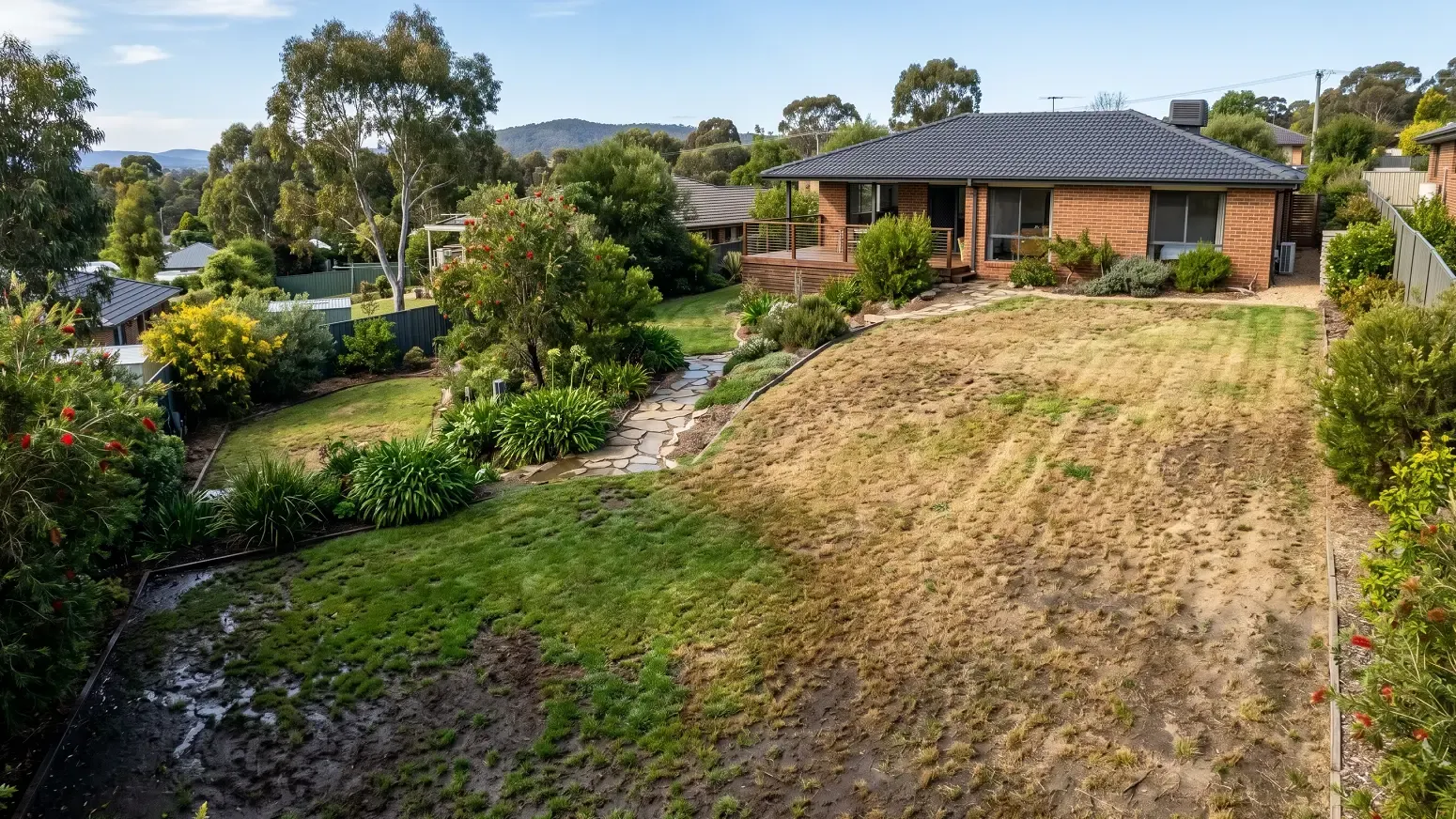
Watering a sloped lawn looks straightforward until you actually watch it happen. The top of the slope gets a brief drink, the bottom turns soft and waterlogged, and the middle — somehow — stays dry. Run the sprinklers longer and the problem gets worse, not better. The issue is not the amount of water being applied; it is the speed at which gravity moves it.
It effectively comes down to one principle: slow the water down so the soil has time to absorb it. Every technique in this guide exists to solve that one problem. Whether your yard has a gentle front rise or a significant back embankment, the approach is the same — work with gravity rather than against it.
How Slopes Affect Watering Needs for Lawns
On a flat lawn, water soaks into the soil broadly and evenly. On a slope, gravity intercepts it. Water moves downhill faster than the soil can absorb it, which creates two problems that compound each other.
At the top of the slope, water runs off before the roots have absorbed enough. The soil dries out quickly, and this section consistently underperforms even when the rest of the lawn looks healthy. In Australian summers — particularly in Queensland, Western Australia, and inland NSW — the top of a slope can go from dry to heat-stressed within 48 hours of a watering cycle that leaves the bottom saturated.
At the bottom of the slope, the opposite occurs. Water collects, soil becomes waterlogged, and root systems are deprived of oxygen. Anaerobic conditions at the base accelerate root rot, fungal disease, and — on clay-heavy soils common across Victoria and parts of South Australia — surface crusting that makes future absorption even worse.
The steeper the incline, the more pronounced both problems become. Research notes that slopes above 12% face significantly higher erosion risk, and on slopes above 25%, standard sprinkler systems become essentially ineffective without design adjustments.
The soil type matters almost as much as the angle. Sandy soils drain quickly and offer a narrower window before water moves on; clay soils are slow to absorb and prone to surface runoff even on gentle inclines. For most Australian yards — which sit on clay-heavy subsoils — this means the absorption window is shorter than most people expect.
The Cycle and Soak Method: The Most Important Technique for Any Sloped Lawn
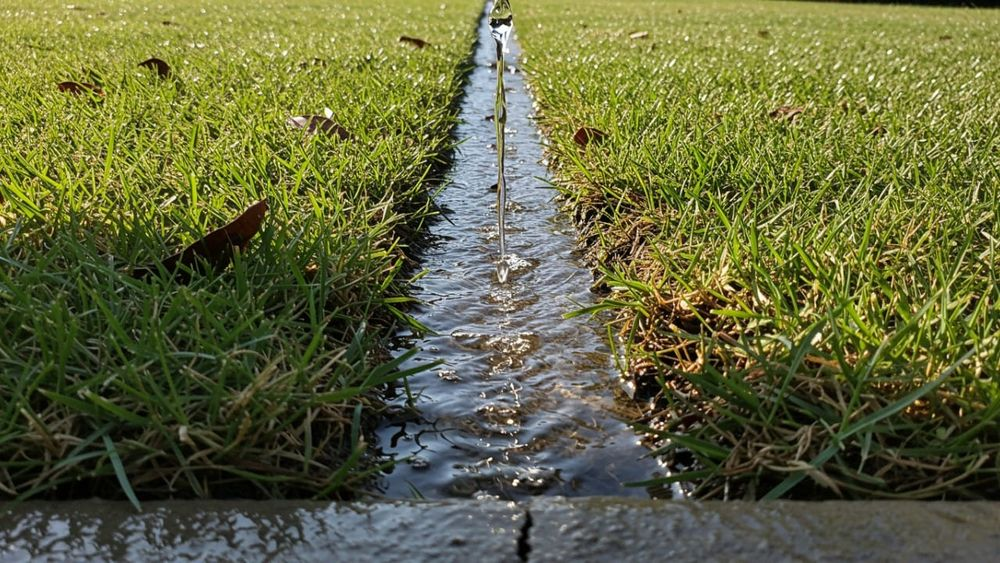
Cycle and soak is the most effective watering technique for sloped lawns, and it works on every irrigation type, slope angle, and every soil type.
The principle is simple. Instead of running your sprinklers for one continuous long cycle, you split the total run time into multiple short cycles with absorption breaks in between.
For moderate slopes (5–15% incline): Split your normal watering time into two cycles with a 30–45 minute break between them. If a zone normally runs for 12 minutes, schedule two 6-minute cycles separated by 40 minutes.
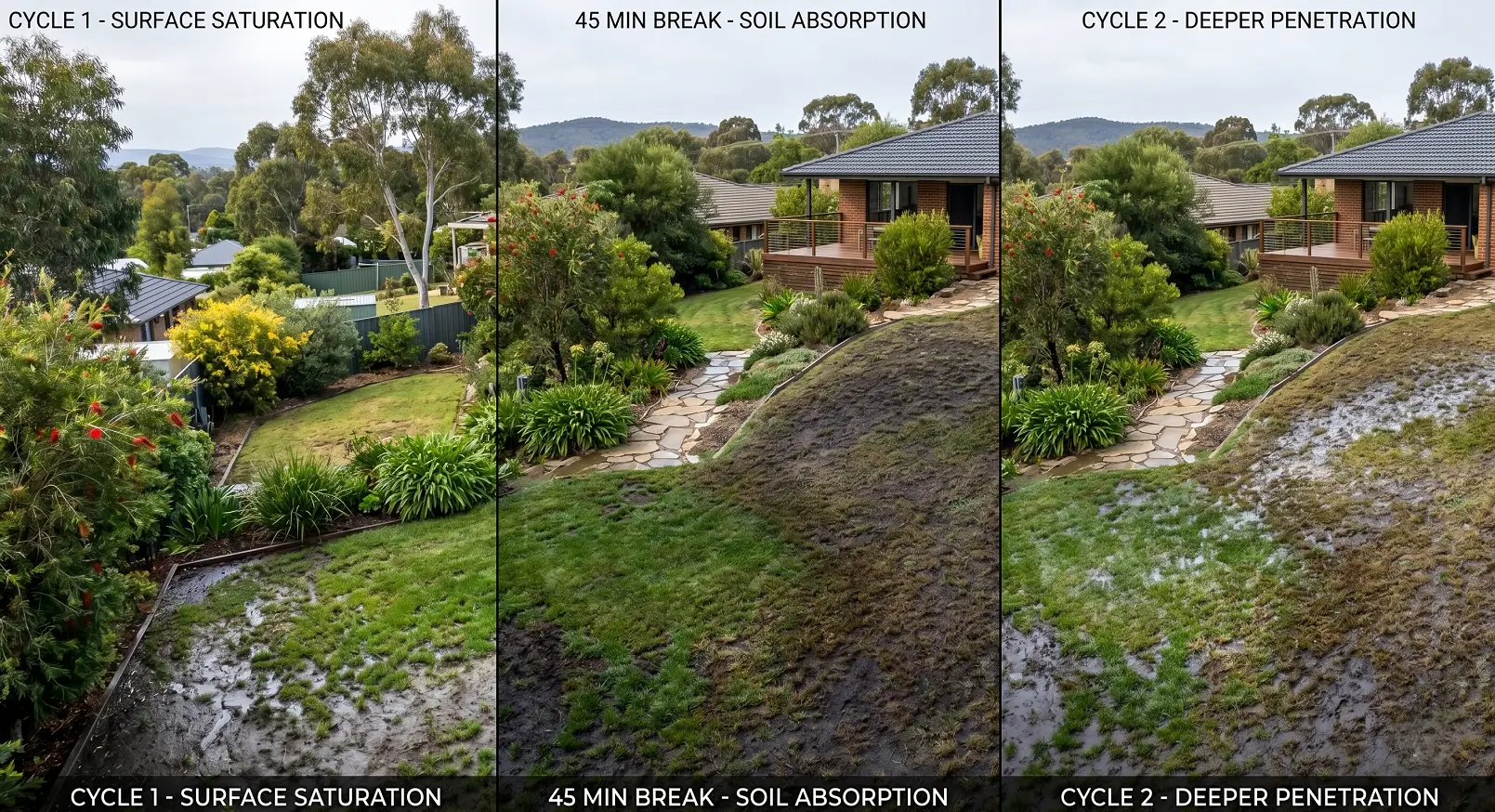
For steep slopes (over 15% incline): Split into three or four cycles of 3–5 minutes each, with 45–60 minute breaks between. Three 4-minute cycles with 45-minute breaks will outperform one 12-minute continuous cycle on any steep incline.
The break periods are not wasted time — they are when the absorption actually happens. The water from the first cycle is moving down through the soil profile while the second cycle begins, allowing each pass to penetrate more deeply than a single long run could achieve.
Most modern smart irrigation controllers automate this precisely — and for sloped lawns specifically, the scheduling flexibility makes a real difference. The Aiper IrriSense 2 supports up to 10 independently scheduled watering zones, each with its own cycle-and-soak programme, so upper and lower sections of a slope run on entirely separate timing sequences without manual adjustment. On a standard mechanical timer, you can replicate this by programming multiple start times within the same permitted watering window — but you will need to update it manually every season.
What Is the Best Irrigation System for a Sloped Lawn?
The right system depends on your slope's angle and what you are growing on it.
Rotary Nozzles — Best for Mild to Moderate Slopes
Rotary nozzles (sometimes called rotary sprinklers or MP Rotators) apply water at a significantly slower rate than standard fixed spray heads — typically 5–12mm per hour rather than 25–40mm per hour. That slower application rate gives the soil more time to absorb each millimetre of water before it can run off. For a lawn on a mild to moderate slope, replacing standard spray heads with rotary nozzles is often the single most impactful upgrade available.
They also distribute water more evenly across the zone, which addresses the top-dry, bottom-wet problem directly.
Drip Irrigation — Best for Steep Slopes and Garden Beds
On steep slopes or areas planted with ground cover, garden beds, or mixed plantings rather than turf, drip irrigation is the superior choice. Water is delivered directly to the root zone through emitters placed at each plant, eliminating surface runoff almost entirely. There is no spray arc to be affected by slope angle, no runoff from soil surface, and no evaporation from airborne water.
For slopes between 25% and 50%, irrigation professionals consistently recommend drip as the default system. It is also significantly more water-efficient than any spray-based system.
Soaker Hoses — Best for Small or Irregular Slopes
For small embankments or irregularly shaped areas where laying out a full drip system is impractical, soaker hoses deliver a slow, gentle release across the full length of the hose. They work well for sloped garden borders and narrow strips where a sprinkler layout does not fit cleanly.
How to Retain Water on a Sloped Lawn
Improving the soil's ability to hold moisture reduces how much irrigation work your system needs to do in the first place.
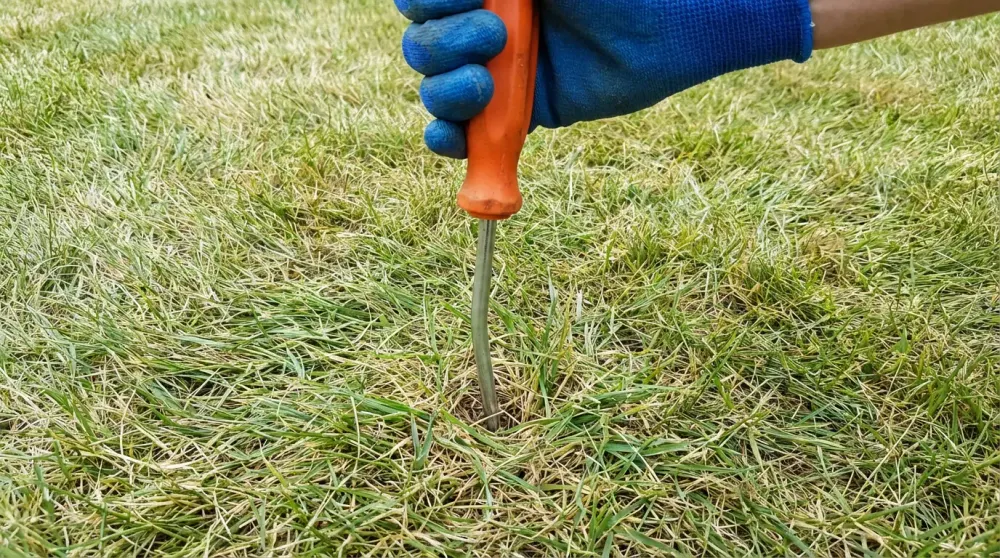
Aerate the slope annually. Compacted soil is the enemy of slope irrigation — water beads on the surface and runs off before it can penetrate. Core aeration opens channels in the soil profile that allow water to move downward rather than sideways. For Australian lawns on clay-heavy soils, aeration at the start of the growing season makes a measurable difference to how effectively subsequent watering sessions perform.
Mulch exposed garden beds on the slope. A 5–7cm layer of organic mulch on garden beds within or around your sloped lawn significantly slows moisture evaporation from the soil surface. It also moderates soil temperature — important on north-facing slopes that receive full sun through Australian summer afternoons.
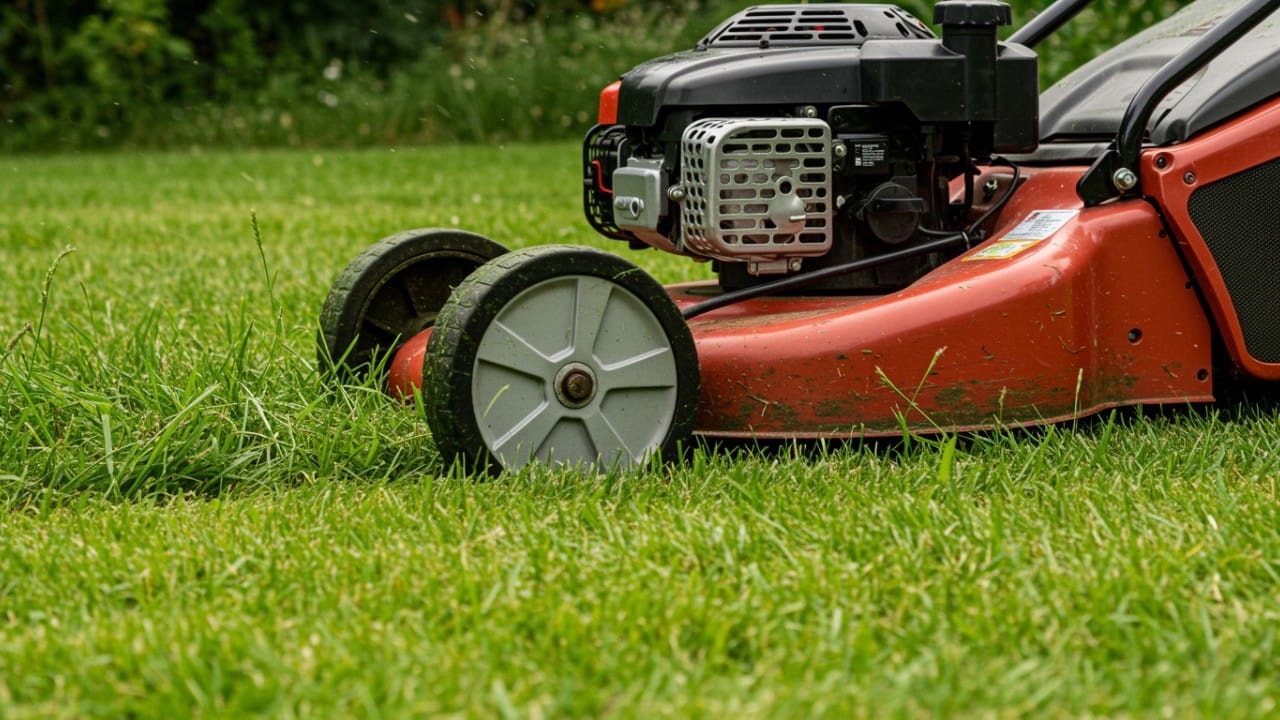
Mow slightly higher than usual. A lawn kept at the upper end of its recommended mowing height shades the soil surface, which reduces evaporation and slows the drying-out process at the top of the slope. For buffalo grass — one of the better-performing varieties on sloped Australian lawns due to its deep root system — the recommended mowing height is 30–50mm. Keeping it toward the 50mm end through summer noticeably improves moisture retention. See our guide on best mowing height for lawn for variety-specific recommendations.
Add organic matter when topdressing. Sandy or free-draining soils hold very little moisture on a slope. Topdressing with a quality compost mix improves the soil's water-holding capacity over successive seasons. This is a longer-term improvement, but one that compounds with every season.
FAQs
How to retain water on a sloped lawn?
Aeration, organic mulch on garden beds, and topdressing with compost all improve the soil's moisture-holding capacity on a slope. Mowing slightly higher than usual reduces evaporation from the surface. For the irrigation itself, cycle and soak is the most effective technique — short bursts of water with absorption breaks between them allow each cycle to penetrate rather than run off.
What is the best sprinkler system for hillsides?
For mild to moderate slopes (under 15%), rotary nozzles paired with cycle-and-soak scheduling outperform standard fixed spray heads. For steep slopes (over 15–25%), drip irrigation eliminates runoff almost entirely by delivering water directly to the root zone. For very steep slopes (over 50%), drip irrigation with terracing or retaining walls is the standard professional recommendation.
How to install sprinklers on a slope?
Zone the slope by elevation — at minimum, separate upper and lower zones on independent schedules. Use pressure-compensating heads with built-in check valves to prevent low-head drainage at the base of the slope after cycles end. Position spray heads to angle across the slope rather than downhill. Apply cycle-and-soak scheduling to every zone regardless of head type.
Which irrigation method is suited for steep terrain?
Drip irrigation. It delivers water at root level through individual emitters, eliminating surface runoff entirely. It also reduces evaporation and can be paired with a smart controller for automated scheduling. For turf on a steep slope, rotary nozzles with cycle-and-soak remain a practical alternative where drip is not feasible.
Can I water a sloped lawn during water restriction days?
Yes, provided your watering falls within your council's permitted hours — typically before 10am and after 4pm in most Australian states. Cycle-and-soak scheduling requires multiple start times within the permitted window, which most smart irrigation controllers manage automatically. Check that your cycles begin and complete within the allowed window.
Conclusion
Watering a sloped lawn well is not about applying more water — it is about applying it slowly enough for the soil to keep it. Cycle and soak handles the timing. Rotary nozzles or drip irrigation handle the distribution. Zoning by elevation handles the uneven demand. And aeration, mulching, and the right mowing height handle the soil's ability to absorb what the irrigation system delivers. Get those four elements right and a sloped lawn performs as well as any flat one — often better, because the drainage is naturally superior once runoff is controlled.