
What Is Drip Irrigation? A Complete Guide for Australian Gardeners
Drip irrigation achieves over 90% water efficiency for Australian gardens, avoids leaf fungal diseases and runoff on slopes, and is mostly exempt from watering restrictions. It fits planting beds, fruit trees and slopes, while sprinklers remain better for large lawn turf.

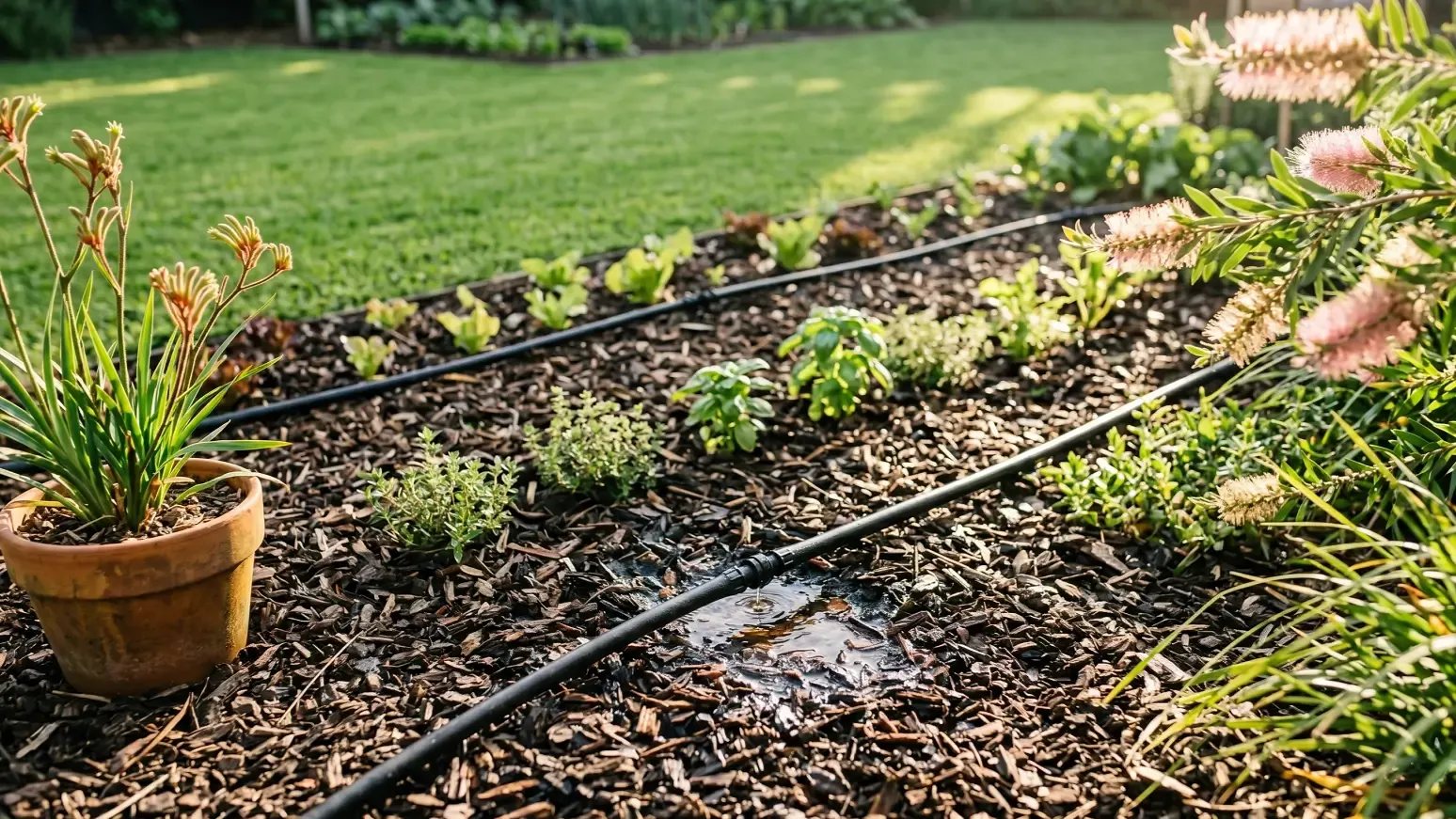
Drip irrigation is one of those gardening terms that sounds technical but describes something straightforward: a system that delivers water slowly, directly to the roots of your plants, rather than spraying it into the air and hoping for the best. In Australia's climate — where water is expensive, summers are long, and evaporation rates are high — it is one of the most practical ways to keep a garden healthy without watching the water bill climb every quarter.
This guide covers everything you need to know: how the system works, where it excels, what it cannot do, and the practical details that determine whether it is the right choice for your garden.
How Does Drip Irrigation Work?
A drip irrigation system delivers water through a network of tubes placed on or just below the soil surface. At regular intervals along these tubes, small devices called emitters release water at a slow, controlled rate — typically 1 to 4 litres per hour per emitter. That slow release gives water time to soak into the soil before it can evaporate or run off, delivering moisture directly to the root zone where plants actually need it.
Drip irrigation is highly effective because of two factors: water is allowed to absorb into the soil before it evaporates, and it is applied only where it is needed rather than being lost to wind drift.
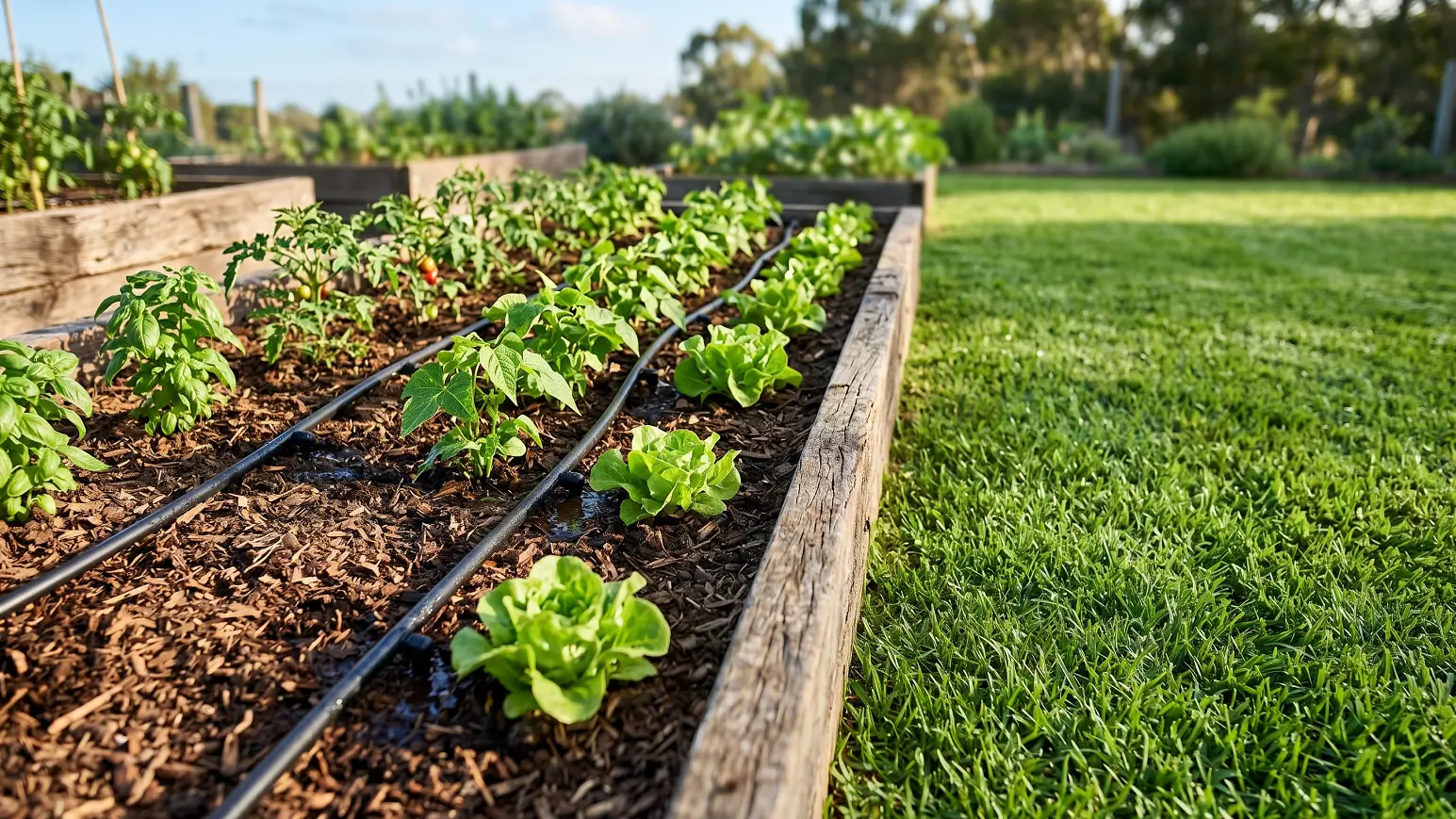
There are two main configurations:
Above-ground dripline sits on the soil surface between plants. It is easier to install, inspect, and adjust, making it the practical choice for garden beds, vegetable patches, and potted plants. The main trade-off is UV exposure over time, which degrades the tubing.
Sub-surface drip irrigation (SDI) is buried 10–15cm below the surface and delivers water even more directly to the root zone with minimal evaporation. It is invisible, protects the tubing from UV damage, and performs well under turf. The installation cost is higher and fault-finding takes more effort, but for permanent garden installations it is the more efficient long-term option.
Key Benefits of Drip Irrigation
Water efficiency. Drip irrigation operates at 90% efficiency or higher, whereas sprinkler systems typically run at 75–85%. In practical terms, that gap means less water used for the same result — which matters in both cost and your lawn water conservation goals.
No leaf wetness. Because drip irrigation targets the soil rather than the foliage, leaf blades stay dry. This removes the primary environmental trigger for fungal diseases like dollar spot and brown patch, which thrive on prolonged leaf wetness.
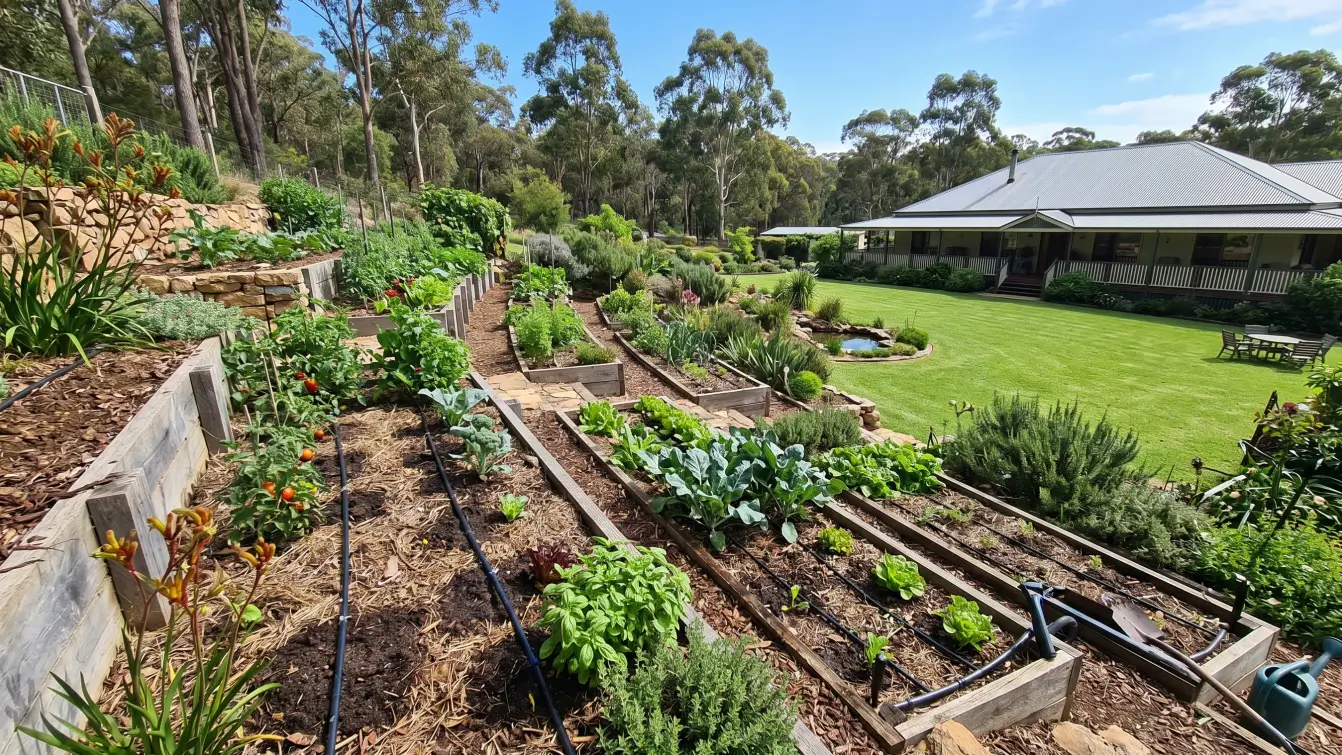
Works on slopes and uneven ground. Unlike sprinklers, which lose efficiency on slopes due to runoff, drip systems apply water slowly enough for the soil to absorb it regardless of the incline. Sub-surface systems particularly excel on slopes because there is no surface runoff at all.
Reduced weed pressure. Water is applied only at the emitter points — the dry soil between plant rows receives no moisture, which significantly reduces weed germination between beds.
Compatible with Australian water restriction windows. Drip irrigation can run at any time of day or night. Unlike sprinkler systems, which are subject to permitted watering hours in most states, drip systems are generally exempt from or less restricted by timed watering rules. Check your local council for specific exemptions.
Where Drip Irrigation Is Used?
Drip irrigation performs best in defined planting areas with individual plants. The most common applications in Australian gardens are:
- Vegetable gardens and raised beds — the classic use case; each plant gets its own emitter and precise water delivery encourages root depth and yield
- Fruit trees and orchard rows — emitters placed at the drip line of each tree maintain consistent root-zone moisture without wetting the trunk
- Garden beds and mixed plantings — dripline laid between ornamentals or natives irrigates efficiently without wetting pavement or paths
- Sloped gardens and embankments — slow application prevents runoff that would otherwise carry both water and topsoil downhill
- Greenhouses and pots — micro-drip systems keep containerised plants consistently watered with minimal maintenance, particularly useful if you need to water plants while you're away.
Is Drip Irrigation Better Than Sprinklers?
The honest answer is that they solve different problems.
Drip irrigation is better for garden beds, vegetable patches, fruit trees, and defined planting areas — anywhere you want precise, low-volume water delivery to individual plants. It outperforms sprinklers on water efficiency, disease prevention, and slope management.
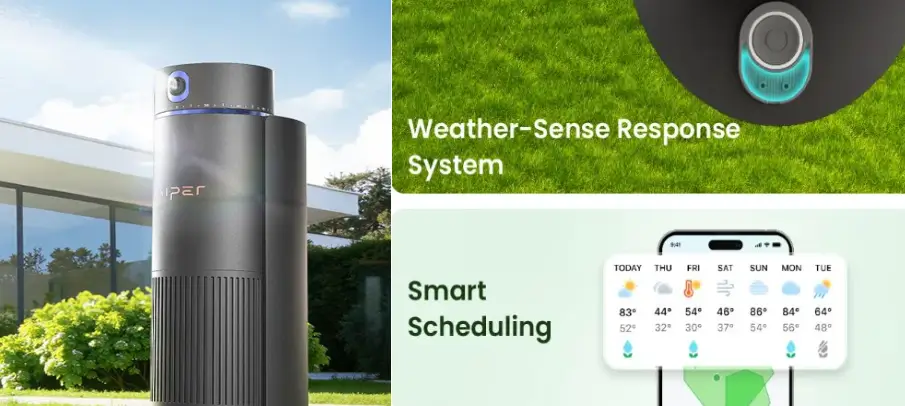
Sprinkler systems are better for turf lawns, where even distribution across a large surface area is the goal. A sprinkler-based system covers ground too broad and irregular for drip emitters to reach effectively. For Australian homeowners with a lawn plus a garden, the practical answer is usually both: drip for the beds, sprinklers for the turf. Systems like the Aiper IrriSense 2 cover the lawn side of that equation with smart scheduling and weather-adaptive watering, while a separate drip setup handles the garden areas independently.
How Long Should You Water With Drip Irrigation?
Drip irrigation run times depend on three variables: your emitter flow rate (litres per hour), how much water each plant needs, and your soil type. There is no universal number, but a practical starting range for established garden beds in most Australian conditions is 30–60 minutes per session, two to three times per week during summer, with frequency reduced to one to two times per week in cooler months.
Sandy soils drain quickly and benefit from shorter, more frequent sessions. Clay soils — common across Victoria, South Australia, and parts of NSW — hold water longer, so less frequent, longer sessions are more effective.
The most reliable method is the screwdriver test: push a screwdriver or finger 10cm into the soil near an emitter after a cycle. If the soil is moist at that depth, the run time is sufficient. If it is still dry below 5cm, extend the run time by 10–15 minutes and retest.
Pros and Cons of Drip Irrigation
Pros |
Cons |
|
|---|---|---|
Efficiency |
90%+ water efficiency |
Higher upfront cost than sprinklers |
Plant health |
No leaf wetness, reduces fungal disease |
Requires regular maintenance (filters, emitters) |
Flexibility |
Works on slopes, uneven ground, any soil |
Not suitable for large turf areas |
Compliance |
Often exempt from restriction watering hours |
Clogged emitters can go unnoticed |
Weed control |
Dry soil between plants suppresses weeds |
UV exposure degrades above-ground tubing over time |
Installation |
Modular, expandable, DIY-friendly |
Sub-surface systems require professional installation |
Conclusion
Drip irrigation is not a universal solution — it excels in defined garden areas and struggles on open turf — but within its range, it is genuinely the most water-efficient irrigation method available for Australian conditions. Getting the emitter type, flow rate, and run schedule right for your soil takes a season of adjustment, but once dialled in, a drip system requires very little attention and delivers reliable results through even the harshest Australian summers.
FAQs
What is the 30/30 rule for drip irrigation?
A system design guideline specific to 1/4-inch micro-tubing: keep each run no longer than 30 feet (approximately 9 metres) and total flow no higher than 30 gallons per hour. Beyond those limits, friction causes pressure loss along the line, meaning emitters at the far end deliver noticeably less water than those at the start. For larger 1/2-inch mainline, the equivalent rule is 200/200.
What are the common problems with drip irrigation?
The most common problems are emitter clogging, deterioration of dripper components, and mismanagement of system pressures. Clogged emitters are typically caused by mineral deposits, fine debris, or algae — a filter installed after the backflow preventer prevents most of it. Pressure irregularities cause uneven flow between zones; a pressure regulator at 100–200 kPa resolves this. For sub-surface systems, root intrusion is a long-term risk near trees.
Does drip irrigation use a lot of water?
The opposite — drip systems typically use 30–50% less water than overhead sprinklers by delivering water directly to the root zone and eliminating losses from evaporation and runoff. The slow flow rate of 1–4 litres per hour per emitter appears modest, but applied directly to the root zone it maintains consistent soil moisture with none of the waste that spray-based systems cannot avoid.