
When to Fertilise a Buffalo Lawn in Australia
Fertilise buffalo lawn when it is actively growing, not just by the calendar. Find the right timing, seasonal schedule and conditions for a healthier Australian buffalo lawn.

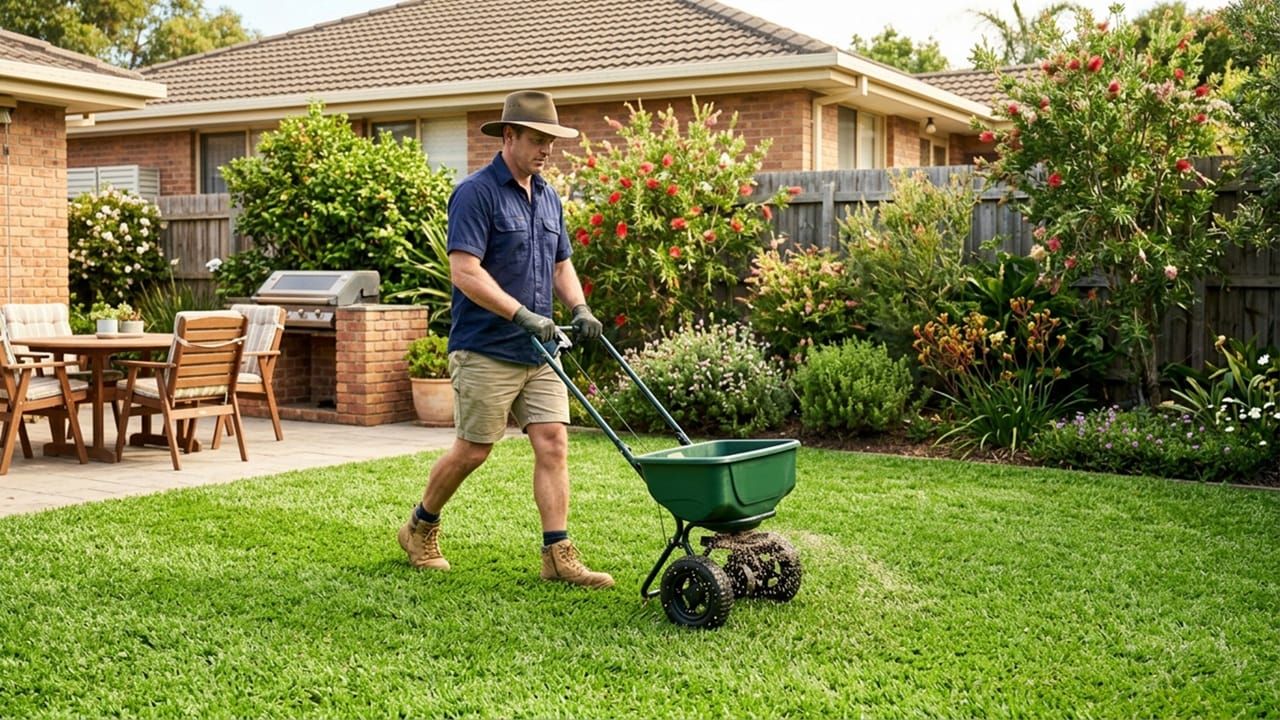
In Australia, established buffalo lawn is normally fed while it is actively growing, with spring and autumn serving as the core applications and an optional summer feed when the lawn is healthy and adequately watered. Before timing your application, clarify that Australian buffalo grass refers strictly to soft-leaf buffalo (Stenotaphrum secundatum), a popular warm-season turf cultivar, rather than the completely unrelated, coarse North American "buffalograss" (Bouteloua dactyloides).
Pro tip: If you are unfamiliar with soft-leaf buffalo grass varieties or want to confirm which turf type is in your yard, take a moment to read our introductory guide on buffalo lawn varieties before establishing a feeding schedule.
When Is the Best Time to Fertilise a Buffalo Lawn?
The optimal window to apply lawn fertiliser coincides directly with active turf growth. Apply the first main feed after winter only once the lawn has greened up and resumed regular mowing; a second feed can support active summer growth, and an early-to-mid-autumn feed can prepare the turf for cooler conditions.
| Season | Primary Action | Controlling Conditions |
|---|---|---|
| Spring | Main Restart Feed | Apply after frosts cease, when growth resumes and mowing begins. |
| Summer | Feed Only If Active | Only feed unstressed turf with adequate soil moisture and irrigation. |
| Autumn | Final Core Feed | Apply in early-to-mid autumn while soil remains warm. |
| Winter | Usually Skip | Skip on dormant turf; exception only for frost-free tropical zones. |
Always make active growth, sufficient soil moisture, local weather forecasts, and fertiliser label instructions your controlling conditions before applying nutrients.
Buffalo Lawn Fertilising Schedule by Season
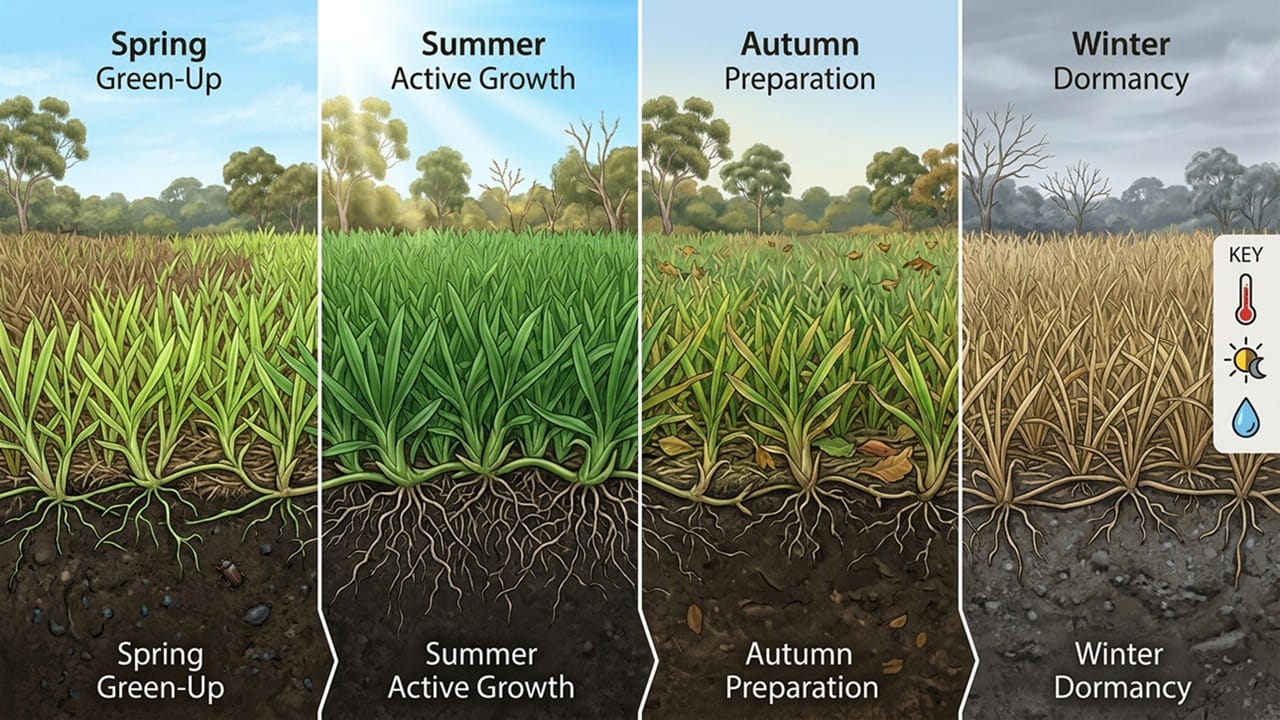
Spring: Wait for Active Growth, Not Just the Calendar
Spring provides the essential restart feed for your lawn, but the ideal timing varies significantly by geographic location.
In frost-prone southern areas, wait patiently until lingering frosts and chilly mornings have passed completely and the buffalo grass has visibly greened and required one or two routine mows.
In warmer northern regions, active growth may resume much earlier in the season. Always choose a dedicated buffalo-safe, slow-release lawn fertiliser and apply it directly to moist, unstressed turf in strict accordance with the product label instructions.
Summer: Feed Only When Heat and Moisture Are Under Control
An early- or mid-summer feed is beneficial primarily for a healthy, vigorously growing lawn that receives consistent moisture. Where manual watering is difficult to keep consistent, the Aiper IrriSense 2 allows users to create custom watering maps and schedules for different lawn areas through the Aiper app.
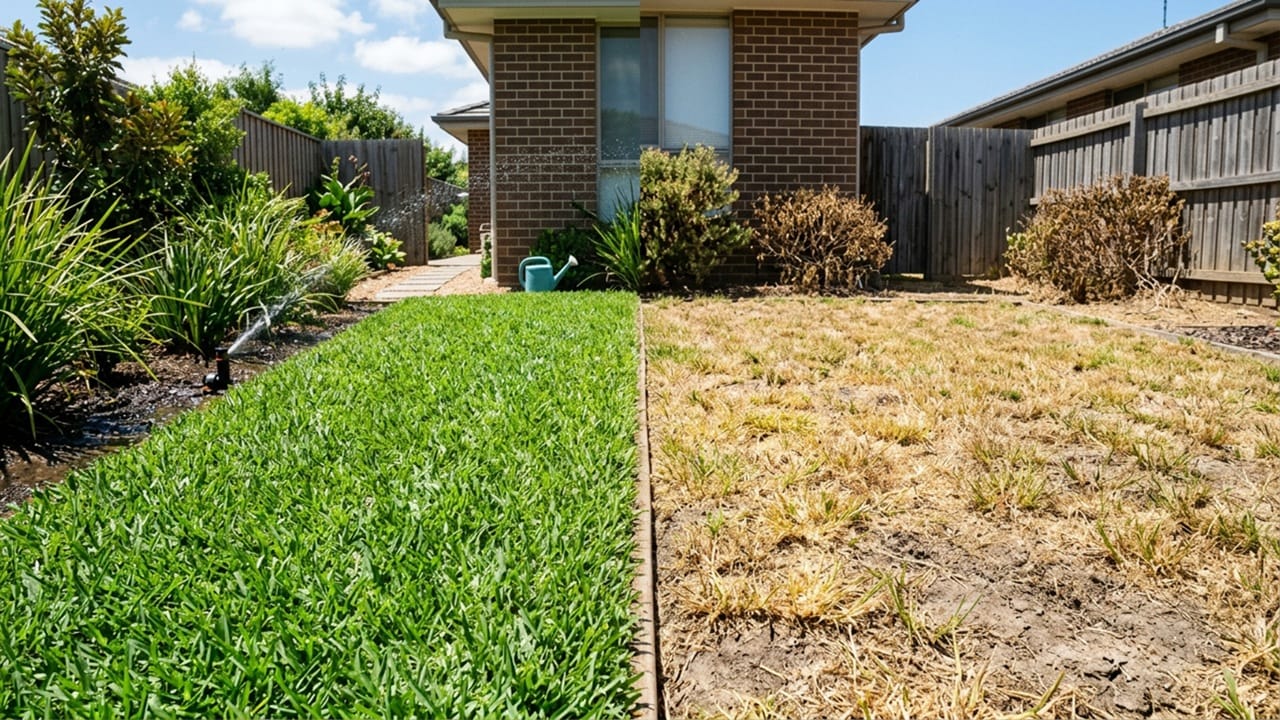
However, never fertilise during heatwaves, severe drought stress or strict municipal water restrictions that prevent adequate watering-in. It is critical to separate robust summer growth from extreme summer heat stress. Feeding wilted or moisture-deprived turf can cause severe leaf burn, meaning hotter weather should never automatically trigger a fertiliser application.
Autumn: Apply the Final Main Feed While the Soil Is Still Warm
Position early to mid-autumn as your lawn's final core application across temperate regions, applying nutrients before ambient soil temperatures drop and growth slows sharply. The main objective of this autumn feed is supporting root density , turf recovery, and winter resilience. Nutrient selection must follow the specific fertiliser label, current turf condition, and formal soil test results if persistent issues arise.
Winter: Usually Skip Dormant Buffalo
Because soft-leaf buffalo is a warm-season grass cultivar, its growth slows dramatically or stops entirely during cold weather, making routine winter fertilising generally ineffective and wasteful. A limited exception exists only for frost-free tropical or warm coastal areas where the turf remains visibly active throughout the season, using a light application supported by product labels.
If your lawn turns yellow in winter, direct troubleshooting toward cold dormancy or soil compaction rather than assuming nitrogen deficiency is responsible.
Adjust the Timing for Your Part of Australia
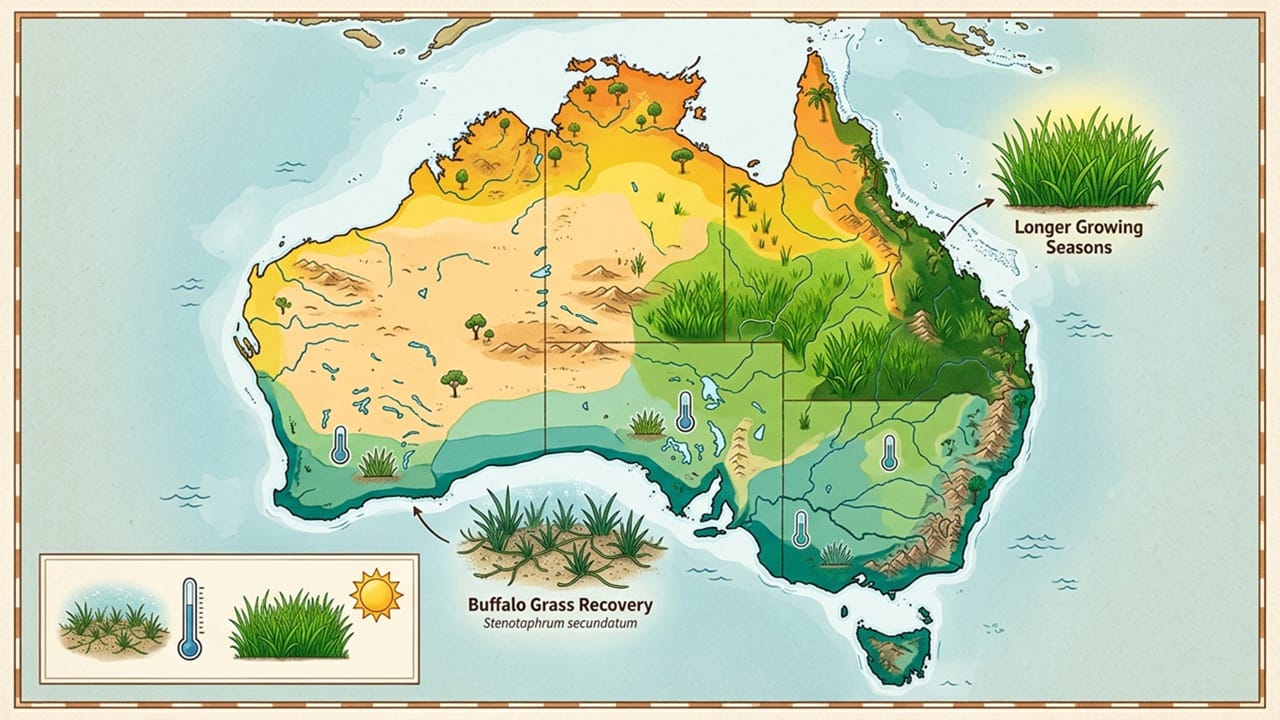
As mentioned above, because distinct geographical regions across Australia experience vastly different seasonal patterns, fertilising timing must be calibrated to local climate conditions rather than a rigid national calendar.
Temperate and Frost-Prone Regions
Regions including Melbourne, Canberra, Adelaide, inland New South Wales, and cool coastal zones require a tailored approach. Expect a significantly later spring green-up, requiring patience until soil temperatures rise above 15°C, along with an earlier autumn feeding cut-off before chilly nights set in. Never apply fertiliser to frosted, waterlogged, or dormant turf.
Subtropical and Tropical Regions
In warm zones like Brisbane, coastal Queensland, Darwin, and the far north, the active-growth window spans most of the year. However, high-intensity wet-season downpours can easily wash applied nutrients past root zones or into stormwater systems, while dry-season water supply determines whether feeding is practical.
The golden rule remains unchanged: apply fertiliser only during steady growth when the product can be thoroughly watered in without causing environmental runoff.
How Often Should You Fertilise Buffalo Grass?
Set Frequency by Product Longevity and Lawn Response
To reconcile conflicting advice recommending anywhere from two to four annual applications, two to three core feeds serve as a reliable practical baseline for most established Australian buffalo lawns. However, actual frequency must be determined by the product label's specified release duration, local climate, soil structure, clipping management (mulching vs. catching), and turf growth rates.
Never repeat fertiliser applications merely because the turf isn't a dark green shade, as soil conditions or shade may be limiting factors.
Choose the Fertiliser Type for the Job & How Fast It Takes Effect
Selecting the right fertiliser format helps deliver consistent results and influences how quickly you see a response:
- Liquid Fertilisers (Fast-Acting) : Liquid formulas are absorbed directly through the leaves within 24 to 48 hours, making them ideal for rapid visual green-ups or correcting short-term nutrient deficiencies. However, their effects are shorter-lived.
- Slow-Release Granular Fertilisers (Sustained Feed) : Granular products breakdown gradually, showing visible results within 1 to 2 weeks and providing controlled, even nutrition over 8 to 12 weeks. They are the preferred choice for regular seasonal maintenance and deep root development.
Always check the N-P-K ratio on the package (Nitrogen for leaves, Phosphorus for roots, Potassium for stress resistance) and confirm the product explicitly states it is "Buffalo Safe".
If growth remains poor despite feeding, conduct a soil test—compacted soil, extreme pH levels, poor drainage, heavy shade, or pests often mimic nutrient deficiencies.
When Not to Fertilise Buffalo Lawn
Applying fertiliser at the wrong time can harm your lawn. Hold off on fertilising if any of the following conditions are present:
- Recent frost exposure or expected sub-zero night temperatures
- Ongoing heatwaves or extreme summer temperatures
- Drought stress or wilted turf
- Waterlogged, saturated, or flooded soil
- Active fungal disease or unmanaged insect pest outbreaks
- Recent selective herbicide applications (unless the label explicitly permits combining)
- Brown, dead turf patches that cannot absorb soil nutrients
Fertiliser is a growth supplement, not a medicine for dead plant tissue. Applying nitrogen to stressed or dead roots intensifies plant stress and results in nutrient runoff into local waterways.
Fertilising New Buffalo Turf
Newly laid turf requires a distinct management strategy compared to established lawns. Avoid applying standard lawn fertilisers immediately after installation; starter fertilisers are frequently incorporated into underlay soil prior to laying, and growers specify precise initial feeding windows.
Always follow the specific grower's guidelines and product labels, waiting until roots securely anchor into the underlying soil and produce visible new leaf growth while prioritizing consistent establishment watering without keeping soil permanently saturated.
Conclusion
Managing a vibrant Australian buffalo lawn comes down to a simple, practical rule: fertilise when the grass is actively growing, adequately hydrated, and capable of processing nutrients; pause applications whenever the lawn is dormant or under environmental stress. Let seasonal growth signs, your regional climate zone, and manufacturer label directions guide your spring, summer, and autumn feeding schedule for long-term turf health.
Frequently Asked Questions
Can I fertilise buffalo lawn after mowing?
Yes, but with caveats: mowing itself does not prevent fertilising, but avoid feeding immediately after scalping or during heavy heat stress. Allow damaged turf to recover slightly and always follow label instructions.
Should I fertilise buffalo lawn before rain?
Light, predictable rain helps wash granular fertiliser into the soil profile. However, heavy downpours or storms will cause surface runoff and nutrient loss. Always check local weather forecasts first.
Why is my buffalo lawn yellow after winter?
Post-winter yellowing stems from cold dormancy, soil compaction, shade, or iron deficiency. Wait for warm weather and active growth to resume before diagnosing nutrient needs, rather than dumping high-nitrogen fertiliser on cold soil.