
Clover Lawn vs Grass: Which Is Better for a Low-Maintenance Yard?
Clover lawns need less water, fertilizer & mowing than traditional grass, tolerate pet urine and drought, and support pollinators. Mixed clover-grass lawns balance durability and low upkeep; pair with smart irrigation to cut outdoor water waste.

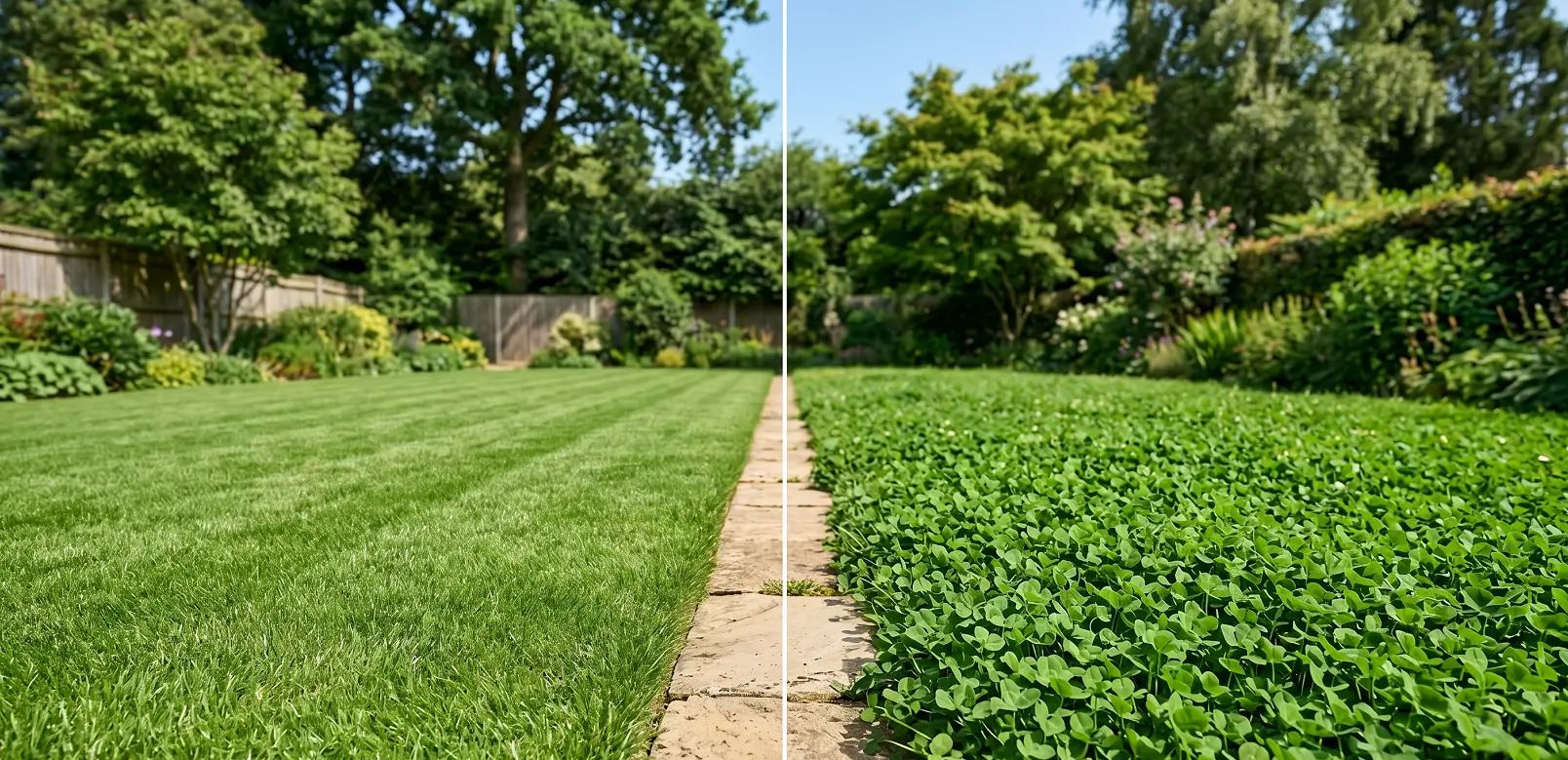
If you’re debating clover lawn vs grass, you’re probably tired of high water bills, constant mowing, and a yard that demands entirely too much of your free time. Let's be honest: a traditional lawn is often the most expensive, time-consuming crop many homeowners grow. For decades, the quintessential American dream included a perfectly manicured, emerald-green turfgrass lawn. But that dream often comes with a hidden nightmare of weekend chores, expensive synthetic fertilizers, and endless watering. Many homeowners spend significantly more money and water keeping grass alive than they ever realize.
Today, a growing shift is happening in backyard landscaping. Homeowners are stepping away from the golf-course aesthetic and looking for smarter, more sustainable alternatives. Clover, once dismissed as a common weed by lawn care purists, is making a steady comeback as the ultimate ground cover.
But is it actually right for your home? Let’s dive into an objective comparison of clover lawn vs grass, breaking down the pros, cons, costs, and maintenance needs so you can build a yard that works for your lifestyle—not the other way around.
Clover Lawn vs Grass at a Glance
If you are short on time and just want the fast facts, here is how a traditional turfgrass lawn stacks up against a modern clover yard across the most important categories for homeowners.
| Factor | Clover Lawn | Traditional Grass |
| Water Needs | Low | Moderate to High |
| Fertilizer Needs | Low (Self-fertilizing) | Moderate to High |
| Mowing Frequency | Low | High |
| Foot Traffic Tolerance | Moderate | High |
| Shade Tolerance | Moderate (Tolerates partial shade) | Varies highly by species |
| Seed Cost | Slightly higher upfront | Low to Moderate |
| Pollinator Friendly | High | Low |
| Uniform Look | Moderate | High |
| Pesticide / Herbicide Use | Low | Moderate to High |
Clover vs Grass: Key Differences in Looks, Feel, and Survival
To understand why these two yard covers perform so differently, we have to look slightly beneath the surface. We won't bore you with a botany textbook, but the fundamental difference lies in how they survive.
Traditional turfgrasses—like Kentucky Bluegrass, Fescue, or Bermuda—are incredibly hungry and thirsty plants. To keep that dense, uniform, carpet-like appearance, they require a steady, external supply of nitrogen and consistent deep watering. When they don't get it, they quickly turn brown and go dormant. However, their superpower is durability. The intricate root systems of turfgrass are designed to take a beating, making them the undeniable champions for sports fields and heavy foot traffic.
Clover, on the other hand, belongs to the legume family. It has a unique natural ability called "nitrogen fixation." Clover literally pulls nitrogen out of the air and pushes it down into the soil, creating its own fertilizer. It also develops deep taproots that reach far below the surface to find moisture during dry spells. Visually, a clover lawn offers a textured, varied green look with small round leaves. It survives brilliantly in poor soil and drought conditions, but its softer stems mean it won't hold up to a daily game of neighborhood tackle football quite as well as traditional grass.
Why Homeowners Are Switching to Clover (The Real Benefits)
The rising popularity of clover isn't just a passing internet trend; it solves real, expensive problems for the modern homeowner.
First and foremost, it is the ultimate low maintenance lawn. Depending on the variety you plant (such as microclover), it typically maxes out at a few inches tall. That means you can drastically reduce your mowing frequency. Instead of sweating behind a mower every single Saturday, you might only need to trim a clover lawn a few times a season to keep it tidy.
Furthermore, clover is a naturally drought tolerant lawn. During scorching summer months when traditional grass turns brown and crispy without constant sprinkling, clover stays remarkably green and lush.
Another massive advantage is natural weed suppression. As clover spreads, its dense root structure and broad leaves act as a living mulch, shading out sunlight and preventing weed seeds from germinating. You will spend far less time pulling dandelions or crabgrass.
Beyond saving you time and money, it’s an inherently eco friendly lawn. By eliminating the need for synthetic nitrogen fertilizers, you prevent chemical runoff from entering local waterways. According to experts at the University of Minnesota Extension, incorporating legumes like clover into your turf not only provides natural nutrients to the surrounding plants but significantly improves overall soil health.
Is a Clover Lawn Right for Families, Dogs, and Kids?

If you have pets or children, your yard isn't just a visual showcase; it’s a living room extension. So, how does clover hold up to everyday family chaos?
For pet owners, clover is a game-changer. If you are wondering, is clover safe for dogs, the answer is a resounding yes. If you are struggling to maintain a dog friendly lawn, you already know the frustration of those ugly yellow and brown patches caused by the high nitrogen content in dog urine. Clover is highly resistant to pet urine. It won't burn or spot the way traditional grass does, keeping your yard looking evenly green.
For kids, clover offers a much softer feel on bare feet than stiff blades of grass. Because its deep roots prevent soil compaction, a clover lawn tends to be less muddy after a rainstorm, which means fewer dirty footprints tracked onto your kitchen floor.
The Caveat: While clover handles moderate play perfectly fine, it is slippery when wet and easily crushed under highly repetitive heavy traffic. If your kids use a specific patch of the yard for intense soccer drills or right under the swing set, a mixed lawn (microclover blended with durable turfgrass) is often the best compromise.
Potential Drawbacks of a Clover Lawn
No landscaping solution is absolutely perfect, and it is important to know the limitations of clover before you scatter seeds across your property.
The most common concern is visual uniformity. If your neighborhood HOA requires a monolithic, uniform green carpet that looks like a PGA putting green, pure clover might not fit the bill. It has a varied texture, and in northern climates with freezing winters, certain types of clover will die back and expose the soil until spring.
Additionally, a clover lawn requires a major shift in how you handle weeds. You can no longer spray traditional broadleaf weed killers (herbicides) over your yard, as these chemicals cannot distinguish between a dandelion and a clover plant—they will kill both.
There is also a minor staining concern. Clover's soft leaves and flowers hold moisture and pigment that can sometimes leave green smudges on white sneakers or pant legs after a heavy romp through the yard.
Finally, there is the wildlife factor. Clover produces small white or pink flowers that are fantastic for local ecosystems. However, as noted by the CDC, flowering clover can attract pollinators such as bees. For households with family members who have severe bee sting allergies, this is a serious consideration. You can easily manage this by mowing the clover right before it blooms or by planting specific microclover blends that flower far less aggressively.
Clover Lawn vs Grass: Water Consumption and Smart Irrigation
Let’s talk about the biggest hidden cost of a traditional yard: your utility bill.
The numbers speak for themselves. Traditional lawns may need 1 to 1.5 inches of water weekly to stay green during the summer. Moreover, typical lawn fertilization requires 2 to 4 applications per year. Clover often needs zero fertilizer and significantly less water once established.
According to the Environmental Protection Agency (EPA), outdoor water use accounts for about 30% of total household water use in the United States, and in drier regions, it can be up to 60%. Worse still, the EPA estimates that as much as 50% of the water we use outdoors is wasted due to wind, evaporation, and inefficient watering methods.
The core problem? Most lawn timers water on a fixed, dumb schedule—even when a rainstorm is coming or the soil is already soaked.
While transitioning to a clover yard naturally reduces your baseline water requirements, true efficiency requires modernizing how you deliver that water. Smart irrigation systems, such as the Aiper IrriSense 2, act as the brain of your sustainable yard. Instead of blindly spraying water every Tuesday at 6 AM, smart systems adjust watering automatically based on real-time local weather conditions, humidity, and forecasts.
If it rained last night, the IrriSense 2 skips the scheduled watering. By combining the deep-root drought tolerance of clover with the precision of smart irrigation, you can cut your outdoor water usage dramatically, lower your utility bills, and completely automate your yard's hydration.
How to Transition: Steps to Overseed Your Lawn with Clover
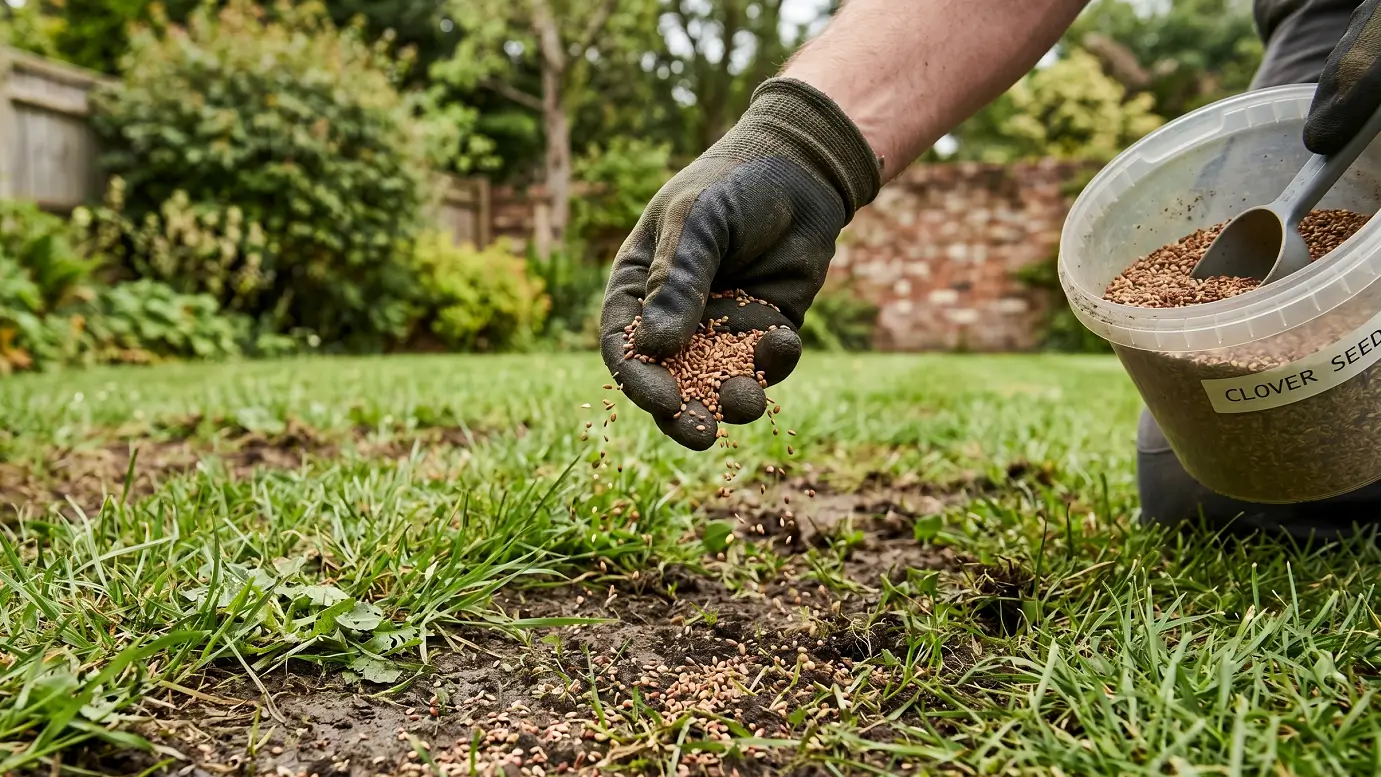
You don't need to rip up your entire existing yard to enjoy the benefits of clover. Most modern landscaping experts recommend a mixed lawn—overseeding microclover into your existing grass to get the durability of turf and the low-maintenance benefits of the legume.
The best time to overseed clover is in the early spring (when frost danger has passed) or early fall. The cooler temperatures and natural rainfall provide the perfect environment for seeds to establish.
Step 1: Prep the Area
Mow your existing grass lower than usual (about 1.5 to 2 inches). Rake the area firmly to remove thatch and debris. Clover seeds need direct seed-to-soil contact to germinate; they won't grow if they are just resting on top of dead grass clippings.
Step 2: Seed
Mix your clover seeds with a carrier like sand or topsoil to help spread them evenly, as the seeds are incredibly tiny. A broadcast spreader works best. For residential lawns, "Microclover" (Trifolium repens var. Pipolina) is the gold standard because it grows low, blends well with grass, and has fewer flowers.
Step 3: Moisture is Key
Expect visible fill-in within 2 to 6 weeks depending on weather conditions. For the first two weeks, however, the seeds must stay consistently moist (but not flooded) to germinate successfully. This is where automation saves the day. Instead of dragging a hose around three times a day, you can use your Aiper IrriSense 2 to schedule short, 5-minute micro-watering cycles throughout the day. This guarantees the delicate seeds never dry out under the sun, drastically increasing your germination success rate without wasting excess water.
Conclusion: Build a Smarter, Greener Yard
The debate of clover lawn vs grass ultimately comes down to what you want out of your weekends. A yard should work for you—not become another weekend job.
If you genuinely enjoy spending your Saturday mornings maintaining, edging, and feeding a traditional turf lawn, grass remains the classic choice. But if you want to reclaim your time, lower your utility bills, and do a favor for your local ecosystem, clover is the clear winner. By starting small with a microclover overseed and upgrading to a smart irrigation system, you can transform your yard from a demanding chore into a lush, resilient, and intelligent outdoor living space.
Clover Lawn vs Grass FAQs
Is clover cheaper than grass?
Yes, overwhelmingly so in the long run. While clover seeds can be slightly more expensive upfront compared to basic grass seeds, the long-term savings are massive. Clover requires zero synthetic fertilizer and significantly less water, slashing your ongoing lawn care and utility costs.
Does clover attract bees?
Yes. Traditional white clover produces small flowers that are highly attractive to bees and other pollinators. If you want to support the local ecosystem, this is a huge plus. If you want to avoid bees, you can simply mow the clover before it blossoms or choose a microclover variety that produces very few flowers.
Does clover stay green all year?
It depends on your climate zone. In warmer southern states, white clover can remain green year-round. In colder northern climates with hard freezes, clover will typically go dormant and die back in the winter, returning vigorously in the spring.
Will clover choke out existing grass?
Not necessarily. While clover is a strong grower, microclover blends are specifically designed to coexist peacefully with traditional turfgrasses like Kentucky Bluegrass or Fescue. In fact, because clover feeds nitrogen to the surrounding soil, your existing grass will likely look greener and healthier as a result of the mix.
Can I mix clover with my current lawn?
Yes, this is highly recommended! A mixed lawn of about 5% to 10% microclover combined with traditional grass offers the best of both worlds: the extreme durability of grass to handle foot traffic, combined with the self-fertilizing, drought-resistant properties of clover.