
How to Identify Lawn Pests: A Complete Homeowner's Guide
Unsure if your brown patches are from bugs or bad watering? Find out how to identify lawn pests with easy DIY tests so you can treat the actual root cause, not just the symptoms.

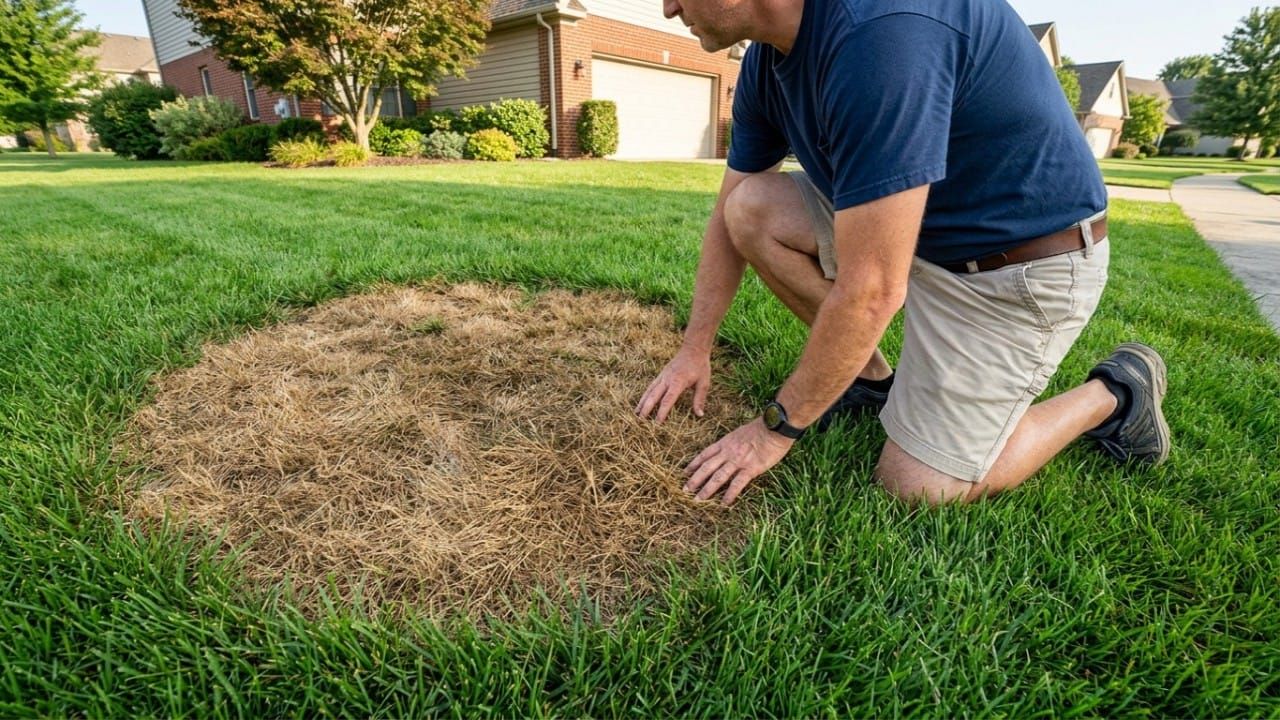
A healthy lawn can change quickly. One week, it looks lush and green, and the next, you notice patches of brown or thinning grass that seem to spread without warning. Unclear lawn damage causes frustration for homeowners.
Before applying treatments or reaching for chemical solutions, it is important to understand what is really happening beneath the surface. Learning how to identify lawn pests is the first step toward solving the problem effectively and protecting the long-term health of your yard.
Quick Lawn Pest Diagnostic Guide
Want answers fast? Use this quick guide to jump to the right section based on what you see:
- Is your turf lifting like a loose carpet? -> Jump to the Grubs section.
- Seeing irregular yellow patches in sunny, dry areas? -> Jump to the Chinch Bugs section.
- Noticing soil mounds and smothered grass? -> Jump to the Ants section.
Common Signs of Lawn Insects (vs. Other Issues)
Lawn insects often give subtle hints before the damage becomes serious. Spotting these early signs can make a big difference, helping you address the problem before it spreads across your yard.
Keep an eye out for these common clues:
- Grass that feels soft or spongy when you walk on it
- Turf that lifts easily, sometimes coming up with almost no roots attached
- Brown or yellow patches that don’t stop spreading
- More birds than usual pecking at your lawn
- Moths flying just above the grass around dusk
- Grass that thins out even though you’ve been watering regularly
Some of these symptoms can look a lot like other lawn problems, so careful observation is key. Watching how the damage develops over time, where it appears, and how fast it spreads can help you figure out if insects are really to blame.
Lawn Pests vs. Watering Issues: A Crucial Distinction
One of the most common mistakes homeowners make is confusing insect damage with watering problems. Dry or under-watered areas can look very similar to sections affected by grass pests. Both may appear brown, brittle, or patchy, which makes it easy to misdiagnose the issue.
The key difference lies in how the grass responds to care. Lawns suffering from drought stress typically improve with consistent watering. The grass may green up again, and the damaged areas stop expanding once moisture levels are corrected. In contrast, pest damage tends to worsen over time, even when watering routines are consistent.
This is where reliable irrigation plays an important role. A smart watering system, such as the Aiper IrriSense 2, helps maintain consistent soil moisture levels across your lawn. By eliminating uneven watering as a variable, it becomes easier to determine whether the problem is environmental or biological. If patches continue to spread despite balanced and automated watering, it is a strong indication that insects may be responsible.
Understanding this distinction prevents unnecessary treatments and ensures that any action you take is based on an accurate diagnosis rather than guesswork.
3 Step-by-Step Methods to Identify Lawn Pests
Once you suspect insects may be involved, a few simple tests can help confirm their presence. These methods are practical, easy to perform, and do not require specialized tools.
The Drench Test (Soapy Water Test)
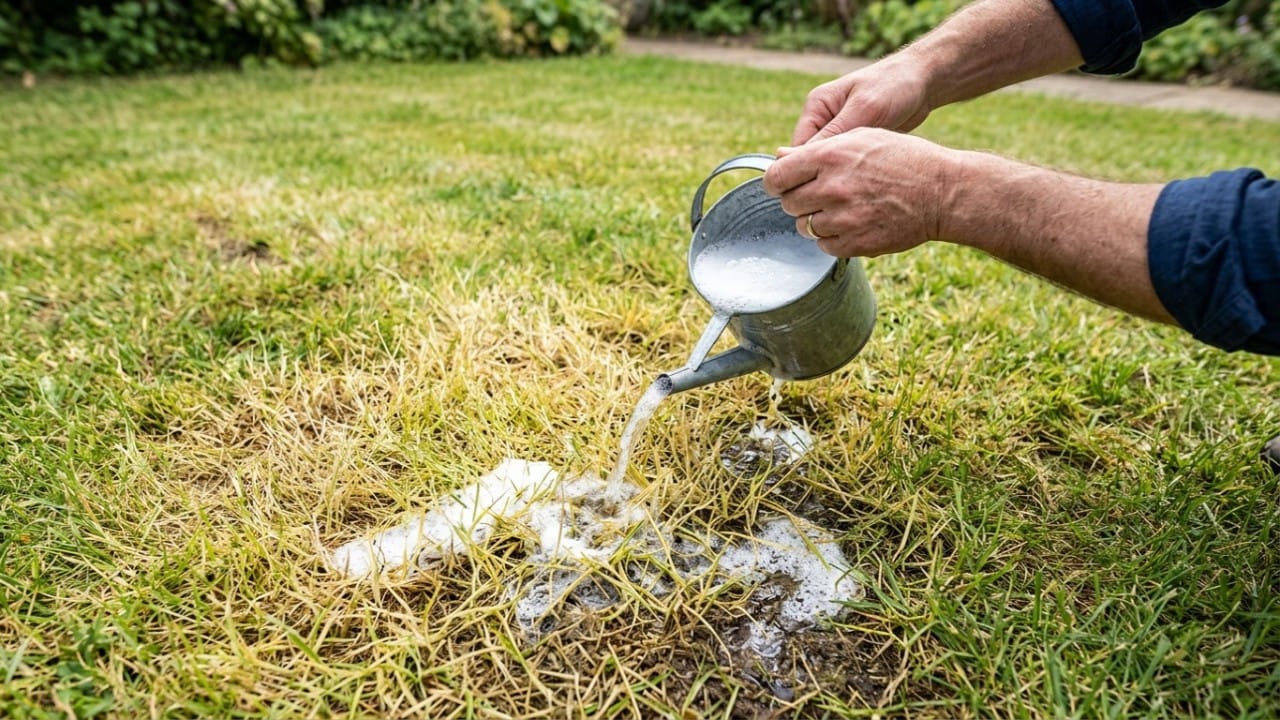
This method is useful for detecting surface-feeding insects such as chinch bugs. Mix a few tablespoons of dish soap with water and pour the solution over a small section of affected grass. Within minutes, insects will begin to emerge from the soil as they are driven to the surface. This allows you to see what types of bugs are present and estimate their numbers.
The Tug Test
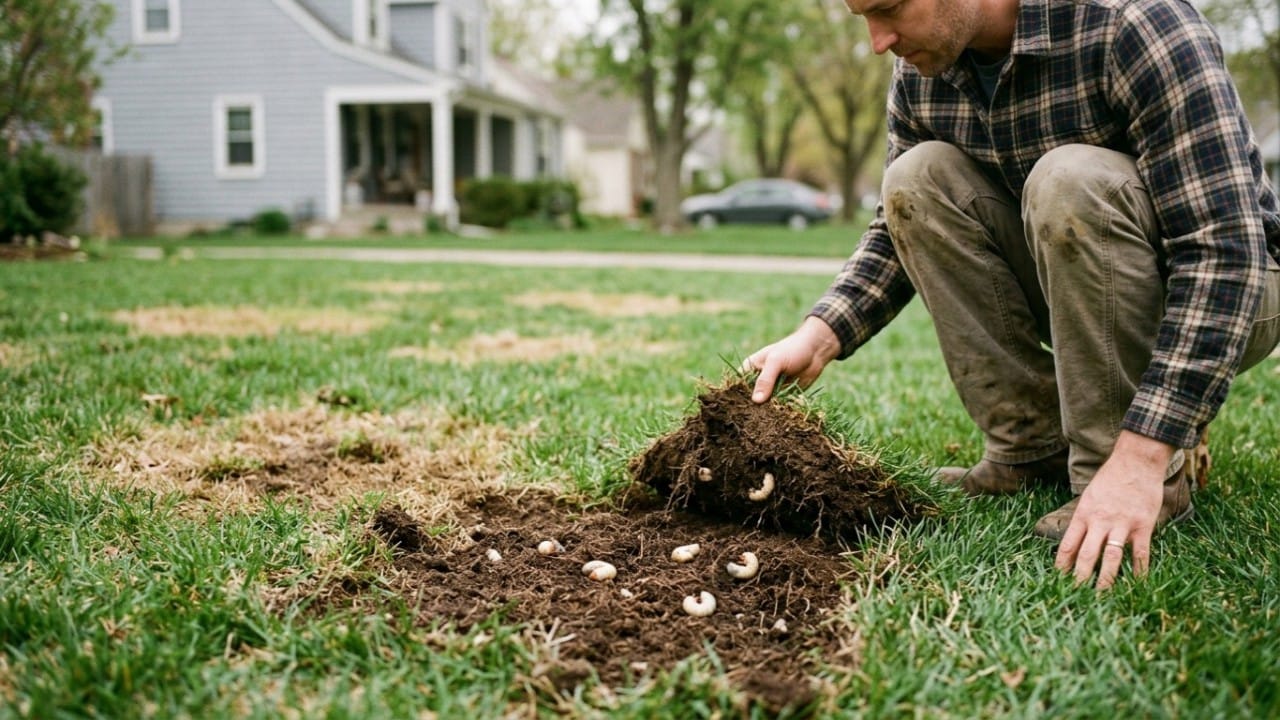
If your lawn shows signs of root damage, the tug test can help identify grub activity. Gently grasp a section of grass and pull upward. Healthy turf will resist, while grass damaged by grubs will lift easily, often in large patches. You may also see white, C-shaped larvae just beneath the surface.
Dusk Observation
Some lawn insects are most active during the evening. Spend a few minutes observing your lawn at dusk, particularly in areas showing damage. Moths flying low over the grass can indicate the presence of larvae that feed on turf roots or blades. This method helps identify pests that are otherwise difficult to spot during the day.
According to UC IPM guidelines, it is best to sample at the boundary between damaged and healthy grass to get an accurate sense of pest density. Using a combination of these methods provides a clearer picture of what is happening in your lawn and helps avoid misidentification.
Top Culprits: Identifying Grubs, Chinch Bugs, and Ants
Several common insects are responsible for most lawn damage in the United States. Recognizing their appearance and behavior makes lawn pest identification much easier.
Grubs
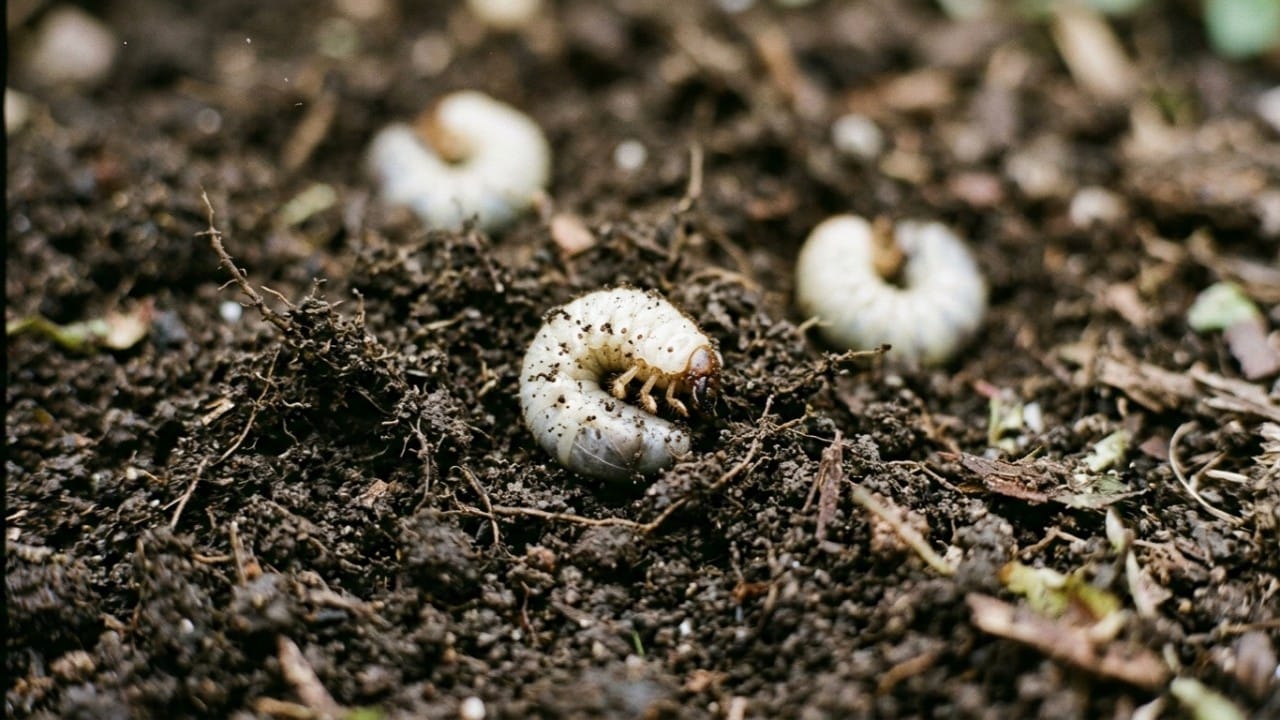
Grubs are the larvae of beetles and are among the most destructive lawn pests. They are white, C-shaped, and typically found just below the soil surface. Grubs feed on grass roots, causing turf to loosen and die. Large patches of grass may roll back like a carpet due to the lack of root structure. If you find more than 6-10 grubs per square foot during your tug test, treatment is necessary.
Chinch Bugs
Chinch bugs are small, black insects with white wings. They feed on grass by sucking out plant juices and injecting toxins that damage the turf. Their activity often results in irregular yellow or brown patches that resemble drought stress. They are commonly found in sunny, dry areas of the lawn.
Ants
Although ants don’t eat grass directly, their nests can still cause problems. Big anthills can interfere with root systems and cover nearby turf, leading to uneven growth and bare patches over time. If you want to learn more about handling this issue, check out this guide on getting rid of ants in the turf.
Knowing exactly which pest is affecting your lawn makes it much easier to choose the right approach and take action that actually works.
Lawn Pest Identification Cheat Sheet
This quick reference can help you match symptoms with likely causes and decide which test to use:
- Grubs
- Damage Symptoms: Loose turf, roots eaten, brown patches
- Best Identification Method: Tug test
- Active Season: Late summer to fall
- Chinch Bugs
- Damage Symptoms: Yellowing patches, dry appearance
- Best Identification Method: Drench test
- Active Season: Spring to summer
- Ants
- Damage Symptoms: Mounds, uneven soil, smothered grass
- Best Identification Method: Visual inspection
- Active Season: Spring to fall
Summary & Next Steps
Before rushing into treatments, it’s important to figure out what’s really causing the lawn damage. Sometimes patches of brown or thinning grass look the same on the surface but come from very different problems. Paying attention to the symptoms, running a few simple tests, and checking that your watering is consistent can give you a clear picture of what’s happening and guide the right approach for your lawn.
 Aiper
Aiper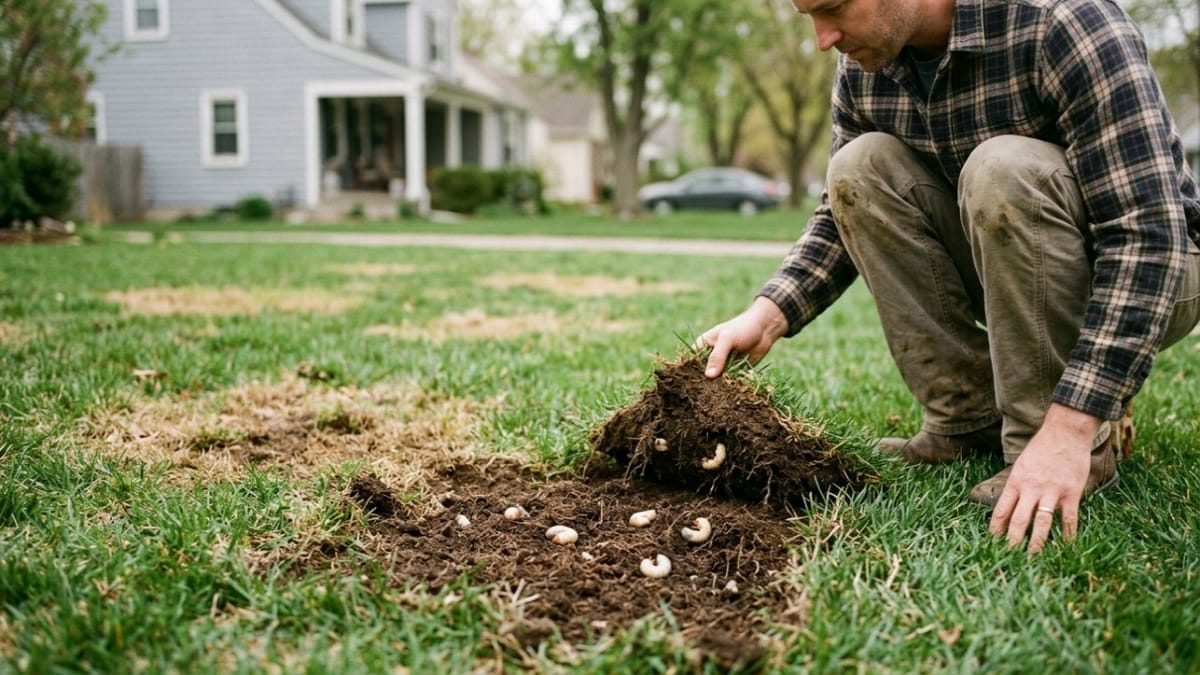
A lawn that’s healthy and well-nourished is better at standing up to pests on its own. Strengthening the soil and encouraging beneficial microbes can make a big difference over time. For homeowners wanting to boost their lawn naturally, adding organic nutrients like Aiper SoilPulse Microbial Organic Soil Amendment can help improve soil health and resilience.
Taking the time to understand the problem and support your lawn at its roots helps maintain a thriving, balanced yard without relying on harsh treatments.
FAQs
How do I know if my lawn damage is from drought or bugs?
Start by checking soil moisture levels. If the lawn improves with consistent watering, drought is likely the cause. If the damage continues to spread despite proper irrigation, it may indicate grass pests.
What are the most common signs of lawn insects?
Common signs of lawn insects include spongy turf, grass that pulls up easily, increased bird activity, and visible insects during simple tests like the drench test.
When is the best time to check for grass pests?
Early morning and dusk are ideal times to observe insect activity. Some pests are more active in cooler parts of the day, making them easier to detect during these periods.