
How to Unclog Pool Lines Without Calling a Plumber or Digging
Clear clogged pool lines safely with a wet/dry vac or drain bladder without digging or plumbers; avoid risky plumbing snakes, spot clog signs early, and prevent future blockages by cleaning skimmer baskets and intercepting pool debris regularly.

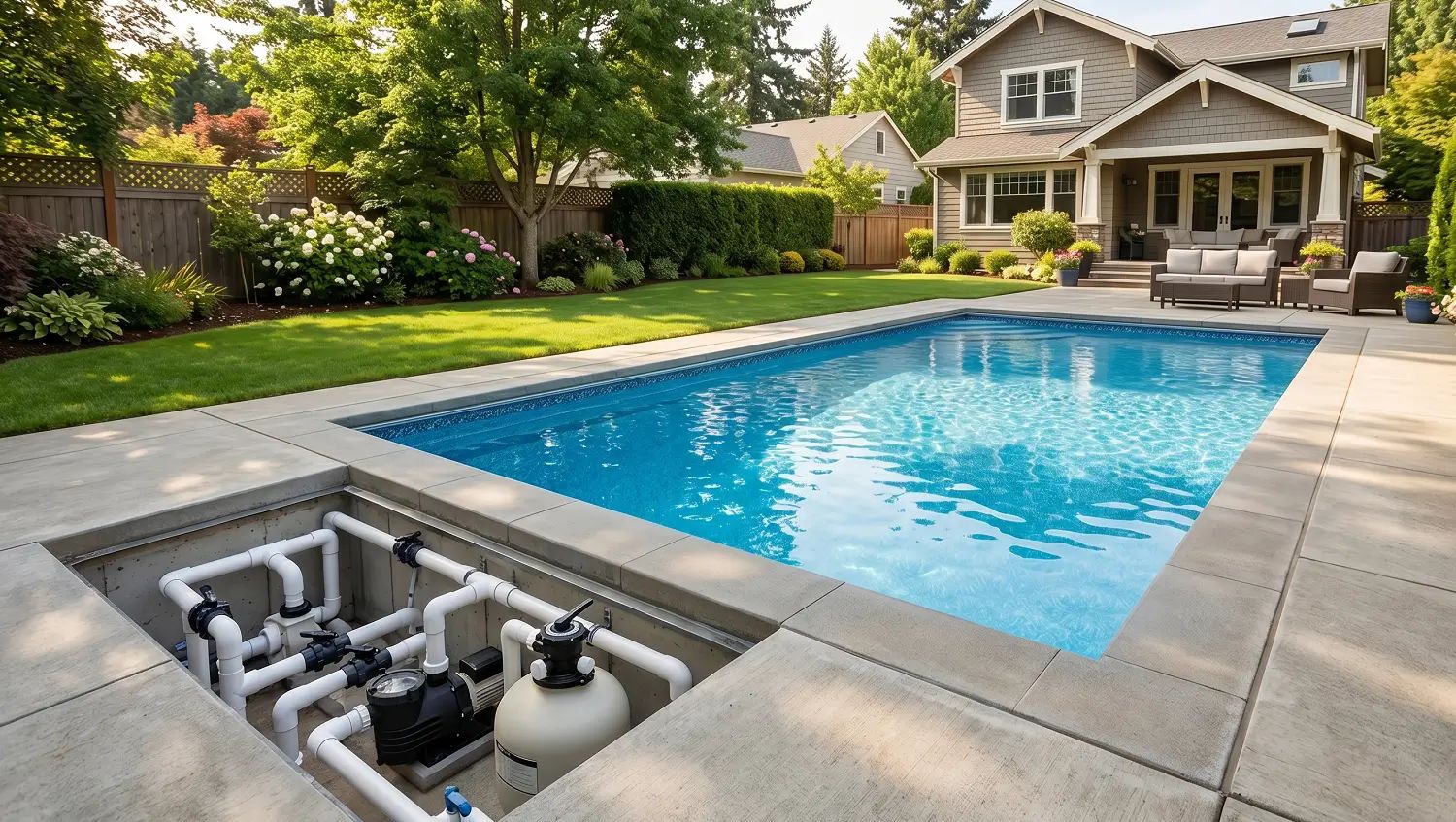
Few pool problems spark panic faster than a clogged line. One weak skimmer, one noisy pump, and suddenly it feels like you are headed toward a huge plumbing bill or broken concrete. The good news is that most clogs are not buried disasters. In many cases, they are simple leaf and debris blockages that can be cleared in an afternoon with basic tools and the right approach.
If you are searching for how to unclog pool lines, start with the safest methods first. Air pressure and water pressure usually work better than force, and they are far less likely to damage underground PVC. Once the clog is gone, the bigger win is prevention. The less debris that reaches your skimmer and pump, the less likely you are to face the same problem again.
Summary Table of Methods
| Method | Tools Needed | Risk to PVC Pipes | Effectiveness |
| Wet/Dry Shop Vac | Shop vac, towels to seal | Low, very safe | Medium |
| Drain Bladder | Drain bladder, garden hose | Low, very safe | High |
| Plumbing Snake | Metal auger or snake | High, puncture risk | Medium |
How to Tell if Your Pool Skimmer Line is Clogged
Before you try to clear anything, make sure you are dealing with a clog and not a different circulation issue. A true line blockage usually shows up as poor suction at the skimmer, weak water movement, and a pump that sounds strained because it is starved for water.
Look for these common signs:
- Low filter pressure on the gauge compared with your normal reading
- A skimmer basket that is not pulling in water or floating debris well
- A pump making a rough cavitating noise because air is mixing with limited water flow
- A pump basket that will not stay fully primed
It is also worth ruling out an airlock or suction side air leak. If the water level is low, the skimmer weir is stuck, or the pump lid O ring is leaking, the symptoms can look similar. If the pump noise is your biggest clue, Aiper has a useful guide on why a pool pump gets loud that can help you separate cavitation from other equipment issues.
Safe DIY Methods to Clear a Pool Line Clog Using Pressure
According to common pool service practice, pressure is the safest DIY way to clear a soft debris clog. It moves the blockage without scraping the inside of the pipe. That matters because most residential suction lines are PVC, and aggressive metal tools can damage fittings or elbows that you cannot see.
Blow Out or Vacuum the Clog with a Wet/Dry Shop Vac
A shop vac is often the best first try because it is simple, low risk, and easy to control. You can either blow air backward from the equipment side toward the skimmer or try to pull the clog out from the skimmer opening itself.
Use this method step by step:
- Turn off the pump at the breaker and close any valves that isolate other suction lines if your system has them.
- Remove the skimmer basket and pump basket so you can access the line clearly.
- At the skimmer, seal the shop vac hose as tightly as possible with towels if you want to suck debris out toward you.
- At the pump basket side, seal the hose there if you want to blow the clog backward toward the skimmer.
- Run the vac in short bursts, then check the skimmer opening for leaves, sludge, or small twigs coming free.
- Once flow returns, prime the pump again and confirm normal suction and pressure.
This method is especially useful when the clog is close to the skimmer throat or made of soft organic debris. It is safe because air pressure can break up leaf packs without dragging metal through the pipe.
Flush the Pipe with a Drain Bladder
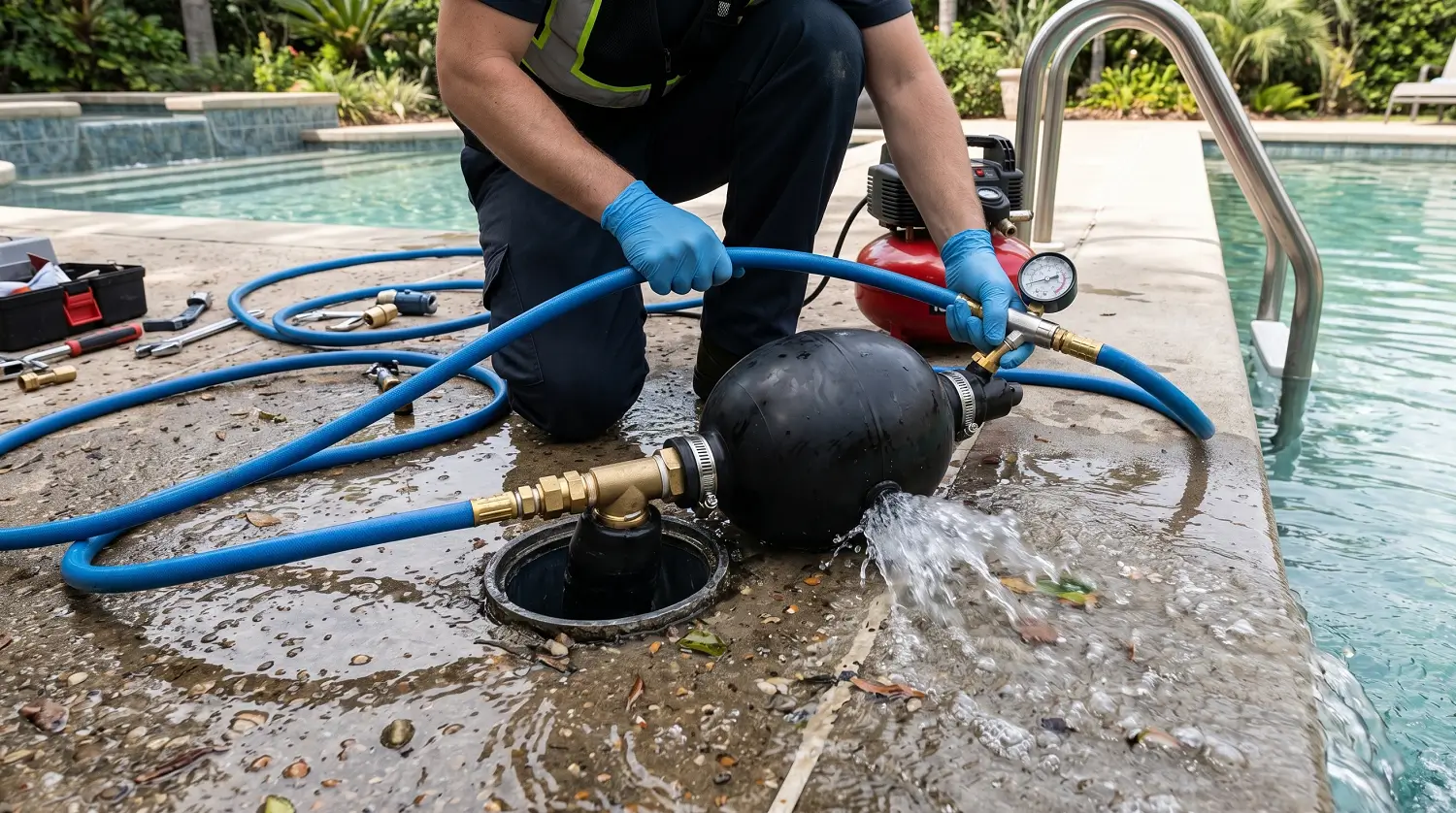
If the shop vac does not clear the line, a drain bladder is usually the next best move. This tool expands inside the pipe and uses garden hose pressure to push water through the blockage. In many real world cases, the most effective approach is a reverse flush from the pump basket side back toward the skimmer.
Follow this process carefully:
- Shut off power to the pump and relieve any system pressure first.
- Insert the bladder into the suction line at the pump basket opening so the water will push backward toward the skimmer.
- Turn on the hose slowly and give the bladder time to expand and seal the line.
- Watch the skimmer opening for dirty water, leaf fragments, and trapped debris pushing back into the basket well.
- Do not leave the setup unattended. If pressure builds with no movement after a reasonable attempt, stop and reassess.
- When the clog breaks free, remove the bladder, clear the debris, and test circulation again.
Water pressure is effective because it can move a tightly packed wad of leaves that air alone may not fully shift. It is still considered low risk when used with restraint because the pressure spreads through the water column instead of scraping the pipe wall.
The Risky Method: Can You Use a Plumbing Snake?
You can, but it should be an absolute last resort. A traditional metal snake may break up a clog, but it also raises the risk of gouging or puncturing underground PVC, especially at tight turns and ninety degree elbows. That is why pressure based methods are usually preferred first.
If someone has already tried a snake and the line still will not clear, stop before forcing it harder. The cost of a professional visit is usually much lower than the cost of repairing a damaged underground pipe.
When to Call a Professional Pool Plumber
DIY has a safe limit. If both air pressure and water pressure fail, or if the line seems to lose pressure immediately, it is time to bring in a professional. A pool plumber can run a camera through the line, check for a collapsed section, and confirm whether you have a stubborn blockage, a cracked pipe, or a valve issue.
Call for help sooner if you suspect root intrusion, repeated clogs in the same line, standing water around the equipment pad, or signs that the pump has been running dry for too long.
Stop Clogs Before They Start with 360 Degree Cleaning
Most clogged lines start the same way: too much debris reaches the skimmer, overwhelms the basket, and gets pulled farther into the plumbing. Prevention is much easier than clearing a packed line after the fact.
Maintain Your Skimmer Baskets
Start with the basics. Empty the skimmer basket and pump basket often during heavy leaf season, after storms, and any time nearby trees are dropping more debris than usual. This small habit reduces the chance that leaves will compact into the line and restrict water flow.
Automate Your Debris Defense
The real pain point is simple: relying only on your built in skimmer means all debris has one path into your plumbing. The better solution is to intercept debris before it ever reaches that path. That is where automation can make a real difference.
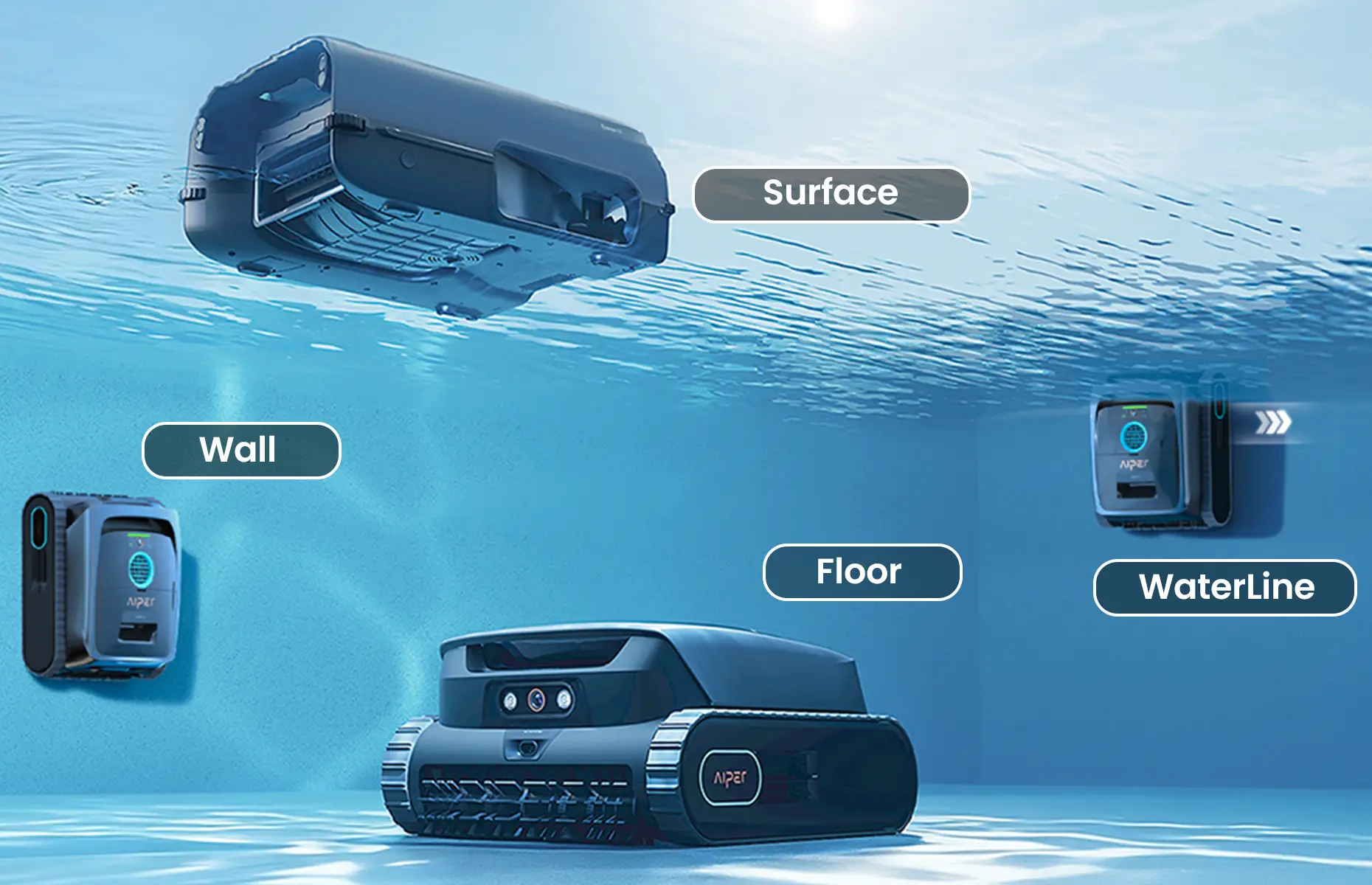
The Aiper Experts Duo is designed around that need. Aiper positions it as a top to bottom cleaning system that pairs the surface cleaning of the Aiper Surfer S2 cordless robotic pool skimmer with the floor cleaning of the Aiper Scuba V3 cordless robotic pool cleaner. On the official Aiper product pages, the system is described with features such as solar powered surface cleaning, extended battery support, and AI guided cleaning coverage. The practical benefit is clear: leaves are intercepted at the surface, settled debris is removed from the floor, and your main skimmer has far less strain placed on it.
Without that kind of early debris control, your plumbing keeps doing all the dirty work. If you want to compare more options, you can browse Aiper’s collection of robotic pool cleaners for different pool sizes and cleaning needs.
Frequently Asked Questions
Can I use an air compressor to blow out pool lines?
It is usually better to start with a shop vac. An air compressor can apply much more force than you need, which makes it easier to over pressurize the line or create a messy blowback at the skimmer. If you do use compressed air, keep it controlled and conservative.
How do I know if my pool pipe is broken or just clogged?
A clog usually causes weak suction, low pressure, and poor skimmer action without obvious water loss. A broken pipe is more likely if the system will not hold prime, the ground stays wet near the line, or the clog keeps returning quickly after clearing.
Will a clogged pool line burn out my pump?
It can contribute to pump damage if the motor keeps running while starved for water. That is because restricted suction can lead to cavitation, overheating, and seal wear over time. If the pump sounds strained, shut it down and inspect the line before running it again.
Most pool line clogs feel worse than they are. In many cases, a shop vac or drain bladder is enough to clear the blockage safely without digging or calling a plumber right away. The bigger lesson is prevention: the less debris that reaches your skimmer, the less stress you put on your plumbing, pump, and filter. Keeping baskets clean helps, but intercepting debris earlier is even better for long term peace of mind.