
Why Are There Mushrooms Growing in My Yard? The Root Causes Explained
Lawn mushrooms grow from excess moisture, decaying organic matter, poor sunlight and compacted soil; they signal fertile soil but risk pet toxicity, fix root issues via proper drainage, lawn aeration and smart irrigation to prevent regrowth permanently.

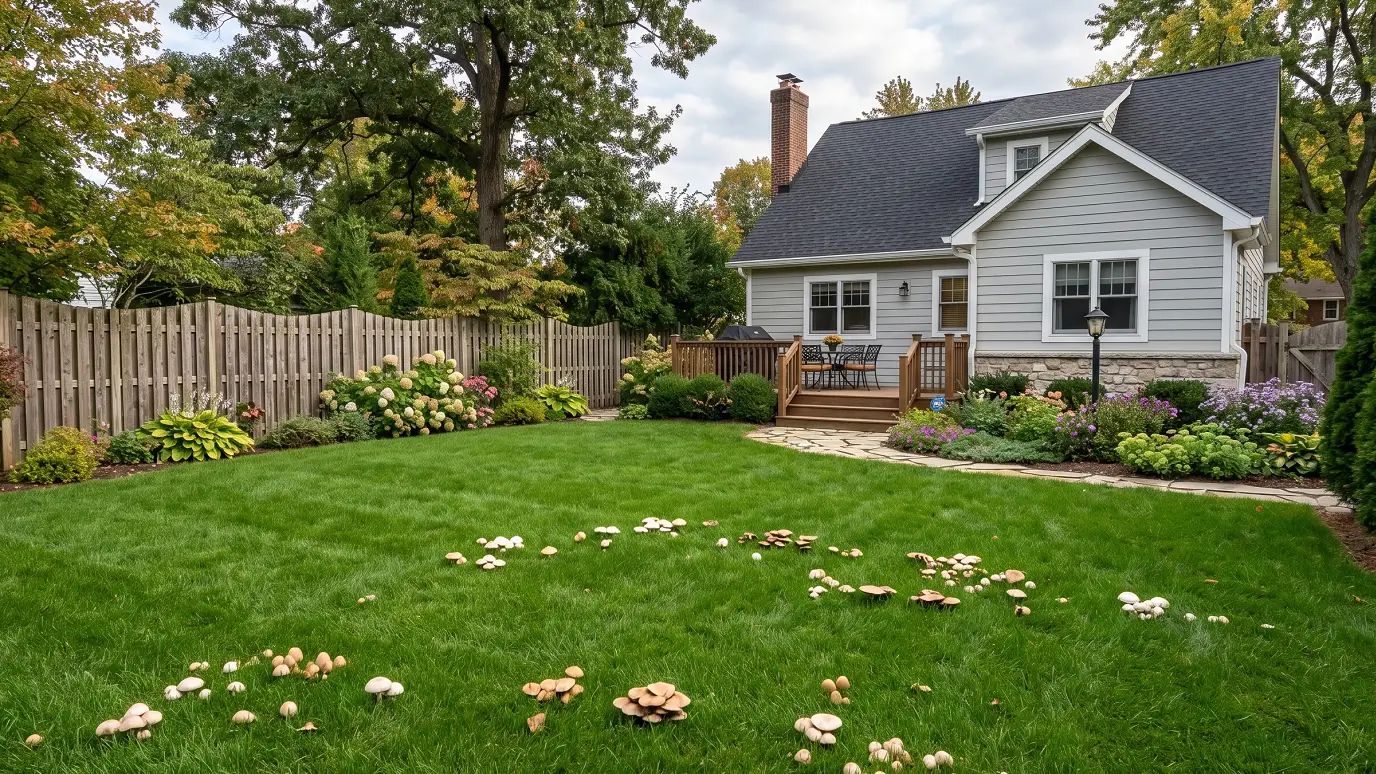
It usually happens overnight. You go to bed with a perfectly normal lawn and wake up to a yard full of strange, rubber-like clumps poking through the grass. Whether they are white buttons or weird, spindly yellow stalks, the first question is always: why are there mushrooms growing in my yard?
If you’re a homeowner in the US, especially in the humid East or after a heavy West Coast rain, you’ve likely dealt with this sudden "invasion." It’s a frustrating sight that usually leads to two immediate worries: "Is my grass dying?" and "Is my dog going to get sick if they eat that?"
The truth is, these mushrooms aren't just random. They are the visible symptom of a much larger story happening under your feet. While seeing a mushroom on grass is actually a sign of fertile soil, it’s also a loud-and-clear warning that your yard is holding onto way too much water. This blog isn't just about identifying these fungi; it’s about figuring out the environmental "glitches" that are inviting them in so you can fix the root of the problem for good.
The Science: What Exactly Are Lawn Mushrooms?
To understand why a mushroom on grass appears so suddenly, we have to look beneath the surface. What we identify as a mushroom is actually just the "fruiting body" of a much more complex organism. Think of it like an apple on a tree; the mushroom is the temporary fruit, while the "tree" is a vast, hidden network of thread-like filaments called mycelium living in your soil.
These fungi reproduce through microscopic airborne spores. These spores are everywhere, drifting on the wind, hitching a ride on lawnmowers, or even traveling on the paws of local wildlife. They settle into your soil and remain dormant until the conditions are exactly right.
According to the UC Master Gardener Program (Alameda County), mushrooms only sprout when these spores find a "happy place" characterized by high moisture levels and a plentiful food source of decaying organic matter. Once the temperature and humidity hit the "sweet spot," the mycelium sends up the fruiting body to release more spores, completing the cycle.
As soon as the temperature hits that humid "sweet spot" and the ground becomes saturated, the mycelium goes into a frantic growth phase. It pushes the mushroom through the soil to the surface so it can release more spores and start the cycle all over again.
3 Main Causes of Mushrooms Growing in Your Lawn
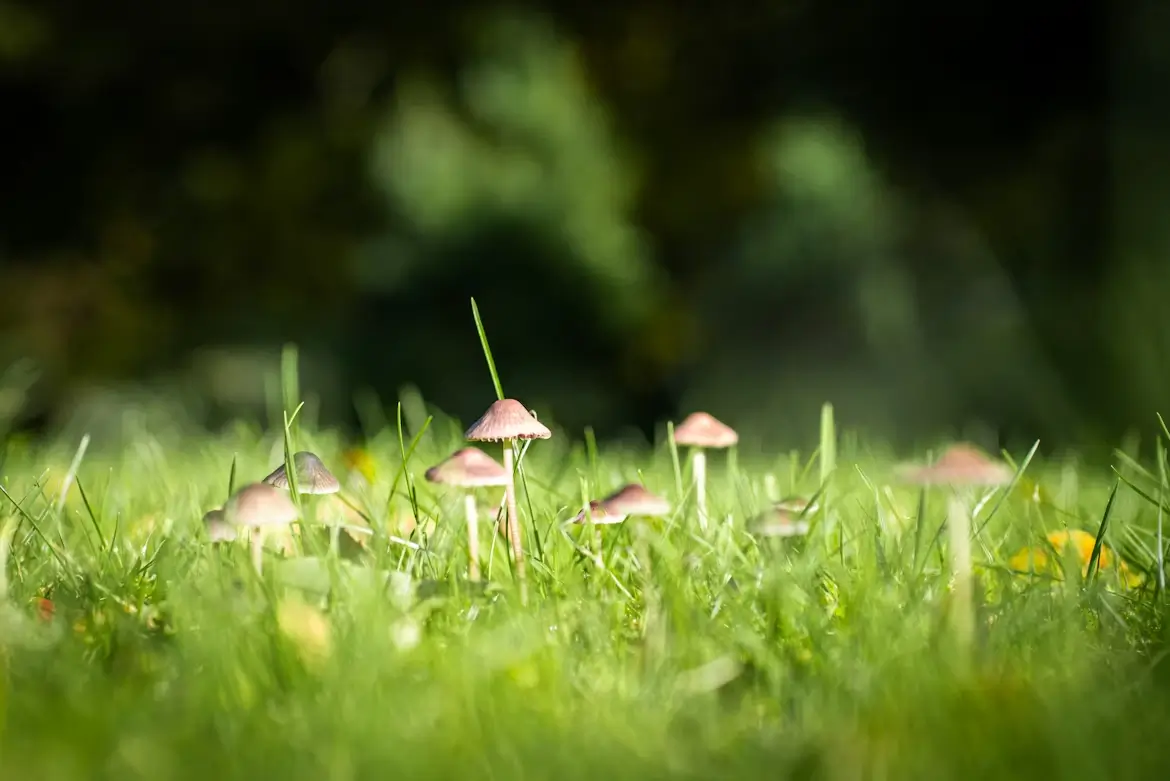
Fungi are opportunistic. They don’t grow at random; they respond to a "perfect storm" of environmental factors. If your yard has become a hotspot for fungal activity, it usually boils down to three primary issues.
1. Excessive Moisture and Overwatering
Moisture is the undisputed number one trigger for fungal growth. Mycelium thrives in damp, saturated environments. When your soil remains soggy for extended periods, it signals the fungi to begin their reproductive phase.
This moisture can come from heavy seasonal rainfall, but more often than not, it is a result of human intervention. Poor yard drainage, where water pools in low spots, is a major culprit. Similarly, running your irrigation system too frequently or at the wrong time (such as late at night when the water sits on the grass for hours without evaporating) creates a 24/7 fungal breeding ground. If you notice mushrooms appearing frequently, it is worth checking for signs of an overwatered lawn to see if your irrigation habits are the hidden catalyst.
2. Decaying Organic Matter
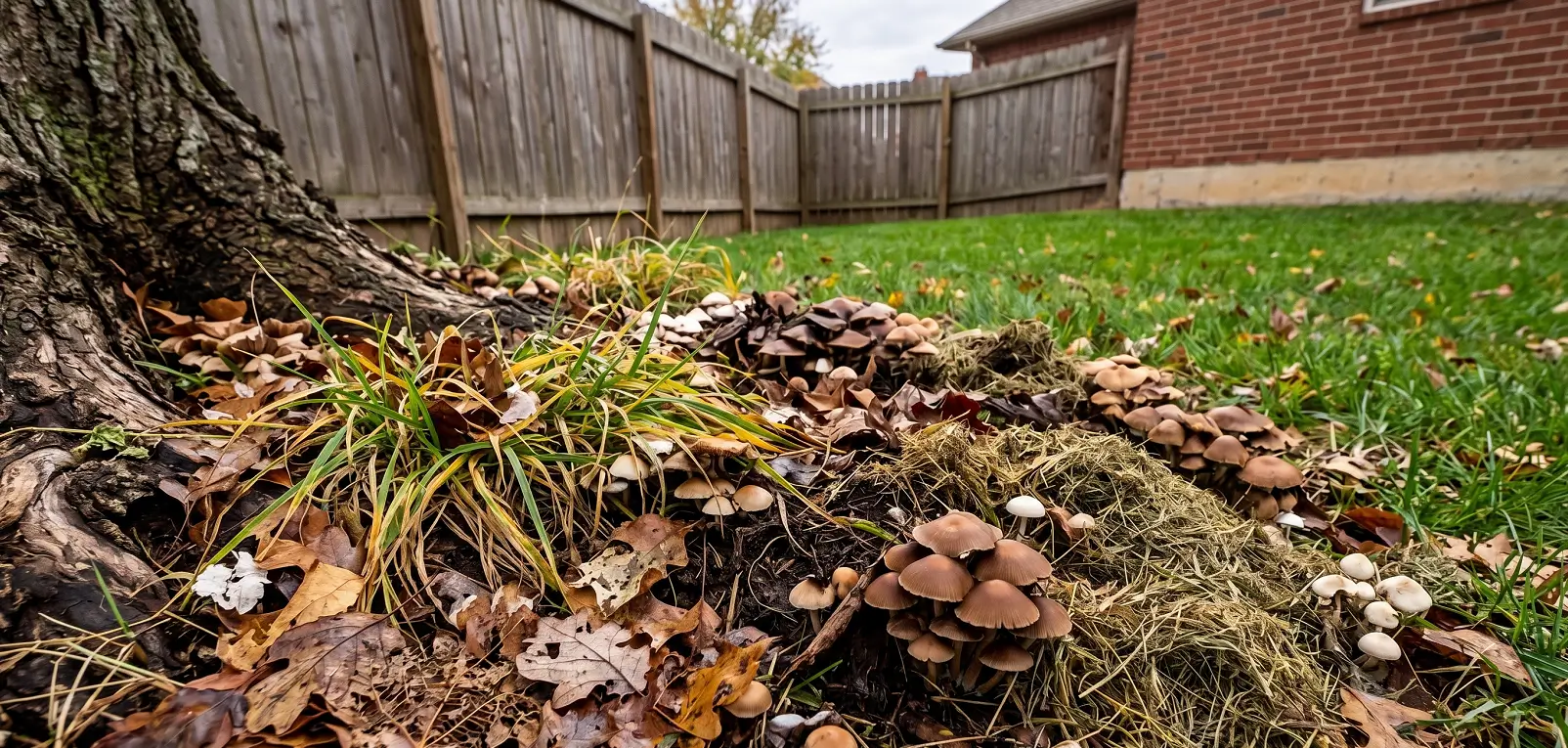
Mushrooms are nature's ultimate recyclers. Their job in the ecosystem is to break down complex organic materials into simpler nutrients that plants can use. If you have mushrooms, it means there is a feast available for them beneath the thatch line.
Common food sources include:
- Old tree stumps and buried roots: Even if a tree was removed years ago, the decaying root system underground provides years of "fuel" for fungi.
- Excessive Thatch: A layer of organic debris over 0.5 inches thick traps moisture and provides a perfect habitat.
- Leaf Litter and Grass Clippings: While mulching is good, an overabundance of wet clippings can encourage growth.
- Animal Waste: Uncollected pet waste adds nitrogen and organic matter that fungi find irresistible.
3. Lack of Sunlight and Poor Airflow
Mushrooms love the shadows. Sunlight acts as a natural disinfectant and helps evaporate excess surface moisture. Areas of your yard that are shaded by large trees, heavy shrubbery, or tall fences stay damp much longer than sun-drenched sections.
Then there is the issue of compacted soil, a sneaky reason for mushrooms growing in your lawn that most people overlook. When your dirt gets packed down tight from kids playing or heavy foot traffic, it basically loses its ability to "breathe."
This lack of airflow stops water from draining down into the deeper layers of the earth, leaving it trapped right at the surface. These stagnant, low-oxygen conditions are like a playground for fungi, but they make it incredibly hard for your grass to survive.
Are Yard Mushrooms a Sign of a Healthy Lawn or a Problem?
The presence of mushrooms is often a biological "double-edged sword." On one hand, they are generally a sign of a highly fertile, organic-rich soil ecosystem. Their work breaking down organic matter releases essential nutrients back into the soil, essentially providing free fertilizer for your grass. In many ways, a few mushrooms indicate that your soil is "alive" and productive.
On the other hand, they can signal underlying structural issues. For instance, if you see mushrooms growing in a distinct circle, known as a "Fairy Ring", it could indicate a more serious fungal infection that might eventually cause the grass in that area to turn brown or die. If you notice the turf around the fungi looks stressed, you may want to consult a awn disease identification chart to ensure you aren't dealing with a pathogen that could kill your grass.
Safety is also a major factor that cannot be ignored. The UC Davis School of Veterinary Medicine warns that mushroom toxicity in dogs is a huge deal, stating: "It is safest to assume that all wild mushrooms your dog encounters are toxic."
Since kids and pets are naturally curious and often explore the world with their mouths, the best move is to pluck those mushrooms and toss them as soon as you spot them. It’s better to be safe and proactive than to deal with a midnight trip to the emergency vet.
Preventing Fungi: Fix the Moisture with Smart Irrigation
While you can’t stop the rain from falling or the wind from blowing spores into your yard, you can control the most significant variable: the water. Traditional "dumb" sprinklers often run on a timer regardless of the actual weather, leading to the exact soggy, over-saturated conditions that mushrooms crave.
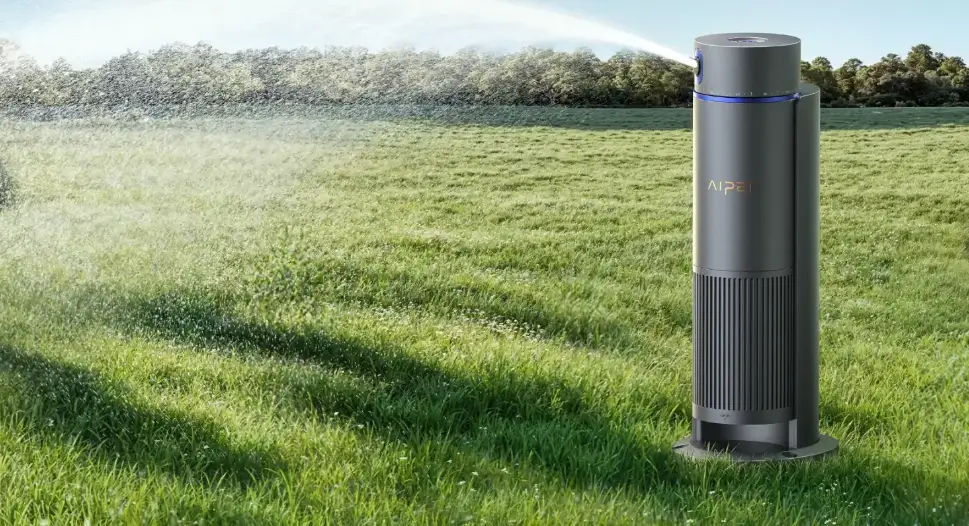
The key to ridding your yard of mushrooms permanently is moving from a scheduled watering mindset to a precision watering mindset. This is where smart technology changes the game. The Aiper IrriSense 2 is designed to tackle the root cause of fungal outbreaks.
By utilizing smart weather-sensing technology and real-time moisture monitoring, the IrriSense 2 automatically skips watering schedules when it rains or when the soil is already sufficiently hydrated.
By ensuring your lawn receives only the water it needs, and no more, you eliminate the damp "happy place" that fungi require to sprout, keeping your lawn healthy and mushroom-free without the need for harsh chemicals.
Frequently Asked Questions (FAQ)
How to remove mushrooms from the lawn safely?
To remove mushrooms safely, wear nitrile or garden gloves to avoid direct skin contact with potential toxins. Pluck the mushrooms from the very base of the stem and immediately place them in a sealed trash bag for disposal; do not put them in your compost bin. Avoid kicking, stepping on, or mowing over them, as this will shatter the cap and spread thousands of spores across your lawn, leading to even more growth later.
Will fungicide help kill mushrooms in yard?
Honestly, reaching for the fungicide is usually a waste of time and money. These sprays mostly just hit what’s on the surface, but the real "engine" of the mushroom is a massive network living deep in the dirt where the chemicals can’t reach. You might shrivel up the one mushroom you see today, but another will just pop up tomorrow. The only real "cure" is to fix your drainage and stop the soil from staying so soggy.
How to rid yard of mushrooms permanently?
If you want them gone for good, you have to starve them out by changing their environment. This means aerating your lawn so the soil can actually breathe, thinning out heavy thatch, and digging up any old, rotting tree stumps. Most importantly, you’ve got to get your watering under control. Switching to smart irrigation ensures your grass gets what it needs without turning your yard into a swamp.