
What is Cyanuric Acid in a Pool? (And How to Manage It)
Cyanuric Acid (CYA) acts as sunscreen for pool chlorine, shielding it from UV breakdown. Maintain 30–50 ppm for outdoor pools; high CYA causes chlorine lock, only fix is partial drain & refill. Pair balanced chemistry with robotic pool cleaners for clear water.

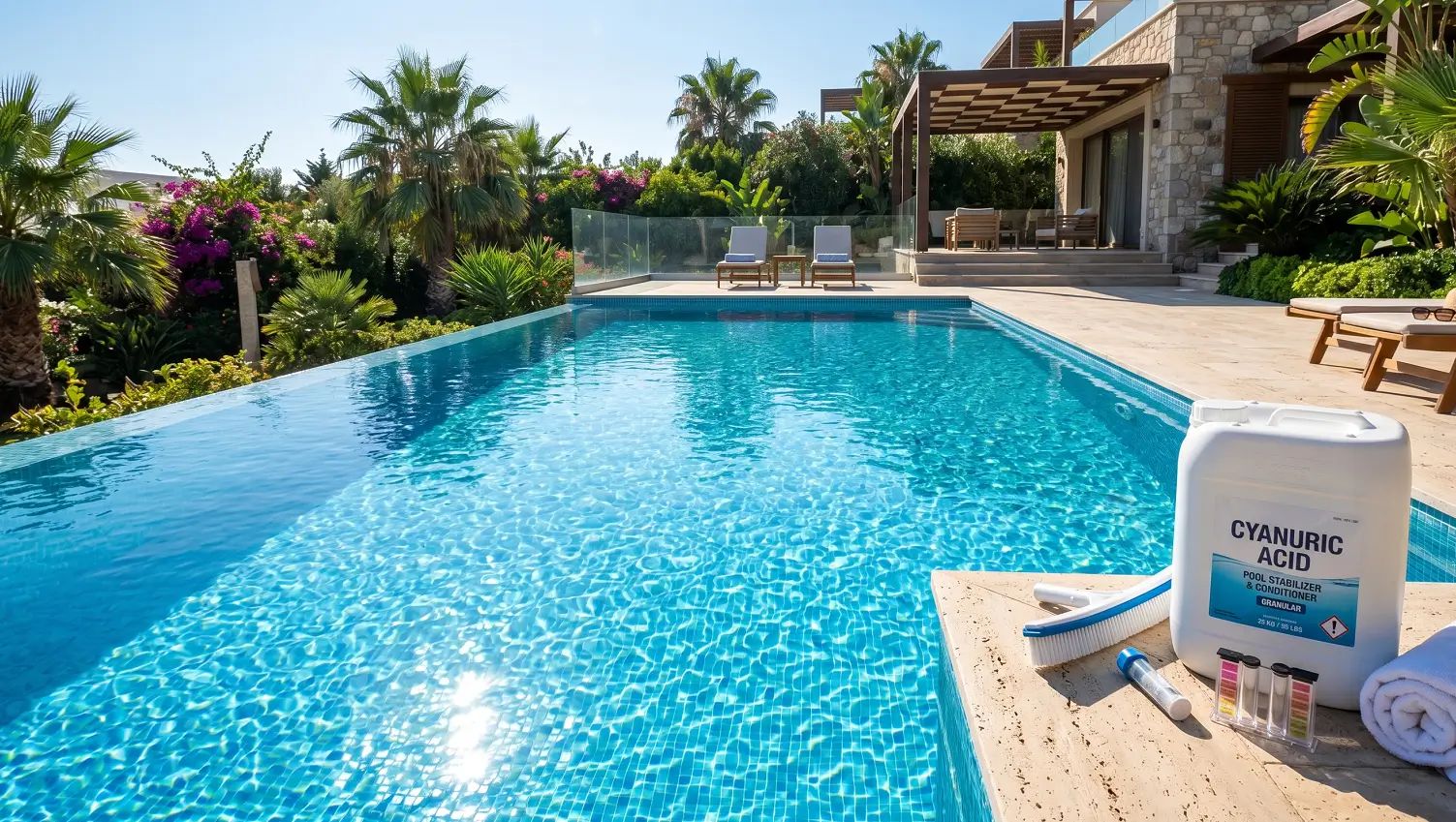
If you have ever stared at a pool water test report and felt like you needed a degree in chemistry to understand the jargon, you are not alone. Between pH, alkalinity, and calcium hardness, the acronym "CYA" often gets lost in the shuffle. However, understanding what cyanuric acid is for pool maintenance is arguably one of the most important factors in keeping your water crystal clear and your wallet full.
Think of Cyanuric Acid (CYA) as "sunscreen for your chlorine." Without it, the sun’s powerful ultraviolet rays can destroy your pool’s chlorine in a matter of hours, leaving your water defenseless against bacteria and algae. But like any sunscreen, too much of a good thing can cause problems. If CYA levels climb too high, they create a "chlorine lock," trapping your sanitizer and rendering it useless.
Key Takeaways
- The Sunscreen Analogy: CYA protects free chlorine from being degraded by UV rays.
- The Ideal Range: Most outdoor pools should maintain 30–50 ppm.
- Chlorine Lock: High CYA levels prevent chlorine from sanitizing water, even if chlorine levels look "normal" on a test.
- The Only Fix for High CYA: You must partially drain and refill your pool; there is no reliable chemical "remover."
- Holistic Care: Chemical balance works best when paired with physical cleaning from advanced robotic pool cleaners.
Does My Pool Really Need Cyanuric Acid?
The short answer is: Yes, if your pool is outdoors.
According to industry standards, ultraviolet light from the sun can dissipate up to 90% of a pool’s outdoor chlorine in just two hours. Cyanuric acid acts as a stabilizer, forming a weak chemical bond with the chlorine that shields it from the sun. Without this protection, you would find yourself dumping expensive chlorine into your water every single morning just to keep it sanitary.
If you find yourself constantly adding chemicals, it is worth your time to understand why your pool loses chlorine in sunlight to see if a lack of stabilizer is the culprit. However, if you own an indoor pool, you generally do not need CYA because the water is not exposed to direct UV radiation.
The CYA Balancing Act: Too High vs. Too Low
Managing CYA isn't a "set it and forget it" task. It requires a delicate touch. To see how CYA fits into the broader picture of water health, you can refer to a comprehensive pool chemistry cheat sheet to balance it alongside pH and alkalinity.
What Happens When CYA is Too Low?
When your stabilizer levels drop below 30 ppm, your chlorine is essentially naked. It will vanish rapidly under the sun, leading to a high risk of sudden algae blooms. This leads to a frustrating cycle of "yo-yoing" chemistry where you add chlorine, it disappears, and the water turns cloudy, forcing you to spend more money on chemicals than necessary.
What Happens When CYA is Too High? (Chlorine Lock)
This is the hidden danger of over-stabilization. As CYA levels rise (often above 100 ppm), the "sunscreen" becomes a "straitjacket." It binds to the chlorine so tightly that the chlorine cannot move to kill bacteria or organic matter. You might test your water and see a "perfect" chlorine reading, yet your pool is turning green. This "chlorine lock" is a leading cause of pool owner burnout.
How to Test Your Pool's Cyanuric Acid Levels (The Ideal CYA Range)
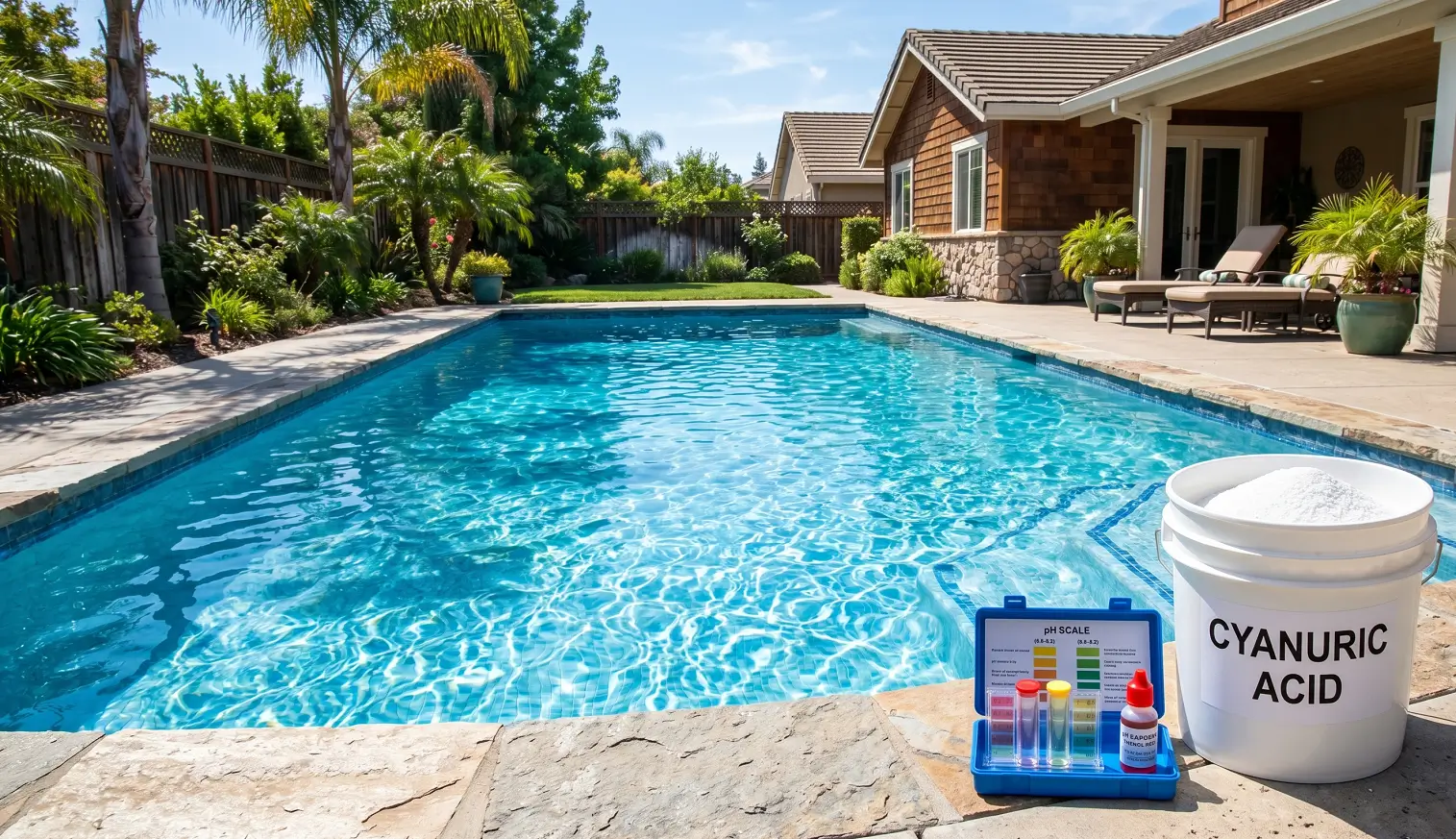
To keep your water safe, you should test your CYA levels at least once a month, or more frequently if you use stabilized chlorine pucks (which add a small amount of CYA with every dose). Leading robotic engineering principles and pool safety guidelines, such as those from the CDC, emphasize that proper stabilization is key to preventing waterborne illnesses.
Before you start, learn the best methods for how to test pool water to ensure your readings are accurate.
| Standard Outdoor Chlorine Pools | 30 – 50 ppm |
| Saltwater Pools | 60 – 80 ppm |
| Indoor Pools | 0 – 10 ppm |
How to Fix Your Pool’s Cyanuric Acid Levels
Once you have your test results, you need to take direct action to return to the "Goldilocks zone."
How to Raise Low Cyanuric Acid
To raise your levels, you must add a pool stabilizer or conditioner (pure cyanuric acid). It is available in granular or liquid form.
Granular CYA takes a long time to dissolve. Do not just throw it into the pool, as it can damage the liner. Instead, place the required amount in a "skimmer sock" or an old nylon and hang it in front of a return jet or place it in the skimmer basket to dissolve slowly.
How to Lower High Cyanuric Acid
This is the tough truth of pool ownership: There is no reliable "CYA reducer" chemical. While some enzymes claim to lower CYA, they are often inconsistent and expensive. The only scientifically proven way to lower high cyanuric acid is to partially drain your pool and refill it with fresh water.
Common CYA Misconceptions Cleared Up
Does Pool Shock Raise Cyanuric Acid?
It depends entirely on the type of shock you use. "Dichlor" or "Trichlor" shocks are stabilized, meaning they will raise your CYA levels. If your levels are already high, you should use "Cal-Hypo" (Calcium Hypochlorite) or liquid chlorine shock, which provides a boost of sanitization without adding extra stabilizer.
Is Baking Soda the Same as Cyanuric Acid?
No. This is a common point of confusion. Baking soda is used to raise total alkalinity and buffer pH. It has no effect on chlorine stabilization. Only pool stabilizer (CYA) provides the UV protection your chlorine needs.
The Complete Approach to a Clear Pool: Chemistry and Cleaning
Managing your chemistry is only half the battle. Even with a perfect CYA reading of 40 ppm, debris like leaves, dirt, and microscopic algae spores are constantly entering your water. If this physical waste is left to sit, your chlorine, no matter how well-stabilized, will be overworked trying to break it down.
This is where the Aiper Scuba V3 becomes your best friend. Modern robotic pool cleaners like the Scuba V3 take the manual labor out of the equation. While your CYA ensures the chlorine is chemically active, the Scuba V3 ensures the physical surfaces are scrubbed clean, removing the organic load that usually depletes your chemicals.