
How to Get Rid of Oxalis Weed in Australian Lawns and Gardens
Identify whether oxalis is creeping or bulb-forming before treating it, then match physical removal or labeled herbicides to your grass type to protect surrounding turf.

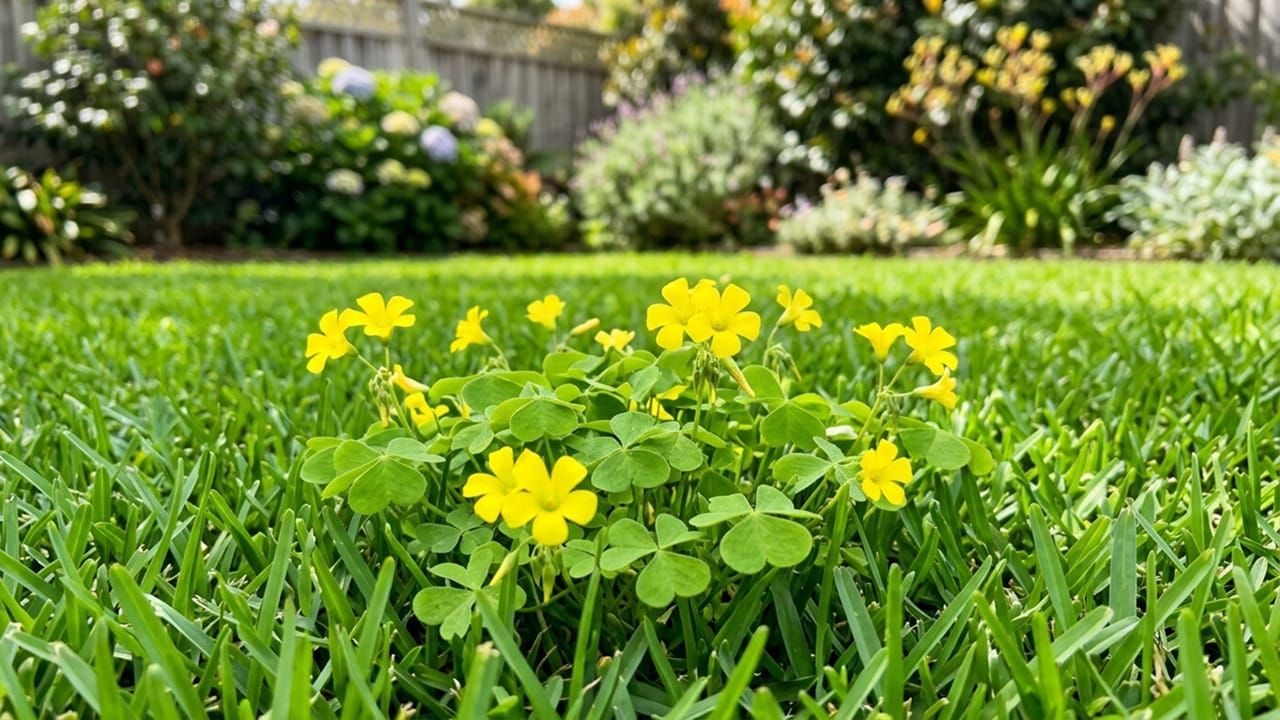
Oxalis is one of those weeds that looks harmless at first—a few small heart-shaped leaves or yellow flowers appearing among the grass—but it can quickly become frustrating once it spreads through a lawn or garden bed. To get rid of oxalis effectively, the first step is identifying which type you have and where it is growing. Small patches can often be removed by hand, while larger infestations may require a carefully selected lawn treatment. Choosing the wrong approach can waste time, damage wanted turf or leave the plant’s main regrowth system untouched.
Quick answer: four steps to control oxalis
Use this four-step route after confirming that the plant is oxalis.
- Identify creeping oxalis or a bulb-forming species such as soursob or pink oxalis.
- Choose a method based on the location, patch size and grass growing underneath.
- Remove the relevant stems, roots, bulbs and bulbils, or use only a correctly labelled lawn treatment.
- Reinspect the area, deal with regrowth and repair bare turf to reduce open space for reinvasion.
Identify the oxalis before you treat it
Identification matters because not every oxalis spreads or responds to removal in the same way. Check both the visible plant and, where appropriate, what is under the soil.
Creeping oxalis in turf
Creeping oxalis (Oxalis corniculata) is a low-growing weed that can quietly spread through turf. Its creeping stems may root wherever they touch moist soil, allowing a small patch to expand over time. Look for leaves made up of three heart-shaped or notched leaflets, small yellow flowers with five petals and elongated seed capsules. Snapping off the foliage leaves rooted stem sections or roots behind, so removing only the visible top is incomplete control.
Soursob and other bulb-forming oxalis
Soursob is a bulbous perennial. In Australia, it spreads through underground bulbs rather than seed, and bulbs can be carried to clean areas in contaminated soil. That makes digging and soil hygiene central to control. Pink oxalis may also be bulb-forming, but do not assume every species shares the same life cycle. Creeping oxalis, for example, presents a seed-and-spreading-stem problem rather than a soursob-style bulb problem.
Oxalis, clover or another lawn weed?
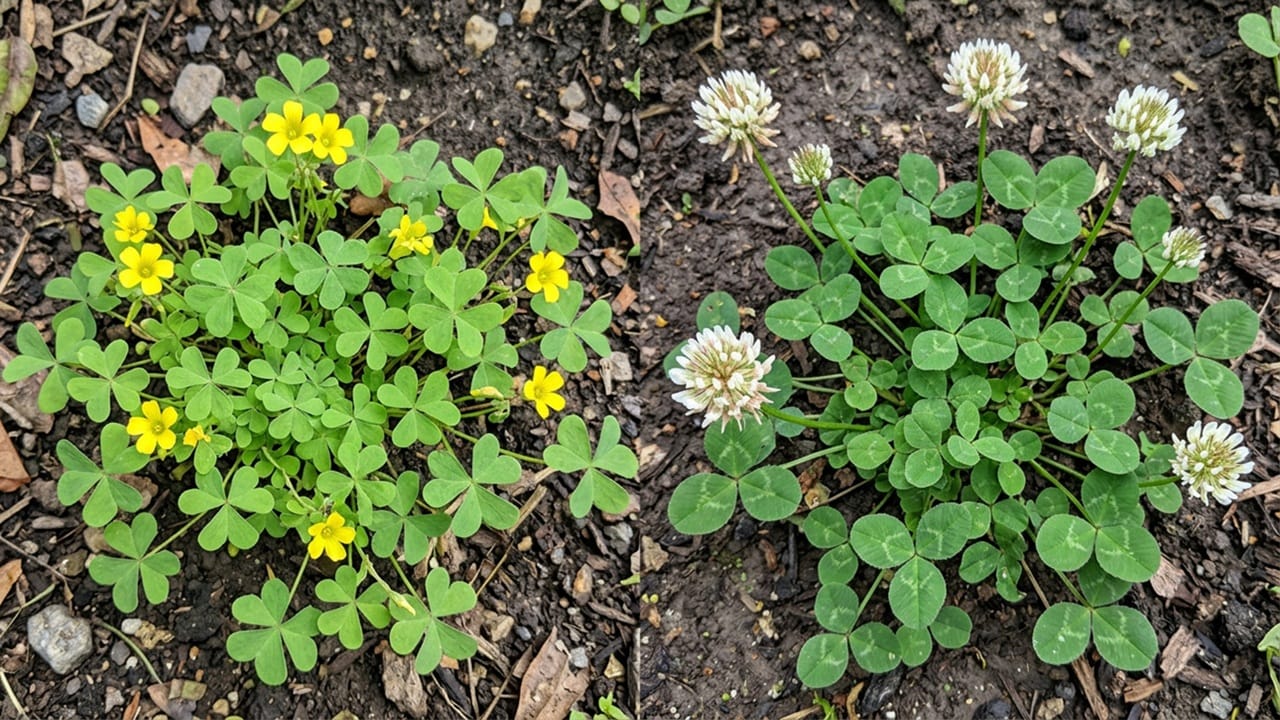
Oxalis is often mistaken for clover, especially when it appears among grass. Its heart-shaped leaflets and small five-petalled flowers help separate it from clover’s more rounded leaf shape and flower heads. Clover usually has more oval or rounded leaflets. If the plant does not match either description, identify it before treating it; other broadleaf lawn weeds such as bindis require their own control decisions.
Choose the removal method by location and scale
Route the problem using three facts: where it is growing, how much is present, and which grass species or variety is underneath it. The safest useful method for a few lawn plants is not necessarily suitable for a broad mat or a bulb-filled garden bed.
A few creeping oxalis plants in a lawn
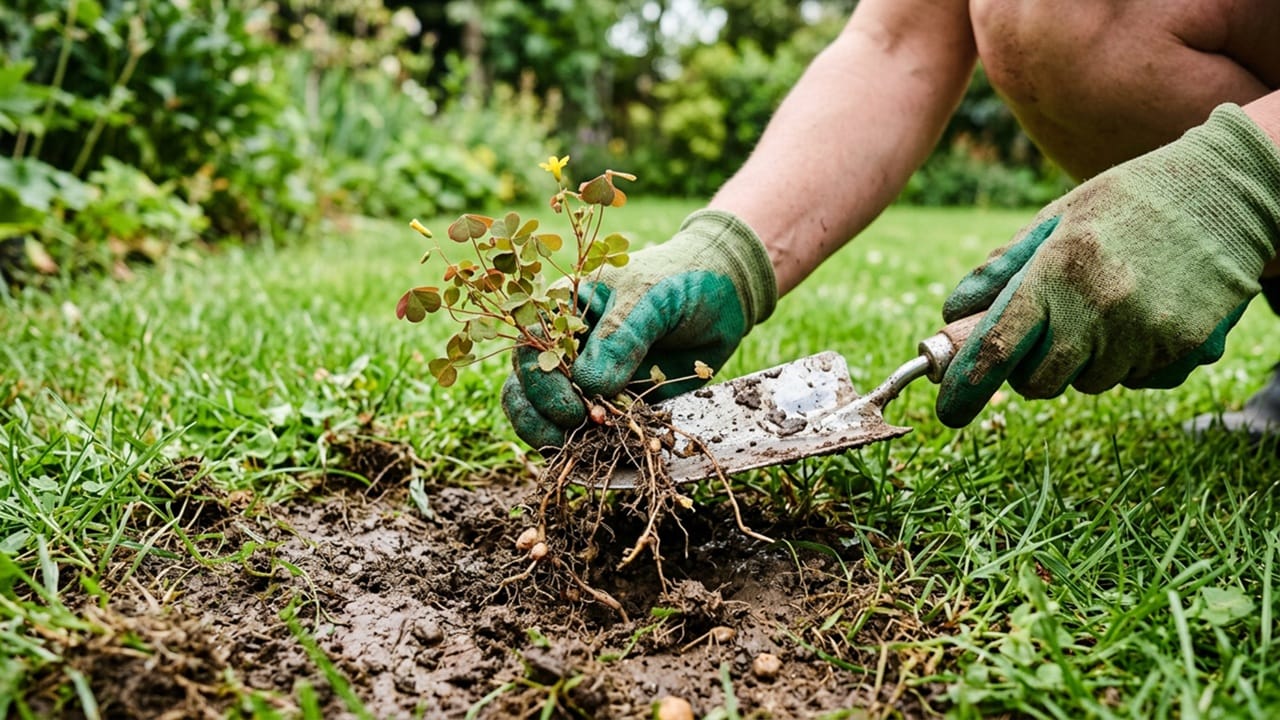
Wear gloves and work when the soil is moist but still workable. Slide a hand trowel or weeding tool into the soil beside the plant, loosen the root zone and lift the rooted stems and root system with as little disturbance as possible. Do not simply tug at the leaves. Work from the outside of the patch inward so you can see where the low stems run through the turf. If the plant carries mature seed capsules, bag the material so seed is not shaken across the lawn; do not assume every home compost system will neutralise it.
Mark or remember the spot and inspect it again. Retained stem or root material and new seedlings can appear after the first pass. Fill and repair the small bare area rather than leaving open soil. Mowing may remove flowers temporarily, but it does not remove the rooted parts of established creeping oxalis and should not be treated as the solution.
Widespread creeping oxalis in established turf
When creeping oxalis forms a widespread mat, hand removal may disturb too much turf. A selective post-emergent lawn herbicide can be more practical, but only after you identify the exact grass. Apply a non-negotiable selection rule: use only a currently APVMA-registered product whose current label lists creeping oxalis, the intended lawn setting and your exact established turf species or variety. Look for the APVMA or NRA approval number on the label. Read and follow every direction covering application, personal protective equipment, temperature, rain, wind, spray drift, re-entry and environmental protection.
A “selective” herbicide is not automatically safe for every lawn. Do not treat new, dry, heat-stressed or otherwise excluded turf when the label prohibits it. Prevent drift onto garden plants, and keep the product out of drains and waterways. Inspect the result and repeat an application only if the current label allows it, at the stated timing and under suitable conditions.
Bulb-forming oxalis in garden beds
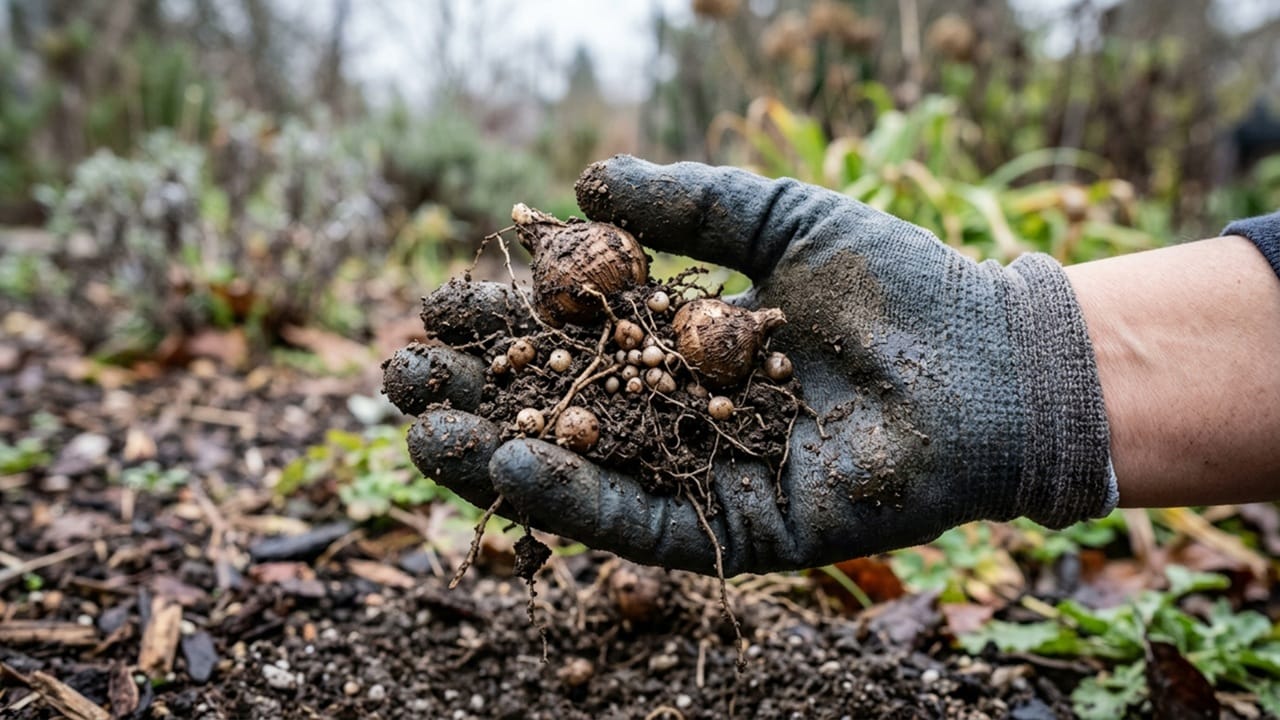
For soursob or another confirmed bulb-forming oxalis, loosen the soil beside the stem until you find the main bulb. Lift it carefully and collect attached or nearby daughter bulbils, then bag and remove the material. Avoid shaking infested soil around the bed or carrying it into a clean area. Pulling the leaves alone leaves the underground food store in place.
For a larger bed infestation, a suitable layer of mulch or another light-exclusion method may suppress growth, but it requires persistence and is not an instant cure. Mulch belongs in garden beds, not over a lawn. A non-selective herbicide can injure wanted grass and plants, so use one only where its current Australian label permits precise application and you can protect surrounding vegetation.
Paths, cracks and plants beside wanted vegetation
Choose careful physical removal where spray drift could reach wanted plants. Do not use boiling water, salt or homemade vinegar mixtures as “lawn-safe” shortcuts: they can injure grass, garden plants or soil and do not reliably solve an underground bulb problem.
When to act and what to expect
Act while the target weed is actively growing and, for seed-producing creeping oxalis, before seed capsules mature where practical. The right window depends on the species, local climate and chosen method. If you use a registered product, its restrictions for turf condition, temperature, wind and expected rain take priority over a general seasonal rule; “spray in spring” is not sound Australia-wide advice.
Check hand-weeded and treated areas regularly rather than assuming one pass has finished the job. Remove or treat new growth using the same species, site and turf decision route. Stop moving infested soil or plant material into clean areas.
Reduce the chance of oxalis returning
Make follow-up and hygiene routine. Remove new creeping oxalis before it develops mature seed capsules. When digging bulb-forming species, collect the main bulb and nearby bulbils, and do not relocate soursob-infested soil. Brush soil and plant material from trowels, forks, mower parts and footwear before using them in a clean lawn or bed.
Repair divots and bare patches after removal, then maintain dense turf at the correct mowing height. Healthy coverage can leave less open space for new weeds, but it does not kill established oxalis. The weed alone also does not prove that your soil is acidic, compacted or nutrient deficient.
Match irrigation to your grass, soil, season and local restrictions, and avoid overwatering your lawn. During turf recovery, consistent watering helps new grass establish evenly. Systems such as Aiper IrriSense 2 allow users to map area, line or point irrigation zones, create app schedules and adjust watering based on changing conditions. Irrigation does not kill, remove or prevent oxalis, and it cannot replace complete physical removal or a correctly labelled treatment.

Frequently asked questions
What kills oxalis but not grass?
Only consider a selective lawn herbicide whose current Australian label lists the target oxalis and your exact established turf species or variety. “Broadleaf” or “selective” on its own is not enough to establish compatibility. Confirm the APVMA or NRA number and follow the full label, including turf-condition, application and safety directions.
Does vinegar kill oxalis?
Vinegar may burn exposed foliage, but it is non-selective and can damage lawn grass and wanted plants. It is also unreliable for removing the underground bulbs and bulbils of bulb-forming oxalis. Skip homemade recipes and use careful physical removal or a site- and turf-appropriate treatment authorised by a current label.
How do you get rid of oxalis bulbs?
Dig beside the stem until you locate the main bulb, then lift it with nearby daughter bulbils without scattering infested soil. Bag and remove the material, clean the tool before moving to an uninfested area, and monitor the spot for missed bulbs. Removing only the leaves is not enough for bulb-forming oxalis.
Final takeaway
Correct identification is the turning point: creeping oxalis and bulb-forming soursob require different removal work. Match the method to the location, infestation size and exact turf, then follow up. Careful removal and current label directions are more dependable than a quick household remedy—and more protective of the lawn and garden you want to keep.