
How to Get Rid of Moss: Complete Guide for Australian Lawns

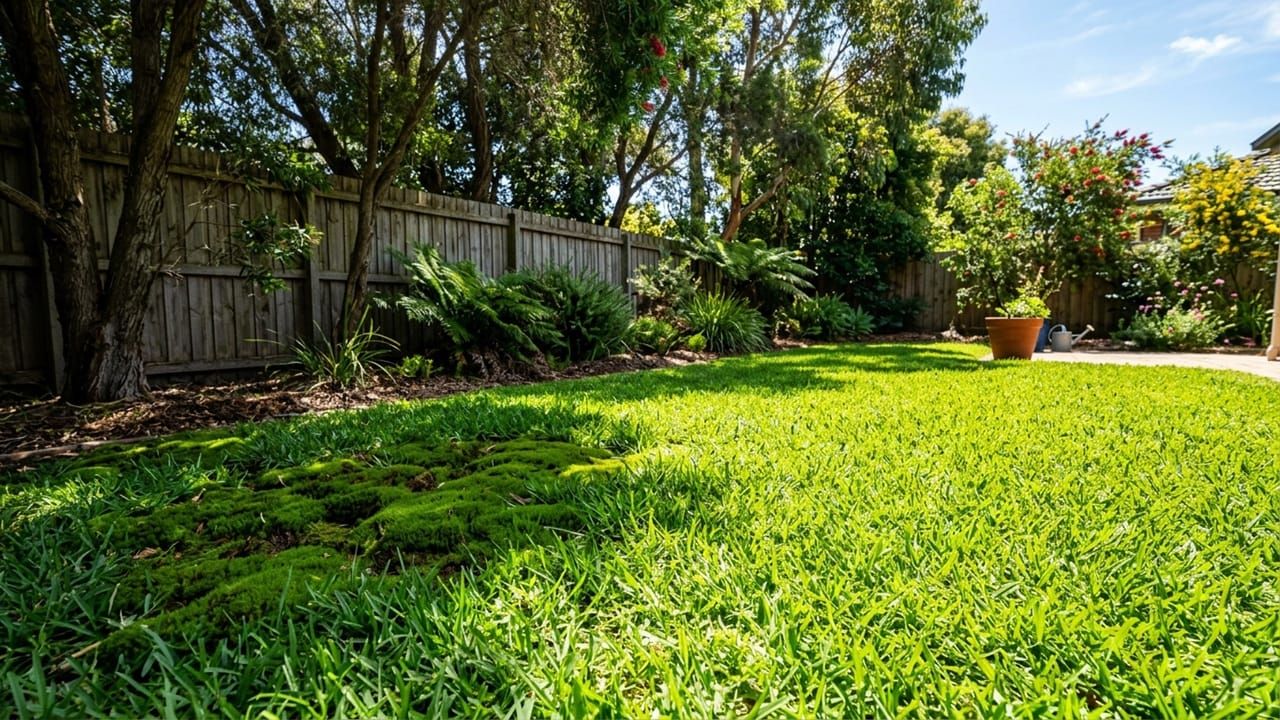
If you have moss in your lawn, you are not alone. It is one of the most common problems in Australian backyards, and it shows up in all kinds of gardens, from shady courtyards in Melbourne to damp corners in Sydney. The frustrating part is that removing it once is not enough. If you do not fix what caused it, the moss comes straight back.
This guide covers why moss grows, how to get rid of it, and what to do so it does not keep returning.
What Is Moss in a Lawn?
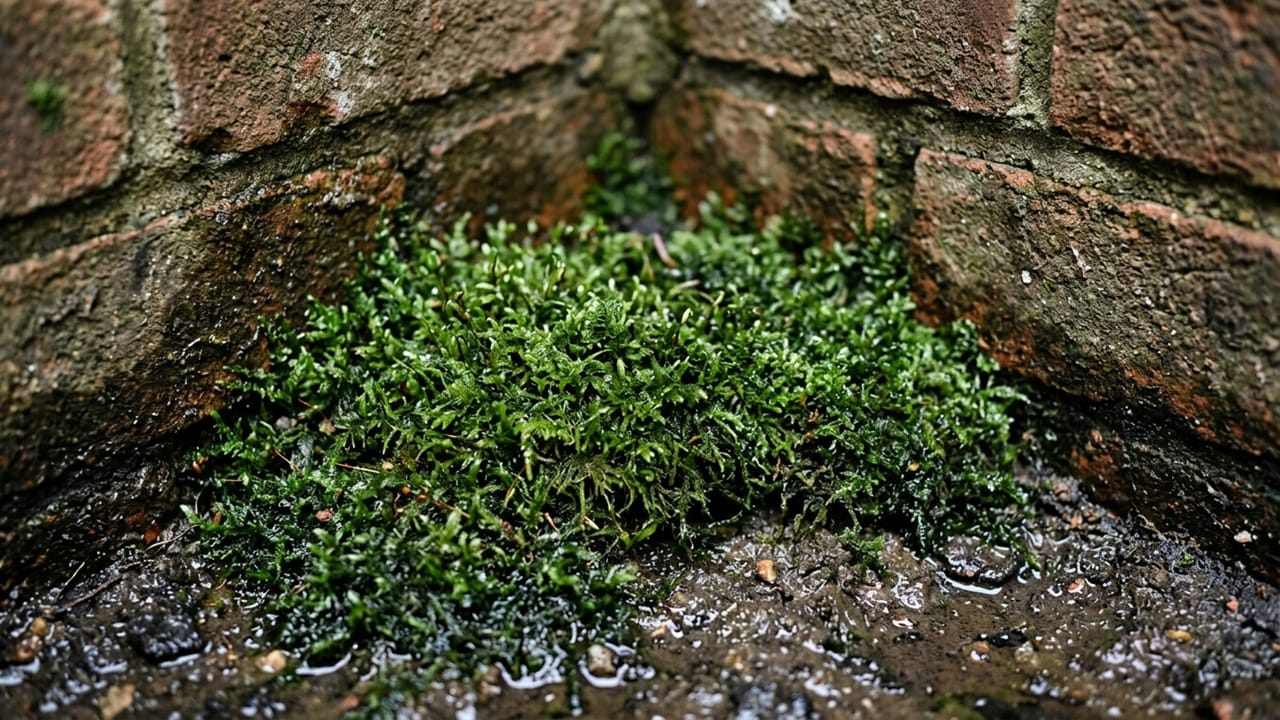
Moss is a small, low-growing plant that does not flower and does not have roots like grass does. It absorbs moisture directly through its leaves. That is why it loves damp, shady spots.
Unlike grass, it does not need fertile soil or much sunlight to survive. When your lawn is thin or struggling, moss quickly fills those gaps. It spreads through tiny spores carried by wind and water.
It will not kill your grass directly, but it crowds out new growth and holds moisture at the surface. Over time, that makes things worse.
Why Is Moss Growing in Your Lawn?
Moss does not just appear randomly. It grows where grass is already losing ground. These are the most common reasons it takes hold in Australian lawns.
Lack of Sunlight
Shade is the number one cause. Trees, fences, pergolas, and neighbouring buildings all block the sun that the grass needs to stay thick and healthy. In shady spots, grass thins out. Moss moves in.
This is especially common in older suburbs with large established trees or gardens built around shade structures.
Poor Drainage and Excess Moisture
Waterlogged soil after rain is a perfect environment for moss. Parts of Australia that get heavy winter rainfall, like Melbourne, Adelaide, and coastal NSW, see this a lot.
Low spots in the yard, areas near downpipes, and clay-heavy soils that hold water all create exactly the damp conditions moss needs.
Compacted Soil
When soil gets hard and compacted from foot traffic or heavy equipment, grass roots cannot push through it. The lawn thins out. Moss, which does not need soil depth at all, takes over those areas easily.
Compaction is very common in high-traffic backyards and lawns sitting on clay subsoil.
Low Soil Fertility
Grass needs nitrogen and other nutrients to grow thick and strong. When soil is acidic or nutrient-deprived, grass grows slowly and weakly. Moss does not need those nutrients to thrive. So a poorly fed lawn is always at a disadvantage.
Incorrect Mowing
Cutting the lawn too short removes the leaf blades that the grass needs to photosynthesise. Scalped grass weakens and thins out. That slow recovery period is when moss gets in. Cutting below the recommended height is one of the easiest ways to weaken a lawn and invite moss in.
How to Get Rid of Moss in the Lawn
There is no single fix that works for every situation. The right approach depends on how bad the moss is and what caused it. Here are four methods that work.
Manual Removal
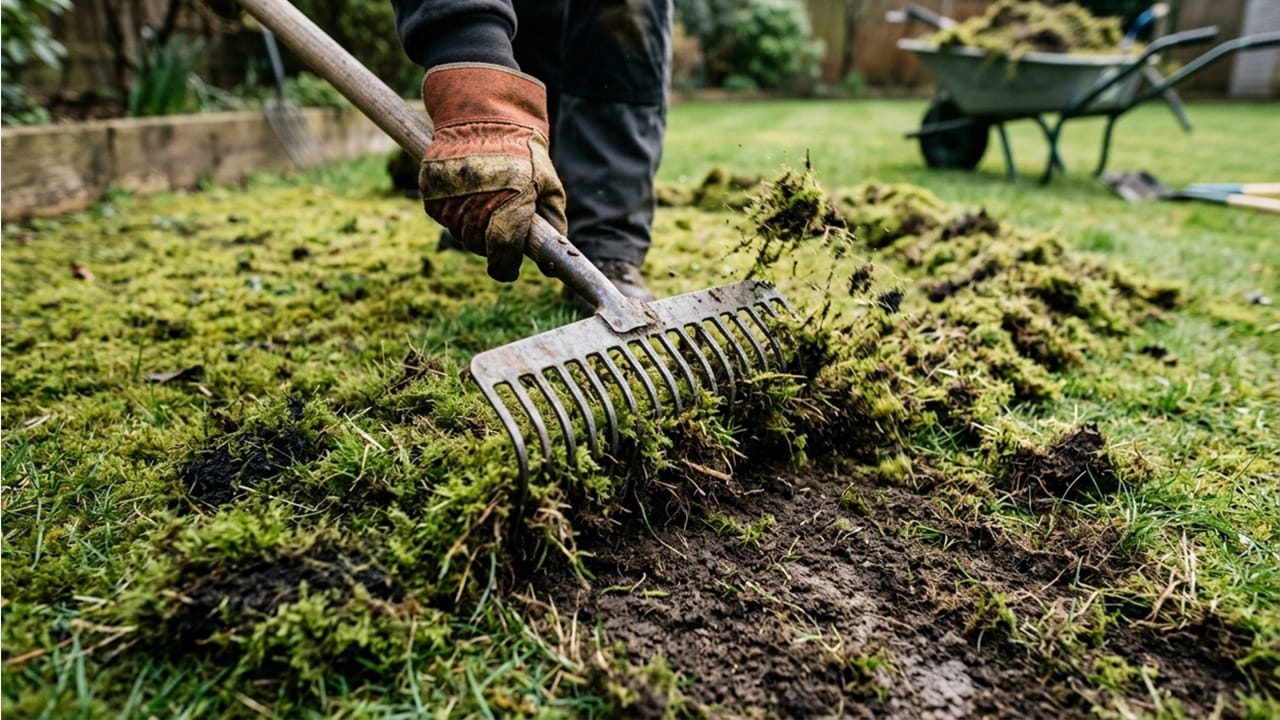
For small patches, removing the moss by hand is the fastest option. Use a rigid garden rake or a dethatching rake and scrape it out. This works best when you catch it early.
Rake out as much as you can, bag it and throw it away. Do not compost it. Moss spores can spread. After raking, the bare patches will need to be reseeded, or the moss will simply return to the same spot.
Chemical Moss Control
For larger infestations, iron sulfate is the most widely used moss killer in Australia. It works quickly, turning moss black within a few days. You can find it at most hardware and garden stores easily.
Mix it according to the product label and apply with a sprayer. Avoid watering the lawn for 24 to 48 hours afterwards. Keep it off concrete and paving as it can stain. The downside is that it kills the moss but does not fix what caused it. If the drainage is still bad or the soil is still compacted, the moss will be back within a season.
Natural Moss Removal
If you have pets or kids, or prefer to avoid chemicals, diluted white vinegar or a baking soda solution can knock back light moss growth. These are not as fast as iron sulfate, but they work for small problem spots.
Mix one part white vinegar with one part water, then spray directly onto the moss on a dry day. Or sprinkle baking soda dry and leave it for a few days before raking. Reapply as needed.
Kill Moss Without Killing Grass
Precision matters here. Moss killers need to go on the moss, not across the whole lawn. Over-applying iron sulfate can stress your grass. High concentrations of vinegar will burn it too.
Spot-treat mossy areas with a hand sprayer rather than blanket-spraying. Keep the product on the moss and away from the surrounding turf. Stick to the recommended dilution rate on the label.
Here is a quick comparison of moss removal options
| Method | Best For | Main Limitation |
|---|---|---|
| Manual raking | Small or early patches | Labour-intensive; moss returns without soil fixes |
| Iron sulfate | Moderate to heavy moss | Does not fix the underlying cause |
| Vinegar or baking soda | Light moss, pet-safe option | Slower; less effective on established moss |
| Spot treatment | Protecting the surrounding grass | Requires care and patience |
How to Repair Your Lawn After Moss Removal
Getting rid of moss is only half the job. Once it is gone, the lawn needs to recover properly. Otherwise, the same conditions remain, and moss returns.
Aerate the Soil
Aeration breaks up compacted soil and lets air, water, and nutrients reach the root zone. You can do it by hand with a garden fork or hire a hollow-core aerator for larger lawns.
Push the tines in 10 to 15 cm, working across the area in rows. Do this when the soil is moist but not waterlogged. Late winter or early spring works well for most parts of Australia.
Dethatch the Lawn
Thatch is the layer of dead grass and organic material that builds up between the soil and the living grass. Too much of it traps moisture and stops fertiliser from getting through.
Rake or use a dethatching machine to strip it back. Aim for no more than about a centimetre of thatch remaining.
Overseed or Patch the Bare Areas
Bare patches left after moss removal will not fix themselves. Overseed with a grass type suited to your region and the level of shade in that area. In shady spots, choose shade-tolerant varieties.
Keep the seed moist until it establishes. For large bare patches, lawn rolls or plugs will give you faster coverage than seed.
Fertilise to Strengthen the Grass
A slow-release nitrogen fertiliser applied after aeration helps the grass recover and grow thicker. Thick, well-fed grass is the best long-term defence against moss.
Check the soil pH too. Australian soils can be acidic, and adding garden lime to bring the pH to around 6.0 to 7.0 creates a better environment for grass and a worse one for moss.
How to Prevent Moss from Coming Back
Once the lawn recovers, keeping moss away means managing the conditions that allowed it to grow. These are the things that actually matter long term.
Improve Sunlight Where Possible
Trim back overhanging branches to let more light reach the lawn. If a fence or structure is the issue, consider whether shade-tolerant grass varieties might suit that area better than fighting it year after year.
Fix the Drainage
If water pools in certain spots after rain, the drainage needs attention. This might mean regrading the area slightly; you can put some gypsum into clay soil, or install a French drain in a low-lying spot to get rid of this water. Getting water off the surface and out of the root zone removes one of the main things moss depends on.
Adjust Your Watering Schedule
Overwatering is a common and easily fixed problem. Lawns need water less often than most people think. Deep, infrequent watering encourages roots to grow down rather than stay shallow. Frequent light watering keeps the surface damp, which helps moss.
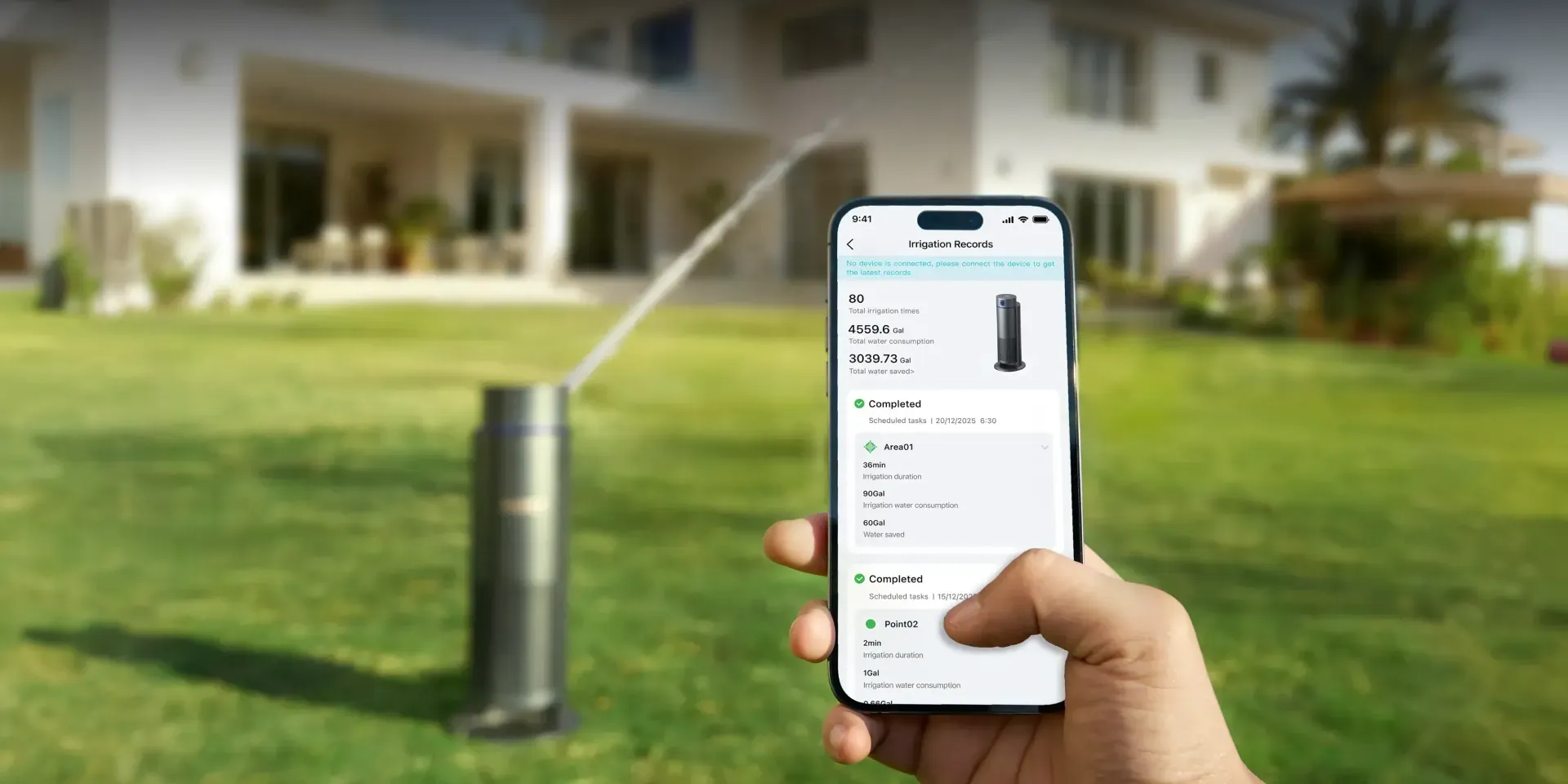
A smart irrigation controller like the Aiper IrriSense 2 adjusts watering automatically based on local weather data. The lawn gets water when it actually needs it, not on a fixed schedule. That kind of balanced moisture is one of the simplest ways to reduce moss risk over time without thinking about it constantly.
Mow at the Right Height
Do not cut the lawn too short because most Australian grass varieties do best at 30 to 50 mm. Mowing at the right height keeps the grass dense and shades the soil, making it harder for moss spores to get established. Keep mower blades sharp, too. Ragged cuts stress the grass and slow recovery between mows.
Watch for Winter Moss
Winter is the highest-risk season for moss in most parts of Australia. Several factors like reduced grass growth, more rain, lower temperatures, and less sunlight all line up at once. Moss thrives in exactly those conditions.
Apply iron sulfate as a preventive treatment in late autumn before moss gets a foothold. Keep mowing through winter, but at a slightly higher height than in summer. Avoid walking on the lawn when it is waterlogged.
Frequently Asked Questions
What kills moss in the lawn permanently?
No single lawn moss treatment kills it permanently. Iron sulfate removes what is there, but if the underlying causes are still present, whether that is shade, poor drainage, or compacted soil, it comes back. The only lasting fix is building a healthier lawn that outcompetes it.
Is moss bad for lawns?
Moss in the lawn is not toxic and will not poison the grass directly. But where it spreads, grass cannot recover easily. It is also a sign that the lawn conditions are off. In Australia, moss in the lawn is especially common during winter and in shaded gardens. Ignoring it usually means the problem gets worse over time.
How do you remove moss from a lawn naturally?
For natural moss removal, diluted white vinegar or baking soda applied directly to the affected area works for light growth. Rake out the dead material, reseed the bare patches, and follow up with aeration and better drainage. On their own, natural treatments manage light growth. Combined with proper lawn repair, they keep it from coming back.
Will moss come back after removal?
Yes, if the underlying causes have not been fixed. Removing moss from the lawn is only part of it. Preventing it from returning is what matters long-term, and that means fixing the soil, sorting out the drainage, adjusting watering, and keeping the grass well-fed. Do those things and moss does not get the conditions it needs.
Conclusion
Moss in the lawn is rarely just a surface problem. It usually appears because something else is off, whether that is poor drainage, compacted soil, heavy shade, low fertility, or an overwatering routine. Removing the moss is straightforward, but keeping it away means improving the lawn conditions around it. Aerate the soil, feed the grass, fix wet spots, mow at the right height, and water more carefully. Do those things consistently, and moss has far fewer chances to come back. Australian lawns already deal with hot summers, wet winters, and heavy shade from established trees, so the goal is not just to kill moss once, but to build a thicker, healthier lawn that can outcompete it naturally.